

Fisheries Minister, George Eustice, met recently in London with the NFFO’s Executive Committee to discuss the industry’s principal areas of current concern.
The issues raised with the Minister reflected both the diversity of the Federation’s membership but also the complexity of the issues confronting us as an industry.
They included:
- shellfish policy
- marine protected areas
- progress of stocks to maximum sustainable yield
- deep sea regulation
- unlicensed fishing
- the EU referendum
- problems caused by the devolution concordat
- IFCAs and the MMO
- EFF and EMFF
- the autumn quota negotiations
- implementation of the landings obligation
- under-10m and non-sector quota management
- absence of constraint on catches by Guernsey vessels and impact on-non-sector fisheries
- Skates and Rays
- Impact of government spending cuts
NFFO Chairman, Tony Delahunty said after the meeting, “This was a good opportunity to gauge the Minister’s thinking on some of the key issues confronting the industry as we prepare for the all-important autumn negotiations. He made clear that his overarching objective was to ensure that the reform of the CFP, agreed in 2013 (the main components of which were regionalisation, MSY and the Landings Obligation) are implemented in a workable and practical way.”
“We were able to highlight our areas of greatest concern as well as underlining the recent scientific advice released from ICES which confirms that generally our stocks and fisheries are going in the right direction.”
“What was encouraging was that the Minister clearly believes that engagement with the Federation, as the voice of the fishing sector, is essential if we are to find a way to implement the CFP reforms sensibly. But in addition to the CFP, there are many issues that are home grown, such as capping the over-15 shellfish fleet, artificial constraints arising out of the devolution concordat, poor access to European grants that can be dealt with domestically. This was a positive meeting, which sent strong signals on the issues that the Federation’s members think most important.”
As new research revealed that Atlantic fish stocks, including the North Sea and Baltic, are showing strong signs of recovery, European Commissioner for Maritime Affairs, Karmenu Vella, has paid tribute to fishermen’s sacrifices and role in rebuilding depleted stocks of some of Europe’s most important commercial species.
The National Federation of Fishermen’s Organisation’s, which along with other fisheries stakeholders participated in the annual State of the Stocks review in Brussels, said, “The recovery trajectory for some species – plaice and hake for example – is nothing less than remarkable. Right across the board, with very few exceptions, we are seeing strong signals from the stocks and this is now reflected in the scientific stock assessments.
“We could point to 20 or 30 separate measures which have contributed to this positive trend, which began around the year 2000, including more selective fishing and smaller fleet sizes; but of course natural fluctuations also play an important part in what we are now seeing.”
According to the new statistics released this week by the International Council for the Exploration of the Sea (ICES), there has been a ‘dramatic reduction in fishing pressure’ across the main commercial stocks, with the majority observing that fishing mortality has decreased to a level consistent with Maximum Sustainable Yield (MSY). This means levels are not only sustainable but will also deliver high long term yields.
Encompassing around 150 stocks, the new data shows a dramatic reduction in the exploitation level of many species, as a result of the strict management objectives now in place for sustainable fisheries across the North Atlantic. Between 2006 and 2015, the number of stocks fished at MSY increased from 2 to 36.
Barrie Deas, Chief Executive of the NFFO said: “The science this year reinforces the trends that we have seen across all the main species groups since 2000 and is a welcome culmination of the efforts made by individual fishermen over the past decade.
“The advice paints a positive picture of dramatic reduction in fishing pressure which has resulted in stock levels responding positively. This is welcome news for both the UK’s fishing industry, as well as those of us who look to fish as a sustainable, traceable and healthy food source.
“The last decade has been a difficult and challenging time for the UK industry and fishermen have had to go through a major attitudinal shift to keep the industry afloat. Sustainability is now at the heart of the way the fishing industry operates and these figures are a major endorsement of the way practices have changed over the last decade.”
On releasing the figures, Chair of ICES Advisory Committee, Eskild Kirkegaard, commented: “Over the last ten to fifteen years, we have seen a general decline in fishing mortality in the North East Atlantic and the Baltic Sea. The stocks have reacted positively to the reduced exploitation and we’re observing growing trends in stock sizes for most of the commercially important stocks.”
In 2013, the UK’s 6,399 fishing vessels landed 624,000 tonnes of fish (including shellfish) with a value of £718 million. There are around 12,150 fishermen, over 10,000 of whom are working full time.*
Arnold Locker is a fourth generation fisherman based in Whitby. He has over 40 years’ experience of commercial fishing in the North Sea and is co-owner and chairman of Lockers Trawlers, which now trawls haddock predominantly, after taking the decision to actively avoid cod to support its recovery.
Arnold was among the first fishermen to join scientific missions to collect accurate data to compare catch rates with different gear. Since 2002, Lockers Trawlers has trialled avoidance techniques including smaller net and mesh sizes, and now operates with a bycatch rate of less than one per cent, verified by onboard CCTV under the Fully Documented Fisheries (FDF) scheme.
He commented: “Over the last few years, we have seen a real increase in the amount and variety of the fish we are catching and it is reassuring to see the science has caught up with what we are seeing in our nets. This progress just goes to show the major impact fishermen working closely with scientists can have as well as the sustainability measure we have worked hard to put in place.
“There has been a significant price to pay for fishermen and coastal communities across the North East coast with many fishing businesses decimated by decommissioning schemes and struggling to stay afloat. This stock recovery is testament to the hard work and commitment of the fishermen themselves and the acknowledgment from the Commissioner is something we’ve been waiting to hear since 2002.
“As a family business, we’ve worked hard over the last ten years to secure a legacy for future generations to continue to provide what is a vital and sustainable food source for our island nation. At last, it’s starting to pay dividends in both the quality and quantity of the fish we’re catching.”
Over
the past 10 years the issues of sustainable seafood have been high on the
agenda of public opinion and have become a key part of the consumer’s decision
as to which type of seafood to buy.
 We see lots of products that
claim to be “line caught” and “day boat” however the reality is that day boat
fishermen receive 4% of the UK’s landed catch. So everyone claiming to sell day
boat fish can’t possibly be doing so.
As
part of the commitment we make to our customer we aim to provide the freshest,
most environmentally sound seafood we can. So just before Christmas I took a
trip down to Newlyn in Cornwall and Brixham in Devon to meet fishermen and fish
suppliers, see the situation for myself and hunt down the best seafood in
Britain.
You
may ask “why the south west and not the east coast?” The simple answer is
volume and variety. Both Newlyn and Brixham land more species of fish than any
other markets in the country and in significant volume, so it is the number one
place to go.
So
on Monday 6am I was on Newlyn fish market watching the many boxes of hake,
mackerel and squid being sold by the auctioneer. It wasn’t a great daywith bad
weather over the weekend but the quality of the fish was excellent.


One
of the main reasons to go down to Newlyn was to meet Kevin Penny of
Drecklyfish: an organisation of 4 day boat fishermen who, rather than putting
their fish on the market, sell direct to the wholesale and restaurant trade.


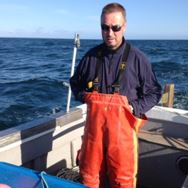


The
fish they land is so fresh and can be with us in
within 24 hours of it being caught. Big respect to Kevin and his colleagues who
fish up to 6 miles out at sea in small open boats. Solo fishing is truly the
most dangerous job in the world.
We
also met Saul and Abi of Wild Harbour Seafoods: a similar organisation of up to
20 day boat fishermen who only catch using hand line or new eco trawl nets.


Again
the quality is superb and with a wide selection from Bass to Pollock they offer
us a truly fantastic range of seafood. Again this will be with us in
provide our customers with a range of the freshest fish.
Of
course with all day boat fisheries the catch is hugely dependent on the weather
and so we have to accept that this quality may not be available every day.
One
of the key elements of buying direct from the fishermen is that they get a fair
and consistent price for their fish and proper reward for the work they do and
the risks they take.
Meeting
the fishermen like Saul and Kevin was fantastic, to see and hear of the passion
they have for their industry and their catch is truly exciting and I look
forward to working closely with them over the coming weeks and months.
Along
with meeting the great fishermen I also met great suppliers such W. Stevenson
on Newlyn market and Brixham Seafish based in Brixham who both supply some of
the finest seafood from these markets.
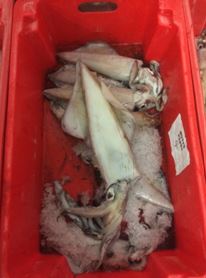

We
have already seen some of their fine quality fish such as squid and bass shown
above, hake, dove sole, mullet, John Dory and mackerel.
The
quality of everything I saw on my trip was fabulous and over the coming weeks I
look forward to seeing you in our shops buying some of our great quality
seafood. Look for the Wild Catch logo on our tickets to guarantee the freshest,
fairest and most sustainable seafood in the country.

He takes over the helm from John
Butterwith who has worked hard and steered the Committee since 2011. Steve is supported by John Balls, Clovelly
fisherman and Chairman of the North Devon Fishermen’s Association who was also
elected as Vice Chairman at the meeting.
Steve who is also very active
on the Federation’s Executive Committee said: “I’ll be working to build upon
John’s legacy for the Committee to deal with the myriad of issues facing the industry
in the South West today. As a non-sector
fisherman myself, I’m keen to see that we get sensible and workable management and
licensing arrangement moving forward for those fishing the quota pools,
particularly given the looming landings obligation affecting demersal fisheries
from next year. Bass is also a key issue
and the application of emergency measures must recognise the need to keep
fishing businesses afloat through this difficult period.”
“We’ll also be looking to engage
and get the right deal for the industry on the management of MPAs and new potential
designations, new marine developments and on new byelaws coming from the region’s
IFCAs,” he said.
The Committee reviewed the policy
developments across a wide range of these areas at the meeting. Productive discussions were also held with invited
guests Alyx Elliott from the NGO World Animal Protection on positive actions on
fishing marine litter, and Libby Ross from the Devon and Severn IFCA on the North
Devon Ray Pilot Project, which is working to improve understanding of the
stocks so that management measures can be better tailored to the local fleet.
The next meeting of the Committee
is tabled for 29th September.
Culture
of Compliance
The
most significant feature of a fully effective monitoring and control regime is
the degree to which a culture of
compliance has been established. In
other words, where and when fishermen perceive the rules and management
arrangements to be broadly fair, rational and proportionate, there is a much higher
probability that those rules will be respected; whether those are quota limits,
technical measures or monitoring requirements.
In
the context of our fisheries (multiple and varied units operating on the basis
of complex spatial and temporal patterns, over a wide geographical area, under
multiple jurisdictions, in an ever-changing marine environment) the degree to
which the management rules are considered reasonable and legitimate is of
critical significance.
The
experience of the CFP over the last 20 years has shown us the limitations of a
top-down, command and control
approach to managing our fisheries. It has also offered however, glimpses of
what can be achieved through a collaborative, results-based approach, through which management objectives are
achieved by delegating responsibility to the fishing industry, within an
overall framework of supervision.
The
EU landings obligation can be considered both a hybrid and a transitional
approach. It contains unhelpful elements of prescriptive micro-management but
also scope for a significant degree of delegated responsibility to regional
member states and potentially, to fishing vessel operators and their
organisations.
This
is the context within which we, collectively, must design a control regime that
can deliver the objectives of the new CFP.
Landings
Obligation: control at the point of landing to control at sea
The
landings obligation involves a shift from control principally at the point of
landing, to monitoring and control at sea, where operational enforcement will
be infinitely more challenging. Apart from the shift in location at which
enforcement will take place, there will be complex set of rules about what must
be retained on board and what must be returned to the sea. This change is of
fundamental importance and it is of utmost significance that it is handled
well.
In
this period of financial stress, it is not insignificant that enforcement at
sea will be considerably more resource hungry than a control regime focused on
the point of landing.
Although
there remain a few black spots, on the whole, the period after 2000 has seen a
major shift in fisheries management, in which non-compliance has been pushed to
the margins. This contrasts with the period before 2000 which was more or less
anarchic in many of our fisheries. In some respects, this disregard for the
management controls was a response to, and consequence of, a dysfunctional
management system in which overcapacity and chronic absence of profitability
fed evasion, circumvention of blunt and poorly designed rules, and in some
cases outright illegality.
We
have no wish for the industry to return to this dystopia, not least for the
significance that it holds for reversing positive trends in the key indices of
fishing mortality and biomass.
Control
is not a stand-alone preoccupation. It takes place within a matrix of
management decisions, economic political, biological and physical realities.
For that reason, to deal with the challenges of the landings obligation, it
will have to be both adaptable and responsive and avoid the silo mentality that
control issues have tended to be dealt with in the past.
Elements
of a Successful Regime
An
absolutist approach to enforcement of the landings obligation has the potential
to set us back decades. We should learn lessons from other countries where
workable discard bans are in place. The keys to an effective monitoring and
control regime are:
- Clarity in the legal requirements
- Pragmatism
- Dialogue where problems
arise - Coherence between the
different elements of the management system - Proportionality and a
risk-based approach - Securing a positive
industry mind-set - An adaptive approach
that applies lessons learnt
Technology
Technology,
especially new kinds of information technology, will have its place to play but
it will not be a panacea. Technological developments, especially in remote sensing, will be of most utility
when they are seen by fishermen as an easier and more cost effective way to
demonstrate compliance than the alternatives. Ways should be sought to
significantly lift administrative and cost burdens in return for commitments to
fully documented fisheries. Technology provides us with opportunities to trial
new cost-effective approaches such as the use of reference fleets.
Crew
welfare
The
landings obligation is going to significantly increase the cost of fishing and
the amount of work on deck, in the fishroom, and in the wheelhouse. It will
take time to develop solutions to reduce unwanted catch. In some fisheries this
will be easier than in others. Increased workload can have implications for
crew welfare. It can also lead to diluted income with lower crew shares. In
addition, in some fisheries and classes of vessel, space, stability and
logistical problems arising from retention of unwanted catch will be real. It
is of the utmost importance that these issues are treated with seriousness and
empathy by the control authorities.
Conclusion
The landings obligation, as
it is progressively implemented, will amount to the most significant change to
the fisheries management regime in the experience of most fishermen working
today. The CFP has an unenviable record of launching grandiose, eye-catching,
initiatives that deliver much less that is anticipated or desired; or even
create perverse outcomes. If the landings obligation is to avoid this fate, it
will require fisheries managers, fisheries scientists, and fisheries control
authorities to work closely with the fisheries stakeholders to develop workable
systems that are fit for purpose.
The MMO is asking that anyone who catches non-native lobsters or crabs keep the animals (regardless of size) and report the matter to the MMO office at Shoreham on 01273 424849, or take them to a local fish merchant who can alert us to them, collection will then be arranged by the Centre for Environment, Fisheries and Aquaculture Science (Cefas) officials.
No non-native species should not be released back into the sea as release could impact native species and constitute an offence under the Wildlife and Countryside Act 1981.
Introduction
The Chairman’s Report is intended to provide an overview of the Federation’s activities over the previous 12 months. In truth, such is the scope and range of the Federation’s work that it can only hope to provide a flavour of the range of issues on which the Federation, its officers and members have worked. Nevertheless, it is important to record, even if it is incomplete, what we have done, both as a source of satisfaction and as a spur to further action over the coming 12 months.
Discard Ban/Regionalisation
Without doubt, the EU landings obligation (discard ban) represents the biggest challenge facing our industry for the foreseeable future and it is natural that the Federation has been at the forefront in shaping the new regime into something that our industry can live with.
A lot of effort has gone into securing a phased approach that is not completely disruptive in the first year of the new regime; but there remain serious challenges ahead, not least the potential for the landings obligation to choke fisheries, i.e. to prevent vessels from taking up, in full, all of their fishing opportunities. Such is the magnitude of the change involved in implementing the landings obligation that this single issue will remain at the top of our priorities for many years ahead. In the CFP reform of 2013, 20 years of progress in reducing discards was swept aside by a toxic tsunami of ignorance and cynical opportunism.
As an example, the graph above, based on ICES advice, illustrates that the absolute level of discards in the North Sea round-fish fishery had been reduced by 90% over the previous 20 years. Other fisheries show a similar pattern. Large scale discarding had been a major problem but it was not a problem that was being ignored. It certainly did not merit the blunt, heavy handed, poorly drafted legislation that we now have to deal with. As the CFP reform wave receded, it has left in its wake an over-prescriptive EU Regulation that has seriously impeded the other strand within the reform: regionalisation. Member states, cooperating at regional seas level, have struggled to produce discard plans that both make sense and comply with the legislative requirements. The NFFO working in the North Sea and North Western Waters advisory councils as well as directly with DEFRA, has been centrally involved in shaping the resulting discard plans into something workable at vessel level. This work will continue.
Drift Net Ban
Another sure sign that we have not yet escaped from the era of blunt, centralised, top-down and highly inappropriate EU measures, was seen in the Commission’s unbelievably stupid decision to propose a blanket ban on small-scale drift nets. The NFFO subsequently led a delegation to Brussels to explain, in words of one syllable, why such a blanket ban would at a stroke destroy a number of important, sustainable, small-scale fisheries, some of which held Marine Stewardship Accreditation. Since then, the Federation has worked with DEFRA officials and Europêche to get the proposal dropped completely by the European Parliament and Council of Ministers. We are not quite there yet but such is the weight of logic, evidence and fairness that we are reasonably optimistic that sense will prevail and these small but important local fisheries will be able to continue.
Bass
Many of the 800 vessels that catch bass either as a target species or as a bycatch are members of the NFFO. Poor recruitment and relatively high fishing pressure have led to a poor scientific prognosis and consequently to initial EU measures. Further proposals are in the pipeline. The Federation has taken the lead in arguing against poorly designed panic measures and for a rational, step-wise approach applying effective remedial measures that shares the burden of reducing fishing pressures to safer levels. It is in no one’s interest to see a collapse of the bass stocks but neither is it sensible to overreact or be led astray by the recreational anglers’ separate and one-sided agendas.
Industry Reputation
Frustration over the widening gulf between the media’s portrayal of fish stock trends and the reality of a dramatically improving situation, led the Federation to invest in the services of communications specialists Acceleris. The results over the last two years have been impressive. As well as instantly rebutting inaccurate stories as soon they appear, our campaigns on sustainability, fleet diversity and fisheries science partnerships have led to a shift towards a fairer and more accurate representation of our industry.
Of course, misinformed or unfair stories on fishing still appear in the press but we have succeeded in building up an alternative, positive narrative, more closely aligned with the facts. Our campaign on hake involving a celebrity chef and intertwining a good news story on the stock with a celebration of hake dishes generated more than 100 articles, big and small in the media, including a spread in a major Sunday supplement. We intend to broaden this successful approach into other species and fisheries later in the year as part of our ongoing campaign.
Fleet Diversity
Perhaps the most salient observable fact about the NFFO’s membership is its diversity. We fish in all of the inshore and offshore areas around the UK as well as in distant waters such as North Norway and Greenland. Our members fish inshore from under-10metre punts and cobles for crab, lobster and salmon, but also offshore in large purpose-built vessels pursuing the large shoaling stocks of mackerel and blue whiting or cod. Almost every conceivable fishing method is represented from midwater trawling, to demersal and prawn trawls, to potting; fly-shooting to beaming; gill nets, trammel nets and drift nets; long lines, rod and lines.
We have calculated that this diverse and varied fleet has produced the basis for 200 trillion meals since the end of the Second World War. That is a huge contribution to the food security of the nation and to the balance of trade with other countries.
Under-10m Fleet
In response to DEFRA’s consultation on how to deal with latent capacity in the under-10 metre fleet, the Federation, after extensive internal deliberations, rejected the proposal to apply a further capping exercise to under-10s. The proposal had not been well thought through, especially in relation to the impending implementation of the landings obligation.
We do accept, however, that there is a significant level of latent capacity on this part of the fleet and that this has the potential to undermine any future management measures. Maintaining the flexibility to alter target species, which is essential for the inshore fleet, whilst dealing with a fleet overcapacity is not an easy task and our conclusion was that the only way to break out of this straitjacket is through removal of capacity via a decommissioning scheme. In these financially straitened times public money is not easy to source but at some stage investment in the future will become a priority. Bringing the benefits of effective quota management to the under-10 fleet and dealing with latent capacity remain the two parallel strands within the Federation’s policy on under-10s.
Fisheries Science Partnerships
The Federation remains a strong champion of strengthened communications between fishermen and fisheries scientists at all levels. Better data, stronger assessment models and techniques as well as increased use of the type of knowledge held by working fishermen, all contribute to better fisheries management. The Federation, along with CEFAS and DEFRA were pioneers in the adoption of fisheries science partnerships and we strongly believe that this kind of collaborative approach still has much to offer and should be nurtured.
Marine Protected Areas
Against the background of an ill-conceived campaign to rush into place a large number of European and domestic closed areas, the Federation has campaigned successfully, mainly through the MPA Fishing Coalition, for a balanced and evidence-based process for designation marine conservation zones. The Government has, in line with our interventions, progressed with the important task of protecting sensitive habitats and vulnerable species through a process of evidence gathering and analysis. The alternative is to respond to a moral panic generated by people who should know better and end with nothing more than a tick-box exercise. As the focus now shifts from site designation to management measures within those sites, there is much further detailed work for the Federation to do; but all this is a far cry from the early days in the wake of the Marine and Coastal Access Act, when MPAs were being oversold as a panacea and the solution to every problem in fisheries.
Safety and Training
The Federation plays an active role in promoting a safety culture within the fishing industry and is a core member of the Fishing Industry Safety Group. Our Safety and Training Officer is equally active in ensuring that all new legislation makes sense at vessel level, and providing advice and encouragement in completing the all-important risk assessment folders. This work is paying off and the casualty rate has fallen significantly. There is however, no room for complacency and the Federation was pleased that its initiative to provide low cost personal flotation devices to its members was emulated by other organisations in the UK. We are doing a similar exercise this year with the purchase of low cost life rafts and VMS.
Referenda
The turbulence surrounding the Scottish independence referendum and specifically the call for the UK industry to be represented by the Scottish fisheries minister brought forth a decisive response from the NFFO that such a move would be unconstitutional and unacceptable to fishermen outside Scotland who would be in effect disenfranchised.
The forthcoming negotiations and referendum on UK membership of the EU is likely to bring a particular focus on fishing, as one of the least successful policies within the Union. The Federation will deal with this as it deals with all issues, calmly, rationally and democratically, weighing and discussing the risks and advantages of the various options.
Marine Management Organisation
It is no secret that the MMO, since its establishment, has faced serious difficulties, including an embarrassing turnover of senior officers. With no imminent sign that the organisation is capable of solving its own problems, the Federation supported calls for an independent review. At some point endless assurances have to be translated into action and we will be repeating our request to the new Government. Implementation of electronic logbooks, Vessel Monitoring Systems, and the administration of European grants, are amongst the areas in which the organisations shortcomings are most acutely felt amongst fishermen.
NFFO Training Trust
Thanks to the generosity of NFFO Services Limited, the NFFO Training Trust, a charity run by the NFFO, has this year been able to put a further £50,000 in the hands of fishermen for training and education purposes and the purchase of safety equipment.
Since the Trust was launched, £860,000 has been made available by the NFFO to the industry for training, education and safety equipment.
NFFO Services Limited
The work of our commercial division, NFFO Services Limited, continues to play a central role in mediating the relationship between offshore developers and fishermen. At its best, good communications and early dialogue can lay the foundations for a harmonious co-existence in an increasingly crowded marine environment. The company also plays an important role in keeping our subscription rate low and contributing to the welfare of the fishing industry through its donations to the NFFO Training Trust.
Shellfish Policy
Despite its huge economic contribution, shellfish, in policy terms, remains the Cinderella of the fishing industry. The Federation addressed this state of affairs through a Shellfish Policy Summit, held in the impressive surroundings of the old naval college at Greenwich.
In some respects, the crab and lobster fisheries have been fortunate in avoiding the fate of the whitefish industry under the CFP. It is clear however that the Marine Strategy Framework Directive will, in the near future, impact also on shellfish management, including a requirement for crab and lobster to be fished below MSY as the UK is
committed to achieve MSY for all commercial stocks by 2012 – including
shellfish. . The Shellfish Summit highlighted the need to cap the capacity of the high volume end of the fleet and subsequent representations have been made, so far without success. Dealing with all these issues will require a highly active response and the Federation’s Shellfish Committee’s detailed attention.
Management Plans
It seems inevitable that management plans of one sort or another will feature as a central feature of our fisheries management system in the future. TACs for the major stocks share with Norway are already under long term management plans and it is generally acknowledged that these have provided the basis for sustainable and relatively stable stocks. The Commission intends to develop proposals for mixed fishery plans for the North Sea and Western Waters demersal fisheries. It is therefore vital that the Federation is right at the heart of the debate about their content.
Conclusions: Oncoming Pressures
The landings obligation is the most prominent of the challenges facing our industry over the next few years. The basics are in place – fishing mortality has been dramatically reduced since the turn of the century and exploitation patterns are being improved daily. The trends are moving in the right direction. Nevertheless, volatile domestic and European politics, pressures from other sea-bed users, and an incomplete shift away from centralised micro-management, all underline the importance for our industry to have at its disposal a strong and coherent voice.
The NFFO provides that voice for fishermen in England, Wales and Northern Ireland. It is my belief and conviction that the Federation’s work, in supremely difficult circumstances, has shaped the world in which our vessels operate for the better. It is our joint responsibility to ensure that this work continues.
Finally, our Federation could not function without the active support of its members. In any given issue our officers are supported, voluntarily, by many fishermen and vessel operators who harbour a great store of knowledge and experience on which we can draw. I would like to record my deep thanks and gratitude to them.
Morrisons knows its customers want their seafood to be caught and farmed from responsible
and sustainable sources. We will always aim to source fish which is only farmed
or caught using methods which are the least harmful to the marine environment.

We ensure our suppliers have easy access to Morrisons’ seafood sourcing policy
which defines the steps that we take and that we expect our suppliers to also adopt.
This policy even includes suppliers in
categories as diverse as prawn sandwiches, pet food and ready meals.
The seafood sourcing policy is built on three pillars; environment, social and economic – as separating them ignores policies formulated by the Food and
Aquaculture Organisation and other National and International bodies.
A key aspect of our approach is direct engagement with the people who supply our
seafood.
Seafood supply chains are complex and the issues facing them are even more so. However by talking directly to fishermen, producer organisations, inshore fishery conservation authorities, environmental NGO’s, government bodies and other stakeholders we are able to find common goals and solutions to problems that have often been deemed ‘too difficult to tackle’.On many occasions it becomes obvious through dialogue that we all want to achieve the same thing.
Morrisons and other retailers are often accused of not supporting the industries that supply them. We hope that through our discussions with key stakeholders and introducing improvements that benefit all parties, the fishing industry doesn’t have the same view.
Fish is increasingly recognised as an important source of healthy food but we continue to face challenges to increase consumption. The consumer perception is often that fish is complex to cook, smells, and has too many bones in it.
By working collaboratively with our supply chains we can promote fish and seafood to our customers whilst being confident in the knowledge that our supplies are coming from safe, responsible and sustained sources.
Independent third party certification is an integral part of the assurance that we need to demonstrate to customers. It would be wonderful if everyone was satisfied with our verification of our supply chains but unfortunately this isn’t the case. Third party certification at each stage in the supply chain is therefore important and we have recently extended this to fishing boats through the Seafish
Responsible Fishing Scheme (RFS).
RFS, which is due to be re-launched next year; provides us with objective evidence that fishermen are acting responsibly, safely and within the legal framework provided, handling the catch to maximise quality. As Dr Tom Pickerell of Seafish recently blogged “Commercial fishing has become more than just about the environment; the social responsibility aspect of fishing is clearly just as important as ensuring
stocks are managed effectively.”
At Morrisons we work with our supply chains to ensure a productive, profitable and safe fishing industry which is fundamental to our seafood offering.
Huw Thomas, Fisheries and Aquaculture Manager at Morrisons.
Science and Management Policy
ICES advice suggests that against the background of below
average recruitment and high fishing mortality the stocks of bass in our waters
is in decline. it would therefore be prudent to take proportionate steps to significantly
reduce fishing mortality.
The EU’s policy of achieving MSY by 2015, or where this is
not possible by 2020, has created a further impetus towards additional
management measures for bass.
Bass Exploitation
The bass stock is subject to exploitation by a wide range of
fishing métiers and both recreational and commercial fishing, including:
Pelagic trawl
Otter trawl
Pair trawl
Fly shooter
Drift net
Trammel net
Gill net
Rod and line
The diversity and complexity of this exploitation pattern imposes particular challenges for the design of effective management measures.
Fishing Mortality
On the basis of recent ICES advice fishing mortality on bass can be broken down into three main groups:
Targeted pelagic vessels (30%)
Bass caught as a bycatch in mixed fisheries (40%)
Recreational fisheries (30%)
Total Allowable Catch
We consider that a TAC approach to managing bass would not be appropriate and would not be effective because of:
• The relatively high proportion of the catch taken by recreational anglers, who would not be subject to TAC constraints
• The regulatory discards that would result from a TAC allocated on a relative stability basis at a time when the EU is focused on discard reduction if not elimination of discards.
• Allocation on the basis of catches over a recent historical reference period would unfairly disadvantage those member states which have already unilateral steps to constrain their fleets’ activities on bass.
Alternative Management Measures
- In January 2015, the European Commission used its emergency powers to apply a seasonal closure to the pelagic fishery for bass mainly prosecuted in the mid-Channel
- Subsequently, the Commission proposed a 3 fish bag limit on recreational anglers which was adopted as part of an amendment to the TACs and Quotas Regulation
- A proposal for a further amendment to the TACs and Quotas Regulation has recently been published by the Commission. If adopted by the Council of Ministers it would:
• Apply monthly catch limits scaled to different métiers.
• Generalise the ban on fishing for bass, currently applied by the Republic of Ireland to its own fishermen, to all EU fishermen operating within a zone around Ireland, excluding waters within 12 miles of the UK coast.
- Further measures under consideration by the Commission include an increase in the Minimum Conservation Reference Size for bass to 42cm and corresponding mesh size increase for static nets, as part of the revision of the Technical Conservation Regulation.
NFFO Position
The NFFO represents fishermen in England, Wales and Northern Ireland. Amongst its members are many of the 800 fishing vessels which catch bass either as a target species or bycatch. For some of our members, bass is an economically vital component in their annual income. For others it is an economically significant but subordinate part of their catch; and yet others catch bass only sporadically and irregularly.
Although there are uncertainties about the accuracy and completeness of the ICES bass assessments, the NFFO accepts that a high level of fishing mortality and lower than average recruitment calls for remedial measures to rebuild the biomass. We do not accept that impetuous measures driven by an artificial MSY timetable is the correct or effective way to rebuild the bass stocks. All our experience suggests that, rushed, poorly thought through, knee-jerk over-reactions, is a recipe to make things considerably worse.
Principles
Measures should be effective, otherwise there is there is no point
- The measures should be capable of delivering recovery within a reasonable timeframe
- Cosmetic measures, or measures which fall disproportionately on one métier should be avoided
- The objective is to reduce fishing mortality, facilitating the rebuilding of the biomass
- The effect of the measures should be understood as far as possible in advance
- Measures should be proportionate in terms of sharing the burden and rebuilding the stock
- Measures should strike a balance between rebuilding the stock whilst maintaining and protecting the livelihoods of those dependent on the fishery
- Potential collateral consequences and displacement effects of measures should be understood and taken into account as far as possible in the design of the measures
Taking the proposed measures in sequence:
Emergency pelagic closure
There is no doubt that the directed fishery for bass by pelagic pair trawlers in the Channel is a major source of mortality when the bass aggregate to spawn. Some form of seasonal closure could therefore play a valid part within a conservation strategy for bass. However, significant as this component is, the catch amounts only to 30% of the overall fishing mortality on bass. Constraints on this fishery are only justifiable within the context of a broader strategy which addresses the other sources of mortality.
Fisheries managers also have to take into account the displacement effect of such a closure. The vessels concerned will have to earn a living and so in terms of fisheries management the knock on effects should be understood and taken into account. If the overall effects of the closure, brought in as an overreaction to scientific advice and political pressure, are negative, it wouldn’t be the first occasion that a seasonal closure was brought in in such circumstances, only for the post-hoc scientific evaluation to conclude that little was achieved for the primary stock but the negative displacement effects were significant.
We know for example that displaced vessels from the bass fishery have moved into the hake fishery, depressing prices for that species. At present, the hake stock is very healthy but this was achieved by strenuous efforts to reduce fishing mortality. It would be a tragedy if this success story was turned to dust as a knock-on effect of the bass seasonal closure.
Recreational Fishery Bag Limits
Given that the recreational fishery for bass is estimated to account for around 30% of the fishing mortality on that stock it is entirely appropriate and fair that anglers should bear a proportionate weight of the burden of rebuilding the stock. We are however, inevitably, skeptical about the level of compliance with this measure – and therefore the real contribution that it makes. Given the amount of bass that finds its way into hotel kitchens and restaurants, this is part of a much wider issue about fish being sold for profit without a fishing licence. Action on this front is overdue and we have called on the MMO to instigate a risk analysis as a prelude to high profile prosecutions.
Monthly Catch Limits
We can follow the logic of catch limits insofar as they are a direct curb on catches and are designed to share the burden proportionately. However, simply increasing discards of bass caught in mixed fisheries, after the catch limits are reached, does not seem to us to be an intelligent solution. This could be ameliorated if the catch limits contained a degree of flexibility to aggregate limits over say, three months. This would address to some extent, the problem of catch spikes, that are characteristic of the bass fishery.
We are particularly concerned about the impact of monthly catch limits on seasonal inshore fisheries which are particularly susceptible to the effect of weather on their operations. Without the flexibility to aggregate catch limits over a reasonable period, these vessels will be denied any fishing activity during poor weather and then be constrained to uneconomic catch levels when they are allowed to go to sea. The socio-economic consequences on this category of fishing business could be very serious.
Irish Closed Zone
The closure of the zone around the Republic of Ireland to bass fishing, as far as we can see, will only oblige vessels to discard small bycatches of bass. This is not an area in which bass aggregate to any extent or in which there is much of a targeted fishery, and so it is hard to see why it has been proposed except for cosmetic reasons. As a measure, in our estimation it will achieve little or nothing, other than to marginally increase discards of bass.
Technical Measures
Looking slightly further ahead to the revised Technical Measures Framework Regulation, we are still uncertain how the new approach envisaged will operate in practice. We agree in principle that it makes sense to move away from prescriptive micro-management towards a results focused approach. If MCRSs are retained within the context of the landing obligation, it is not clear whether mesh size rules corresponding to the MCRS will be set. To do so would be to revert to prescriptive micro-management, when what is required is a shift in flexibility to allow vessel operators to choose the right gear to catch the right size and species.
MCRS
We support the increase in MCRS for bass to 42cms, with the proviso that this should be increased from 36cm in annual increments. This will avoid sharp losses in income and help to build support for the package of measures. The support of the industry is generally a prerequisite for its effectiveness.
An incremental approach will also allow scope to measure and assess the effect of the measures and to adjust the approach in light of lessons learned.
Nursery Areas
With recruitment, we are very much at the mercy of processes in the wider environment. We would, however, be prepared to consider further recommendations for geographical and temporal closures of nursery areas, as we do believe that these could contribute to the protection of incoming year classes. Our precondition would be that these should be designed and located on the basis of sound scientific evidence, and introduced only after a full consultation which allows us to weigh the advantages with the socio-economic costs.
Bass Conservation
Developing an effective conservation strategy for bass is not easy. As well as being a relatively late maturing fish, the complexity of the exploitation patterns, the diversity of the métiers involved in the fishery, the breath of the stakeholder community, all suggest that there is unlikely to be a silver bullet.
In complex situations such as these, we are firmly of the view that the best solutions materialise when three groups are in the room: fisheries scientists, fisheries managers and fisheries stakeholders. To date, although there are some channels of communication, these groups have worked in relative isolation. We advocate a symposium on bass after which the best ideas and shared understandings can be harvested. At present, the dialogue has been intermittent and bears all the hallmarks of panicked over-reaction. The experience of North Sea Cod demonstrates that a number of false starts were made before the right approach was found to rebuild the biomass. This should give us hope but also pause for thought, before rushing into law measures that may make things worse.
This is not an argument for inertia but it is a plea for intense dialogue, the collation of the best information, and the careful application of remedial measures.
Unfortunately,
this requires us to alter our arrangements for the NFFO Annual General Meeting.
We
propose now to hold our meeting of the Executive Committee in the morning of
the 18th June at the NFFO Offices, York, and the AGM at Gray’s Court, York, in the afternoon.
The revised programme for the day will therefore be:
- NFFO Executive Committee 10.00am at NFFO offices
- Lunch at Gray’s Court 1.00pm
- Minister Arrives 1.10pm
- AGM Minister’s address 2.00pm
- Question and Answers with Fisheries Minister George Eustice
- Minister’s departure 3.30pm
- Formal Business 3.30 – 3.45 pm
- Close of Meeting 3.45pm
All members are welcome to join us at our AGM
A
decreasing problem
Large
scale discarding in EU fisheries at the time of the reform had been a serious problem;
but it was a problem that was well on its way to being eliminated; a point that
our ministers, the Commission and the Fish
Fight Campaign chose to ignore. By way of illustration, over the last 20
years discards in the North Sea roundfish fisheries have been reduced by 90%.
Progress
By
the time that the landings obligation was adopted by the European Parliament
and the Council of Ministers, steady progress had been made by fishermen,
scientists, gear-technologists and fisheries managers, in finding ways to
reduce unwanted catch. In some fisheries this task has been easier than in
others – but there had been no halt in the search for solutions. Continuing the
substantial progress that had already been made was – and remains – a priority
for fisheries managers, fishing industry organisations and the (regional)
advisory councils.
Oneof the principal remaining obstacles to minimising discards lies with regulatory discards – those discards resulting
from management measures, such as catch composition rules, the TAC setting
process in mixed fisheries, and in quota management arrangements. These rules require
fishermen to return species caught above a certain fixed percentage, or
quantitative limit, to the sea. There was, and is, widespread support within
the fishing industry for an initiative to remove those rules which generate
unnecessary discards. There was however absolutely no support or appetite within
the fishing industry for yet another impetuous, poorly-considered, top-down,
piece of European fisheries legislation, with minimal consideration given to
implementation issues. Our difficulty is that the EU landings obligation
amounts to exactly that.
Discards by Fishery
Further
light is shone on the realities of the discard issue, by looking at the discard
patterns for different species. ICES data indicates that in 2012, of the 121,000
tonnes of discarded fish in the North Sea fisheries, 91,000 tonnes were
comprised of only two species (plaice
and dab.)
Plaice:
The scientific assessment for NS plaice tells of a stock rapidly building to
biomass levels above anything seen in the scientific historic record. This
should caution against any simplistic correlation between discard rates and unsustainable
fishing. Additionally, it is also significant that under the landings
obligation, there is more than a likelihood that an exemption for plaice would be justified to permit the return of
unwanted catches of this species to the sea because of the high survival rates
observed in many plaice fisheries. This has to raise the question as to what
purpose the EU landings obligation will serve in this fishery.
Dab:
Dab is caught as an unavoidable bycatch in many fisheries but there is only a
limited market for this species. Consumers to date have yet to be convinced to
pay prices that would justify bringing catches to shore from an economic point
of view. Against this background there is a valid question about whether dab
should continue to be regarded as a regulated species and therefore subject to
the landings obligation.
These two examples from
high discard fisheries, illustrate some of the complexities of the discard
issue which should have – but were not – at the forefront of the political debate
during the CFP reform; and which raise important questions about the rational
for the wide ranging legislation that fisheries managers and fishermen now have
to deal with.
Prescriptive Legislation
We
find it difficult to agree with the Minister’s description of the landings
obligation as “one of the key successes the UK Government secured in reforming
the Common Fisheries Policy (CFP).”
The
co-decision makers, for reasons best known to themselves but no doubt under successful
lobbying pressure from the NGO community, went well beyond simply setting a
requirement to minimise discards. Contrary
to the spirit and stated intention of other parts of the CFP reform, in article
15 of the CFP Regulation, a prescriptive
approach to the timetable for implementation and the form in which that
timetable should be applied was adopted, albeit in highly ambiguous, wording.
Despite the advent of regionalisation of the CFP, this has seriously undermined
the scope for tailored regional seas
solutions.
What
was required to complete the task of minimising discards in EU fisheries, was
absolutely not another grandiose, prescriptive, poorly-designed piece of
European level legislation, with scant thought to how such measures might be
implemented.
There
are potentially positive aspects to
the CFP reform. The scope for a regional dimension to policy formation in the
CFP, and the shift to a results-based management, in combination, offer the
prospect of much more effective governance and therefore the prospect of
delivering successful outcomes. In areas like the landings obligation and
technical measures especially, identifying objectives but leaving the means
flexible for different local adaptations, makes a great deal of sense.
The
landings obligation will create a significant economic incentive to reduce
unwanted catch of regulated species, through improved gear selectivity or by
incorporating avoidance strategies into fishing patterns.
These
potentially positive developments will however be constrained and undermined to
the extent that residual top-down policies hold sway.
Discards and Fisheries Management
Managing/
limiting discarded fish is but one aspect within fisheries management. The
overall level of fishing mortality is by far the most important indicator of a
sound and sustainable fisheries policy. Across the North East Atlantic and
across all the main species groups, fishing mortality has been very
significantly reduced since 2000.
Similarly, the anarchic period of catch under-reporting, misreporting and in some cases over-reporting of the 1990s had been left behind and in recent years the authorities have reported high levels of compliance, leading to better catch information and stronger stock assessments. There are widespread fears within the fishing industry, and within the scientific and enforcement communities that the landings obligation, unless implemented very well, could undermine the important progress that has been made since 2000.
This is a concern that we too share.
Chokes
Undoubtedly leading the industry’s concerns over the implementation of the landings obligation is the scope for choke stocks which in mixed fisheries have the potential to prevent vessels from catching their main economic species, with potentially catastrophic economic consequences.
The degree to which implementation of the landings obligation can avoid these pitfalls will hinge on:
1. The uplift in quota as we move to TACs based on catch rather than landings
2. The use made of the scope within Regulation to phase the implementation of the landings obligation between 2016 and 2019
3. The use made of the flexibilities provided in the legislation, including:
- Inter-annual quota flexibility
- Inter-species flexibility
- High survival exemptions
4. De Minimis exemptions
5. Whether TAC status is retained for all stocks currently listed ( or some kind of grouping of stocks)
6. The speed at which fishing businesses and fisheries management systems can adapt to the new regime, to reduce unwanted catch.
In turn, all of these will crucially hinge on the approach adopted to phasing the introduction of the landings obligation.
Landings Obligation and Regionalisation
Notwithstanding all of the above the above, we recognise that a political decision has been enshrined in law by the co-legislators in the European Parliament and the Council of Ministers. There is therefore a strong political and legal imperative that will mean that member states have no choice but to implement the landings obligation.
The NFFO is committed to working with the fisheries administrations, and through the advisory councils, to secure the best outcomes for fishermen and the management regime.
The principal failing of the Common Fisheries Policy was recognised in the CFP Green Paper leading up to the reform of 2013. An overly centralised, top-down, system repeatedly enacted prescriptive legislation which failed to deliver during the implementation phase, not least because of its application to many diverse fisheries operating in widely different conditions. This remoteness and rigidity can only be intensified by the arrival of the cumbersome co-decision process, in which fisheries legislation must be agreed jointly by the European Parliament and the Council of Ministers.
Against this background a degree of regionalisation in CFP decision-making was therefore a very welcome first step towards a potentially more flexible and responsive decentralised approach. This is significant for the implementation of the discard ban as responsibility for the development of regional discard plans is expressly accorded to member states cooperating at regional seas level; with a default of a Commission delegated act if member states fail to agree. Member states are expected to work closely with the relevant advisory councils in the development of regional discard plans.
Specifically, the discard plans will include recommendations for phasing the introduction of the landings obligation between 2016 and 2019; and making recommending high survival and de Minimis exemptions.
Regionalisation however, can only work successfully if it is freed from overly prescriptive micro-management from the centre. The retention of a strong top-down command and control dimension to the landings obligation is its central weakness and reason why its implementation is likely to be difficult in the extreme.
Uncertainty
At this stage, the most salient feature of the landings obligation, a matter of months away from its application to the demersal fisheries, is the uncertainty it has generated. Not knowing if, or to what extent, the flexibilities available to member states will be used, or the level of TAC uplift that will be available, and how this will be allocated, means that it is close to impossible for fishing businesses, large or small, to undertake any business planning. Strategic thinking about how to adapt to this radically new regime is all but ruled out. The level of clarity about the future of almost all aspects of the fisheries management regime is close to zero. We cannot think that this would be acceptable in any other area of productive activity.
The prospects for success in any human endeavour are likely to be enhanced by adequate preparation. This truth is no less valid for the landings obligation, which amounts to the biggest change to the Common fisheries Policy since its inception. In a formal sense, responsible regulation in the EU and at national levels take care of this through the preparation of regulatory impact assessments. The reality, however, is that impact assessments are box-ticking exercises, frequently superficial, inadequate, documents with form but no substance. This is no less true of the EU and UK impact assessments. In short, they do not provide a reliable or useful guide to the consequences of the implementation of the landings obligation.
The sense of moral panic generated by the Fish Fight Campaign subverted a necessary rational debate about the necessary preparations and necessary preconditions for the successful implementation of landings obligation.
This should have included:
• Precise information on the discard rates in each fishery leading to the removal of uncertainty on quota uplifts
• A comprehensive review and removal of all regulations currently on the statute books which are inconsistent with the landings obligation, including but not exclusively, the catch composition rules, effort control, and the one net rule
• The collation and evaluation of the science on high survival rates, where this is a potential basis for an exemption
• Clear guidance on how the introduction of the landings obligation is to be phased-in allowing for:
- Scenario planning for the purposes of quota management and onshore logistics
- Technical adaptations to reduce unwanted catch
- An evaluation of the implications of carriage to shore and separate storage on-board of fish previously discarded
- Evaluation of the conservation rationale for inclusion of all stocks currently on the regulated species list
- An economic evaluation on the operational economics of fishing for different fleets affected by the landings obligation
- Clarity on how the landings obligation will be monitored, controlled and enforced
As it is, all the signs these important considerations will be addressed on the hoof, as the new regime is agreed, adopted and applied within a ludicrously short timeframe, within a sub-optimal approach to phasing.
Mortality Rates
The single most important determinant of the success or failure of fisheries management measures is the mortality rate: the proportion of fish extracted from the biomass of and individual stock over the course of the year. Requiring all quota species to be landed will affect mortality rates but not in any simple or linear fashion. For some stocks like nephrops, the science suggests that the mortality rate under a landings obligation would increase because of predator/ prey relationships.
Having made considerable progress in reducing fishing mortality, we have no wish to go backwards a decade. We would therefore lay down a marker that all decisions taken to implement the landings obligation, including high survival and de minimis exemptions, should be based on an assessment of whether the decision will impact on fishing mortality. The benefit of the doubt should lie with the status quo if implementation means that fishing mortality would increase.
Unintended Consequences
Unintended
consequences have been a constant feature of the Common Fisheries Policy’s
resource management measures since the CFP was established. In a change as
profound and all-encompassing as the landings obligation, the scope for
unintended consequences is huge. Maintaining fishing mortality at target levels
and, where possible, improving exploitation patterns will depend on the way the
landings obligation is implemented. The obvious initial task is to map out and
address the potential consequences of the landings obligation, and address
these as far as possible in the implementing measures. But we are reasonably
certain that this exercise will not flush out all the possible outcomes, given
that many hundreds of fishing businesses will be looking at the new regime to
figure out a way of surviving it in ways that make sense to them.
In
these circumstances, it will be important for the whole management regime, from
individual member state, to regional groups, to the Commission and co-decision (where
relevant) to understand the need to provide flexibility to adapt to address
unintended consequences. The lesson learnt from the EU Cod Recovery Plan is
that it is vital to build in, from the beginning, adequate scope to adapt as
new knowledge becomes available.
Phasing the Introduction of the landings obligation between 2016 and 2019
Phasing
Given the magnitude of the changes impelled by the landings obligation, the legislation makes provision for its phased introduction for demersal fisheries between 2016 and 2019, when all regulated species apart from those not expressly exempted, must be landed.
Phasing offers the prospect of allowing fishing businesses and fisheries management systems some (limited) time to adapt to the new regime in a step-wise fashion, identifying and avoiding the pitfalls along the way.
North Sea
We support the North Sea AC’s proposal that the landings obligation should be phased in gradually by trialling with one or two species in the first year across all fisheries, adding others sequentially in years two and three, with full implementation in 2019. This would:
- Allow time for problems to be identified and for vessels and management systems to adapt
- Build on the Norwegian experience of introducing a discard ban
- Reduce uncertainties over full TAC uplifts
- Avoid the complications of having to define specific fisheries, given that there are an estimated 92 gear/area/target species permutations possible in the North sea
- Avoid the kind of fleet boundary issues which have plagued the Cod Management Plan
- Avoid perverse outcomes such as quota being traded from fleet segment not subject to the discard ban to a fleet segment which is
There are however, two main disadvantage of this approach. The first is that, depending on the species selected, it would pull some fleets into discard ban for some species earlier than the timetable indicated in the Regulation. The second is that there is a body of opinion that a species approach is incompatible with the prescriptive requirements within Article 15 on phasing. The first of these we are willing to accommodate. The second has the capacity to derail the most rational way to implement the landings obligation; with a high risk of chaotic outcomes.
Requiring all cod, haddock, whiting and saithe to be landed in 2016 would remove a large part of the advantage of a phased approach and would result in chaos for fishing businesses and for the administration of fisheries systems. On the other hand breaking down this cluster into its component parts will create a nightmare of complexity and boundary issues, with different vessels operation on the same grounds subject to different discard rules.
The NSAC has made plain that any departure from a phased species approach would to create a rod for our own backs. In turn, it has been made plain by the Schevengingen Group that a species approach would be incompatible with its interpretation of Article 15 of the CFP Basic Regulation.
This is not a good outcome.
North Western Waters
Given the constraints of Article 15, the NFFO has been working within the context of the NWWAC to find some accommodation with the fisheries approach and the phasing requirements in the Regulation. It seems to us that:
The actual fisheries in NW Waters do not align well with the definitions of “fisheries” used in Article 15
It would be wise for phasing to reflect to some degree western waters sub-areas: West of Scotland, Irish Sea, Celtic Sea and Channel because of the variability in catch composition and fleets across the area.
The important milestone will be the point at which solutions are available rather than the date at which the landing obligation takes effect, for example in the availability of selectivity options.
The NWWAC has nominated a number of species for inclusion under the landings obligation in year 1. We support that approach.
Although we agree with avoiding a big bang approach, either in 2016 or 2019, the precise timetable on which additional species should be added to those included under the landings obligation from 2016 will depend to some degree on development work currently under way in the fleets
In the Celtic Sea, the ultra-mixed character of the demersal fisheries precludes simplistic notions of “target species”
In Western Waters the large number of area subdivisions, along with allocations made on the basis of relative stability, will certainly mean that there is significant scope for early and regular chokes. As this will represent the most serious challenge to the economic (and social) wellbeing of the fishing industry it will be of the utmost importance that potential chokes are dealt with at an early stage through:
• The actual fisheries in NW Waters do not align well with the definitions of “fisheries” used in Article 15
• It would be wise for phasing to reflect to some degree western waters sub-areas: West of Scotland, Irish Sea, Celtic Sea and Channel because of the variability in catch composition and fleets across the area.
• The important milestone will be the point at which solutions are available rather than the date at which the landing obligation takes effect, for example in the availability of selectivity options.
• The NWWAC has nominated a number of species for inclusion under the landings obligation in year 1. We support that approach.
• Although we agree with avoiding a big bang approach, either in 2016 or 2019, the precise timetable on which additional species should be added to those included under the landings obligation from 2016 will depend to some degree on development work currently under way in the fleets
• In the Celtic Sea, the ultra-mixed character of the demersal fisheries precludes simplistic notions of “target species”
• In Western Waters the large number of area subdivisions, along with allocations made on the basis of relative stability, will certainly mean that there is significant scope for early and regular chokes. As this will represent the most serious challenge to the economic (and social) wellbeing of the fishing industry it will be of the utmost importance that potential chokes are dealt with at an early stage through:
- Appropriate quota uplift
- Appropriate exemptions
- Inter-annual and inter-species flexibility
- Removal or grouping of minor bycatch species (subject to monitoring and alternate remedial measures where necessary)
- Enhance and streamline the procedures for securing international swaps
- Force majeure preparations that would be used to prevent any choke leading to serious adverse repercussions
• The NWWAC is currently working on an approach to defining fisheries through an elective approach that is described in the next section. Within a fisheries approach, we consider that this could offer a flexible workable option.
The Process and Criteria Used to Identify Vessels that are subject to the Landings Obligation
With multiple gear/area/ target catch permutations within fisheries that are essentially dynamic, defining meaningful fleet boundaries that make sense at both the regional seas and vessel level is a near impossible task. We know from our experience with the EU Cod Management Plan that creating fleet boundaries with different requirements on either side also creates incentives which shape fishermen’s behaviour as rational economic actors.
Although it will be necessary to define fisheries to which exemptions apply, it is not necessary to define fleets or fisheries if a species approach is adopted.
We acknowledge the legal/political obstacles to a species approach, but think that it may be possible to mitigate against the folly of an unalloyed fisheries approach through some kind of hybrid.
There are essentially three approaches to identifying which vessels will be subject to which rules during the phasing period of the landings obligation:
- Gear categories
- Historic catch
record - The master of the vessel elects which segment he will be fishing
in before the start of fishing operations
Assessing
the options:
- We already know that there are very many possible gear/ target species/ area permutations (92 in the case of the North Sea).
- We have the experience of the Cod Management Plan gear categories which generated perverse consequences; besides which, under a landings obligation that in part is about changing gear to reduce unwanted catch, is it sensible to use mesh sizes to determine which discard rules will apply to which vessel
- We recognise that in Western Waters a sub-area approach will be necessary to some degree
- We know that the disadvantage of using historic catch records is that they reflect historic, not current or future activity
- The advent of the electronic logbook and modern enforcement technology has changed the way an elective approach might be used.
All
three approaches have disadvantages but we consider that on balance the elective approach avoids considerably
more pitfalls than the others.
How to allocate any quota uplifts received as a consequence of moving from landing limits to catch limits and improving quota management arrangements
Quota Uplift
It is important that the quota uplifts associated with the landings obligation accurately reflect the actual discard rates in the fisheries. If they do not, the problem of chokes will be intensified.
Quota Uplifts will be dependent on the data on discard rates held by ICES. The level of completeness of this information is known to be highly variable fishery by fishery. The shortfall in quota uplift that this might lead to, and the consequence for intensifying the problem of chokes, is a matter of great concern.
We also harbour concerns about TACs which are based on estimates of partial mortality rates (partial F, where a mortality rate for part of a fleet exploiting a stock is estimated)
We had assumed that quota uplifts would be fed through as overall TAC recommendations from ICES and therefore allocated on the basis of relative stability allocation keys. However, if a partial F is used, will the part of the fleet continuing to discard receive its relative stability share? Or will an adjustment be made before allocation to the member states and if so on what basis?
It will be important to have clarity on this point before considering internal UK quota distribution of uplift.
Internal distribution of uplift
FQA Default: We have in the UK a system of fixed quota allocations that is well embedded and understood and reflects historic usage, along with past FQA transactions between different quota holders.
Despite frictions at the margins, there is a general view within the industry that this arrangement works well and should be the basis for the allocation of quotas in 2016 and beyond, including quota uplifts associated with the transition from TACs based on landings to TACs based on catches.
On the other hand, we are not insensible to the circumstances in which allocation on a FQA basis could leave a fleet component which previously discarded heavily, exposed to a choke stock with no quota uplift.
This is by no means straightforward, as using some kind of value judgement about allocating quota uplift to a high discarding component of the fleet, runs the risk of penalising those who in the past have done most to reduce their discards, and rewarding those who have done the least.
There is a further perspective which argues that whoever are the winners or losers’ if uplift quota is allocated on a FQA basis, the uplift increases the quota liquidity in the system overall.
Against this background, and potentially divisive issue, we consider that FQAs should be the default basis for uplift allocation but that there is scope for a departure from this approach on a case-by-case basis after extensive and detailed consultation with the industry.
Relative Stability and Quota Flexibility
The landings obligation will put great strain on the existing ways of managing quota in the UK as the flexibility provided by the ability to discard unwanted catch is removed. All quota species (unless a specific exemption applies) must be retained on board and fish above and below the minimum conservation reference sizes must be stored separately.
Against this background, it will be important to maximise quota flexibility internationally and domestically. At EU level, whilst it will be important to respect relative stability, it will also be important to find ways to ensure optimal uptake of quotas at EU level. As the landings obligation is progressively applied it will be necessary to explore how this can be achieved. Given the seriousness of some potential chokes these discussions should be held sooner rather than later.
Domestically, it will be important to streamline the quota transfer arrangements to facilitate the movement of small quantities of quota and FQAs between groups and vessels.
It will also be necessary to examine how quota management through pool arrangement will have to change to be compatible with the landings obligation.
Licence categories
The consultation paper on the landings obligation says nothing with regard to the changes to the UK licensing arrangements that have been necessary to accommodate the landings obligation. This was dealt with in a separate consultation. Amalgamating licence categories A, B and C is necessary because vessels holding categories B and C licences are not allowed to retain on board a number of regulated species and are therefore obliged to land them. The issue here is that if these vessels are now obliged to land all catches of quota species, where will that quota come from. If these vessels by default find themselves in the non-sector, vessels currently operation in the non-sector will see their monthly allocations reduced.
Equally, we are at a loss to understand how licence capping could work within the context of a landing obligation. At present a vessel with a caped licence is obliged to discard species for which he holds no quota. Under landings obligation such a vessel would be choked at a very early stage. This was not the intention of capping but would be the unintended consequence.
It will be very important to have joined up government thinking here.
Quota Flexibility
Whatever the undoubted downsides of discards, in terms of wasted resource and adverse public perceptions, discarding provided a degree of flexibility that enabled a system of TACs and quotas that is based on relative stability allocation keys, to function in the context of mixed, multi-species, fisheries. With the removal of this lubrication, we can expect that as the landings obligation is progressively implemented, frictions will appear in the form of choke stocks.
The Regulation provides some scope for quota flexibility to address this. However, we will not know until the landings obligation is in force whether, in aggregate, these flexibilities will be sufficient to deal with the scale of the problem. To enable the fleets to have any prospect of maintaining their viability within a landings obligation it will be necessary to maximise the flexibility without losing control of fishing mortality. This is likely to be a tricky balancing act.
Inter-annual banking and borrowing of quotas
We strongly support effective and proportionate borrowing and banking arrangements. The UK rules in this area have become opaque and should be refreshed prior to the implementation of the landings obligation. We advocate a Defra/MMO meeting to address these issues and bring clarity to the arrangements.
Interspecies Flexibility
Whilst we would reiterate the need for quota flexibility, it is far from clear to us how inter-species flexibility would work in practice.
Clearly agreed exchange rates are going to be at the heart of the arrangements, but the implications of getting the inter-species flexibility wrong are serious. This is another area in which we think that clarity is required and is currently absent.
Exemptions
Fish that have survived return to the sea have the potential to contribute to the biomass of that species, which would otherwise be wasted if brought ashore. Unlike the gadoid species, flatfish, elasmobranches and nephrops all appear to have characteristics that would potentially allow survival after capture on return to the sea, depending on treatment of catch on individual vessels. These species in our view should therefore be considered candidate species for high survival exemptions.
It is clear that the pilots, trials and research work on this issue will not provide comprehensive, definitive data by the time discard plans must be submitted, although they will give important pointers.
It would be ludicrous to include a species under the landings obligation, with a consequent increase in mortality, creation of shore infrastructures, additional costs on industry, only to subsequently grant that species a high survival exemption. For this reason we consider that high survival exemptions should be granted if there are reasonable indications in the science that including them in the landings obligation will lead to an increase in mortality. The option remains to remove that exemption in the future if the science points in the opposite direction.
ICES has established a set of guidelines to inform how survival experiments should be undertaken to achieve robust and reliable results. The difficulty is that these guidelines have become available only when the landings obligation is imminent. Pragmatic decisions on high survival exemptions will therefore have to be made on the basis of “the best available science.”
Documentation of Catches; Monitoring and Enforcement
Documentation:
Clearly, under the landings obligation, documentation of catches will play a very important part in the future of fisheries management. ICES stock assessment for regulated species will be based on landings, plus estimates of discards under various exemptions. Obviously, the more comprehensive the data, the stronger will be the assessment.
On the other hand, documentation represents an administrative burden on masters and crews, during times when conditions on deck or in the wheelhouse may be difficult, and other preoccupations, like the safety of the vessel, may be uppermost.
It is clear also that there is a potential trade off to be made in which prescriptive micro-management can be reduced when the authorities are confident that the vessel is compliant with the rules – full documentation of catches is a way in which that confidence can be provided.
All this points to the need for two essential ingredients:
- Proportionality: Catch and discard monitoring should be robust but should not present the vessel with an unreasonable burden
- Cooperation: The provision of complete, accurate catch data is more likely to be forthcoming from vessels in which the fishermen understand its relevance and agree with the objectives
These are likely to be best achieved through a risk-based approach, through which reporting requirements, monitoring and enforcement assets are deployed where there is a risk of unrecorded discards on a scale that is significant. Nothing is to be achieved through an absolutist and rigid approach to documenting discards. Everything is to be gained through a pragmatic, workable, approach which earns the respect of skippers.
Ten years of Fisheries Science Partnerships should be enough to persuade any doubters of the benefits of mutual respect and cooperation; and we consider that this approach should be imported into the implementation of the landings obligation. The European co-legislators may have dealt the fishing industry a lousy hand but a spirit of cooperation and pragmatism had delivered a workable discard ban in Norway and we see no reason why it should not do the same in our waters.
On the mechanics of monitoring catch:
- The 50kg exemption for catches per trip for catches of any regulated species below that amount is an important de Minimis provision that makes sense and should be retained
- It is clear that what monitoring and enforcement regime is appropriate for one class of vessel may not be appropriate for another, whether that is based on the scale of the catch, the vulnerability of the stock, or the respective costs and earnings ratio
- CCTV
Finally,
it is worth taking a look at the Norwegian discard ban in terms of striking a
balance between enforcement and a workable, practical landings obligation.
EMFF
Explicit
provision has been made within the EMFF to help the fishing industry make the
transition to the landings obligation. Our experience with accessing EFF funds makes
us concerned about whether EMFF will perform the role assigned to it in
implementing the landings obligation. It would be timely therefore for a
fundamental review of the delivery mechanisms within the MMO to remove
obstacles that could lead to sub-optimal outcomes.
Conclusion: Direction,
Diversity and Delivery
Direction
Generally,
there is no legislative silver bullet for multi-faceted problems which have
ecological/biological, economic and social dimensions. Experience tells us that
complex problems do not usually easily yield to blunt measures; the problem
rather changes shape and reappears in a different form. Fisheries management in
the Atlantic component of the CFP has been dominated for the last decade and a
half by the EU Cod Recovery and Management Plans. Scientific evaluation in
STECF and ICES) has confirmed that this suite of measures undermined
selectivity measures, created perverse incentives, increased industry costs and
generated very high discards of mature cod. We need to learn from that experience.
We
have already explained that extensive progress had been made in reducing
discards, as part of a suite of measures implemented from the mid to late 1990s,
to reduce fishing mortality and put fishing in our waters on a sustainable
footing. The UK fishing industry was moving in the right direction, steadily
and progressively, reducing discards, fishery by fishery, whilst also
maintaining steady progress in reducing fishing mortality across all the main
species groups.
The
EU landings obligation has the capacity to jeopardise that progress.
Diversity
A
further lesson learned over the last 20 years relates to the limitations of a
top-down, command and control approach to European fisheries. The CFP Reform
Green Paper fully recognised the need to decentralise policy formulation in
European fisheries and move away from prescriptive micromanagement towards a
focus on outcomes and results – leaving detailed implementation to those with a
closer understanding of individual fisheries. It is ironic therefore that the
CFP reform which gave legal form to at least some of those aspirations also
adopted an unnecessary and ultimately highly damaging prescriptive approach to
aspects the landings obligation.
There
is no single solution. In the same way that the reasons for discarding are
diverse, so the solutions fishery by fishery will be diverse – attempts to
shoehorn them into management definitions will generate the same kind of
perverse outcomes seen in the cod management plans.
Delivery
The
classic European error in fisheries has been to focus on the legislation and
not the delivery. In a sense this is understandable because the Commission and
European Parliament are not directly responsible for implementing the measures
they propose and adopt. However, without effective delivery, legislative
measures remain aspirational.
Fishing
remains one of the most dangerous professions in the UK, with 84 fishermen
losing their lives in the past 10 years. Funding is being made available from
the NFFO and supported by European Fisheries Fund (EFF), which will allow fishermen
operating vessels under 15 meters to claim up to 70 per cent of the cost to bring
their vessel’s safety up to the Voluntary Code of Practice standard.
Under the voluntary code, all vessels under 15m should
be fitted with an Emergency Position Indicating Radio Beacon (EPIRB), which
transmits the position obtained from a built-in GPS receiver via satellite
directly to rescue services so the vessel can be easily located during
emergency situations. Under
the same code, vessels 7m to 10m should also be fitted with emergency liferafts,
which this initiative will go toward funding.
The
NFFO’s Safety and Training Officer, Robert Greenwood, said: “Anything we can do
to minimise the cost to our members in the aim of improving safety is taken
very seriously. Safety is often forgotten amongst the politics of fishing but
for the NFFO improving safety is a key priority for all fishing vessels
regardless of size.”
Currently
the Code of Practice is voluntary, rather than mandatory, however the NFFO is
encouraging member vessels to meet its
requirement now to ensure the safety of fishing crews, and while the 70 per
cent funding is available.
It is
expected that while these requirements are non-mandatory, eventually they will
be incorporated into law at which point they would become mandatory and would
no longer be eligible for funding from the EFF or future European Maritime and
Fisheries Fund.
David
Fenner, Head of Fishing Vessel Safety at the Maritime and Coastguard Agency,
said: “The next version of the Small Fishing Vessel Code is planned to contain
mandatory requirements for liferafts and Emergency Position Indicating Radio
Beacons. Subject to the necessary consultation and Parliamentary process, it is
expected that the new Code could come into force in 2016.”
While a change
in law is never certain, the NFFO believes it is good practice for fishermen to
meet these non-mandatory standards, particularly while partial funding is on
the table.
Robert
concluded: “Should the new Code of Practice come into force this project will
ease the transition for our members and improve the safety of fishermen in the
UK.”
In August 2002, I stood in the sun after completing some routine
maintenance at the Selsey Coastguard station. It was one of those rare fine
summer’s days where the sea was calm, the sun was hot and the afternoon breeze
was just enough and no more. A call came to the station reporting a man calling
for help 200yrds (one Cable) from shore at the Bill of Selsey.

The tide had just turned and was at it’s fastest, now moving west
at around four knots. We made our way to the initial reporter but realised we
would soon be chasing along the shore to try to catch up with the casualty. As
we ran along the shore we were inundated with new information as the man was
shouting for help loudly, although we still hadn’t caught sight of him.
The inshore lifeboat launched and made its way to us, but by the
time they arrived the man was unconscious and had stopped breathing. They
recovered the man and brought him ashore where we continued CPR for 35 minutes
until an ambulance arrived – unfortunately he never recovered. However this was
not the end, as there was another man missing. For him the search continued for
five hours until his body was found by a fishing vessel at the slack tide,
caught up in the anchor of the dinghy they had been in.
The reason for me telling this story is that the first man had
drowned on a hot day with a warm sea in less than 18 minutes from the time of
the accident. He was wearing a personal flotation device (PFD). He was reported
to be a good swimmer and experienced around the sea and its ways – so what
happened? It was later revealed that the CO₂ cylinder in the jacket had
previously fired filling the jacket with Carbon Dioxide, but unfortunately it
was then repacked and a new cylinder wasn’t fitted.
A PFD is more than an item of clothing: it is a piece of equipment
that requires fundamental care and training to use.
It’s vital that all fishermen have a thorough understanding of how
to use their PFDs, including how to replace the cylinder and make sure it is in
good serviceable order.
The Seafish ‘Sea You Home Safe’ campaign is a welcomed campaign to
encourage more fishermen to wear a PFD. Whilst a PFD
won’t save every life it only needs to save one to matter to you.
Hello, my
name is Paul Gildroy. I am the Head Chef of The Magpie Café Seafood Restaurant
in Whitby, North Yorkshire and also the Manager of The Magpie’s Whitby Catch
Fishmongers.

I am the
main fish/shellfish buyer for both businesses and regularly buy on both Whitby
and Scarborough Fish Markets whilst liaising closely with my wet fish supplier
for the bulk of my fish which during the busy season can use in excess of 80
stone (500 kilos) per day plus shellfish such as lobsters and crab.
Quality is
paramount to our business so being able to buy via auction allows me to bid for
the very best fish available and gives me full traceability, which for our
restaurant and fishmongers is very important as customers are increasingly
wanting to know where the fish was caught, the name of the boat and occasionally
even the name of the skipper.
Having a
license to buy fish via auction gives me more control over my menu and control
over the size and quality of fish which I buy.
We also
hold a First Sale Fish License (FSFL), a license to buy fish direct from boats
that hold a fishing license and have quota to fish. https://www.gov.uk/government/publications/register-as-a-buyer-or-seller-of-first-sale-marine-fish
Restaurants
holding this type of license could be of benefit to local fishermen in coastal
villages or towns that don’t have a fish auction on their doorstep, giving them
an extra outlet for their catch.
You are
required by law to keep a record of species of fish, weights and prices paid.
For us, holding
an FSFL gives us the opportunity to build a strong relationship with local
fishermen giving us the pick of the catch, knowing that the fish or shellfish
that they catch is the freshest it can be from sea to table or sea to counter
in a matter of hours – again this gives us full traceability.
You also
find that you work more closely with the fishermen on seasonality and even
targeting certain species of fish that are synonymous for that area of coastline.
Holding an
FSFL can save you money whilst still giving the boat fair prices for the fish
or shellfish that you are buying. The skipper will have a fair idea of what the
prices should be and if the skipper is happy with what he is getting, then
there’s more of a chance that he will keep fishing – hopefully introducing
others to fishing and keeping this traditional industry alive and kicking.
All the signs are that the Commission now recognises that
the proposal was a colossal misjudgement; but having made the proposal, and with
co-decision involving the European Parliament still in in its infancy, it feels
that it can’t lose face by withdrawing its own proposal. The impression is that
the Commission wouldn’t be too disappointed if its own proposal just evaporated
or someone else (the Council or the Parliament) put it out of its misery.
The UK government and other member states, the regional
advisory councils, and even some NGOs have formed an orderly queue to denounce the
proposal as a misconceived blanket measure that would rob a significant number
of small-scale fishermen of their livelihoods, or in some fisheries at least a
significant part of their livelihoods.
The NFFO led a
delegation of small-scale fishermen to Brussels in September last year to
explain, in detail, to the Commission, what the effect of a ban would be and to
emphasise that the drift net fisheries practised in the UK are fully in line
with the best sustainability criteria. Some of them are MSC accredited.
The proposal now languishes in the European Parliament.
Although it has been quite hard to read the voting arithmetic in the EP
Fisheries Committee, there seemed to be a majority of MEPs in favour of killing
off the whole proposal. Others, although accepting that the proposal is flawed,
want to retain the parts that would let them deal with deficiencies in
enforcement in the Mediterranean.
The whole issue has now become procedural. The driftnet proposal was meant to be
voted on this week in the PECH Committee. MEPs have however, decided to
postpone the vote (probably until next month) pending more information from
another committee. The Chairman and the Coordinators will draft a written
question to the Committee on Constitutional Affairs (AFCO) seeking this
procedural clarification on the admissibility of amendments 22, 23, 24 which
seek to reject the Commission proposal completely.
The NFFO will continue to work with Europeche, the UK
Government, the regional advisory councils and individual MEPs, to ensure that
this mistake never sees the light of day.
The NFFO’s annual general meeting will be held this year in York on Thursday 18th June. All NFFO members are welcome.
The new UK fisheries minister will be invited to
attend as guest of honour, and although we obviously have to wait for the
establishment of the new Government after the election for confirmation, a slot
in the ministerial diary has been pencilled in by the minister’s private
office.
In many respects, the fishing industry is at an
important crossroads and this is likely to be reflected in both the attendance
and the questions likely to be raised by members with the new minister.
These may include views on:
- Implementation of the EU landings
obligation - Marine conservation zones and Marine
Protected Areas - An independent review of the Marine
Management Organisation - TACs and quotas for 2016, including
quota uplifts to cover previously discarded fish - Bass conservation measures
- Management of quota and capacity in the
under-10m fleet - Shellfish policy
- Long term management plans
- Concerns over devolved responsibility
for fisheries and the SNP’s ambitions to take the lead in Fisheries Council - EU drift net ban
- Removal of effort control and catch
composition rules - Impact of offshore renewables
Date: Thursday 18th June 2015
Venue: Grays Court, Chapter House Street, York, YO1 7JH
Start: 10am Coffee, 10.30am Formal Business
Lunch: Buffet lunch at 12.30pm
Contact: To confirm attendance tel. 01904 635430 or email nffo@nffo.org.uk
He said: “Too often policy has become bogged down by
focusing too much at too high a level.
There are certainly challenges in managing the capacity issues and tight
quotas within the under 10 fleet, but we need to examine the options with all
of the information on the table from a regional perspective. One of those options might be a community
quota arrangement. We intend to look at
this in some detail.”
“This is especially important
as we have the next challenge of dealing with the landing obligation coming
around the corner which will demand even more quick-footed management of quota
than we have needed previously.”
His comments followed the
latest meeting of the NFFO West Coast Committee meeting held in Morecambe on
Thursday 28th April, where the Committee followed up a positive
initial meeting with the MMO on the matter.
The meeting also:
- Examined the latest proposals from the NWIFCA
on unifying measures across the old SFC boundaries. - Reviewed the ongoing relationship with marine
renewables; the Committee took the view that emphasis should be placed upon
collective initiatives for the next round of the West of Morecambe Fisheries
Fund. - Discussed new proposals and responses on marine
protected areas. - Reviewed latest developments on CFP including
the landings obligation, bass measures and the drift net ban proposal. - Discussed developments in safety policy and the
NFFO’s initiatives to supply subsidised EPIRBs, life rafts and iVMS to its
small boat members.
The NFFO
wrote to UK Fisheries Minister, George Eustice, at the beginning of March to
highlight the damage that was being done to the UK non-sector skates and rays
allocations by unrestricted catches by Guernsey vessels. He responded in robust
terms but to date there has been no sign of a resolution.
The
potential remains for unrestricted catches to destroy any prospect of rational
quota management and to seriously prejudice the interests of other fishermen
operating in the non-sector.
The State of
Guernsey Fisheries authorities have sought to defend the indefensible and
assert that the MMO quota limits do not apply to them, notwithstanding a
management agreement that implies exactly that.
This will now be an issue at the top of the list
for any incoming minister to deal with. It is clear that Guernsey is acting
outside the law. It has provided no coherent or adequate justification for its
actions. Whether through Westminster powers, or through some kind of interim
order through the European Court, this is a matter that must be addressed as a
matter of urgency.
“At bottom this is a question of democratic
mandate,” said Barrie Deas, Chief Executive of the NFFO. “The UK Fisheries
minister draws his legitimacy from the fact that he is answerable to the whole
Westminster Parliament. A Scottish Fisheries Minister is only answerable to the
Scottish Parliament. If a Scottish Minister was allowed to take the lead in
Council under some unseemly back room deal, it would disenfranchise the whole
fishing industry outside Scotland. This would be unacceptable at any level.”
The NFFO has written to all of
the political parties highlighting the dangers of sacrificing fishing in this
way in order to secure support for a government that does not secure a majority
in the General Election.
“Only the General Election will
give us the true picture but if, as the polls suggest, no one party has a
majority, we can expect a period of instability in government as the
negotiations proceed to form some form of formal or informal coalition. It is
vitally important that the fishing industry outside Scotland is not traded away
as a sop to the SNP on the spurious basis that more fish is landed in Scotland.
In fact in terms of numbers of fishermen and economic value of landings,
fishing is at least equally as important in England, Wales and Northern Ireland
as it is in Scotland.”
“This is a matter of fundamental
importance.”
#CatchOfTheDay = one hashtag and just four short words, but with multiple meanings for thousands of fishermen worldwide. Be it a deck full of fish, a day of good weather during a stormy trip or even recovering lost fishing gear.
Every day spent at sea generates a different meaning for those four short words that only a fisherman can appreciate. To many ashore, #CatchOfTheDay has a singular meaning devoid of interest, other than the succulent fish with crispy batter they enjoy on #FishFriday!
I’m Alan, the 45 year old Deep Water Trawler Skipper of the 29 metre Venture II, BF326.

A 30-year veteran of working the stormy waters around the UK, especially the deep and ultra deep waters to the North-West of Scotland out to Rockall Bank, Faroe zone, West of Shetland basin and, before it became restricted by quotas, the Hatton Bank.
Venture operates from Kinlochbervie in the North-West of Scotland, home of the furthest North-West active daily fish auction in the UK. We operate on a trip on/trip off basis with a crew of eight men at sea for each trip; a trip normally lasts eight to 10 days.
Due to the healthy abundance across the board of all our target species, it is now the norm to have two, sometimes three landings during a trip. With a carrying capacity of 55 tonnes of gutted whole fish, Venture and her crew are constant suppliers of fresh, protein-rich seafood meals to UK and EU consumers.
Obviously, during 30 years in any occupation, any worker will have witnessed massive changes and fishing is no different. The Scottish and UK fleet is now a fraction of what it was in the glory days of the 1980s & 90s. The reality is, the fleet expansion encouraged by government during these times didn’t appreciate that there was a limit to what can be harvested sustainably from the waters surrounding the UK. To our cost, the stocks reminded us in brutal fashion, with multiple business failures due to lack of fishing opportunities and, basically, fish!
Thankfully today stocks are super healthy. For the past eight to 10 years the effects of a massive fleet reduction and various gear technical measures, along with closed areas, have once again allowed the stocks to flourish and become abundant.
In my opinion, fishermen should be listened to more by science and policy makers. We regularly take science staff from Marine Scotland away on observation trips on Venture, along with occasionally volunteering our services for survey trips on the research vessel Scotia (sacrificing our trip off from commercial fishing!).
So much has been done to reduce the environmental impact of trawling on the seabed in recent years, though fishermen are under constant attack by various groups, painting a picture of pirates plundering the fish stocks. Nothing could be further from the truth of a present day fisherman.
Decisions
on multi-annual plans for other fisheries are imminent. They are a legal
requirement under the new CFP and the Commission is currently running a formal
consultation on a mixed fishery plan for the North Sea; to be followed by a
consultation in May for North West Waters. Commission proposals will follow
shortly thereafter. It is important therefore to pay attention to what is
agreed for the Baltic.
Key Features of
the Baltic Plan
The
most significant features of the Baltic Plans are:
- It
allows for ranges of fishing
mortality values to be used in setting the plans and therefore the harvest
rates. This is important because the use of ranges
as opposed to point values provides some flexibility to set
TACs in mixed fisheries in combination, where stocks might be moving in
opposite directions. - The
plans can be set for either single species or for mixed fisheries, whichever is
deemed most appropriate given the circumstances. - The
plan gives the option to set TACs in relation to maximum sustainable yield between 2015 and 2020 (i.e. not at the
most stringent date) to avoid chaotic outcomes - Safeguards
are put in place for circumstances where there is uncertainty about a stock’s
conservation status, with minimum safeguard trigger levels - A
review of the plan is required after 3 years (rather than the proposed 6 years) - If
the F ranges don’t deliver the plan’s
objective, the Commission is mandated to come forward with a co-decision
proposal for a revised plan. - A
biomass trigger point is included, which means that if the biomass falls below
a certain point, remedial measures will be taken to rebuild the stock. A number
of options for the specific measures are included
Politics
The
April Council agreed a full general approach to establishing a multi-annual
plan for the Baltic. This left France and Spain isolated and outvoted. As part
of the wider dispute between the Council and the Parliament, they wanted to
block the adoption of fishing mortality-ranges (potentially tying the hands of
the December Council when setting individual TACs) isolated. A court case on
the legal aspects of the dispute between the Council and the Parliament is due
to be heard in the Autumn but most member states now seem to think the work of
a joint EP/Council Task Force provides the basis for a pragmatic accommodation
on who has jurisdiction to set TACs within the context of management plans.
It
is not insignificant that both Germany and Sweden who in the past have tended
to take quite strong, not to say purist, positions on environmental issues and
fisheries generally, have been noticeably more reluctant to apply an unduly
rigid approach when they have to face the consequences themselves.
The
nub of the issue lies in how tight or slack to set the fishing mortality ranges
(F ranges in the jargon) within the management plan. Too tight and they will
subvert the whole point of providing space to treat groups of TACs caught
together in a mixed fishery in a coherent way. Too slack and the whole idea of
managing fishing mortality on a group basis is eroded.
Predictably
some NGOs have argued for the most rigid interpretation possible, seeing
flexibility as synonymous with backsliding. Their arguments however seem more
like theology than science and by taking such a purist view they have tended to
marginalise themselves in the views of the member states.
Multi-management
plans are however decided by co-decision, so the Council’s adoption of a general approach is not the end of the story. Negotiations now begin in
trialogue (Commission, Council and European Parliament) and the Fisheries
Committee in the Parliament has already favoured a more rigid approach than the
Council. The Parliament remains fruitful territory for the NGOs’ Brussels based
lobbying machine and so nothing can be taken for granted.
In
some respects this is a trial of strength between those who know that will have
to face the practical consequences of managing their fisheries within the
context of a new management plan, and those who have the luxury of having no
such concern or responsibilities. The EP, having voted will turn their
attention from fisheries to light bulbs or whatever, whilst the member states
know that the repercussions of getting things wrong will fall on them and their
fishing sectors. It is possible of course that the EP as a whole will not take
on the Fisheries Committee’s views, heavily influenced as they are by the NGO
lobby. We will know shortly as the vote in Parliament is on 28th April.
Summary
In
general multi-annual management plans are a good thing. They mean a move away
from ad-hoc decisions and crisis
management, potentially increasing stability for the industry. Of course, we
have had experience of some very poorly thought through plans, not least the EU
Cod Management Plan, that managed to cripple an industry; set up all kinds of perverse
outcomes; and result in a huge increase in regulatory discards.
So
although plans are desirable, bad plans can be a nightmare. And if we have
learned anything over the last 20 years it is that top-down prescriptive approaches
to fisheries management rarely succeed. The ideal is that management plans
would set realisable targets and objectives and leave detailed rules to
regional groups of member states working closely with the relevant advisory
councils. There should be scope to learn lessons as we go and adapt the plans
to meet the new circumstances as they arise. We are some way away from that at
present. Too much detail is still decided at EU co-decision level. The review
clauses should help to avoid the worst aspects of the cod plan but it is very
significant that the science on which some aspects of the mixed fishery plans
will be based is in evolution, with more scope for uncertainty than even now.
And
then there is the EU/Norway dimension to take into account especially in the
North Sea. Not to mention the implementation of the landings obligation….
Working closely with the fishing industry on the issues affecting them has always been, and will continue to be, a key priority for Seafish. Our teams are working hard throughout the UK, delivering projects and initiative designed to achieve our aim of supporting a profitable and sustainable future for the seafood industry. I certainly recognise that the fishing industry is central to any ambitions for the future of our industry and the NFFO have always been important partners for Seafish.

You will all be aware that, for many years, we have been supporting fishermen’s training, providing fishermen with specialist vessel survey and inspection services (Marine Survey), providing them with news of offshore activities and locations of surface and subsea structures (Kingfisher Information Services) and supporting some new fishing safety initiatives arising out of the Fishing Industry Safety Group (FISG), where we now sit alongside the NFFO on the FISG Executive Board.
One of the main initiatives coming out of FISG in recent years has been the drive to encourage all fishermen to wear Personal Flotation Devices (PFDs) when working at sea on open decks. The Maritime & Coastguard Agency (MCA) has said it will make the wearing of PFDs by fishermen mandatory if our industry does not voluntarily change its working practices. The NFFO responded proactively to this, and was the first industry organisation to apply for EFF funding (to provide PFDs to 1,000 of its member vessels); we were delighted to provide financial support for that project. The safety of our fishermen is a key area of work for Seafish, and I for one have been delighted to see that the picture is improving year on year on this important issue.
In order to strengthen the ongoing work in this area, we have actively supported industry-led PFD projects throughout the UK and have just recently secured EFF funding from the Marine Management Organisation to purchase and distribute another 4,500 PFDs to fishermen in England. We launched this latest roll-out of PFDs at Skipper Expo International in Bournemouth and were overwhelmed with interest from fishermen wanting to obtain and start wearing PFDs. The team came away from the event inspired to continue their hard work in this area and, as always, the opportunity to discuss the key issues with the industry representatives visiting our stand was invaluable.
We have also been working closely with partners such as the NFFO and CEFAS as part of the Fisheries Science Partnership. Our involvement has included the provision of expert advice on gear technology, collaborative work on scientific testing and joining with partners on the design and delivery of sea trials.
This is certainly a period of change and readjustment for the fishing industry, and not one without its challenges. We are committed to ensuring we offer practical and meaningful support wherever possible. Our teams are out working with industry every day and are always keen to work with industry first hand. On behalf of them, I extend the invitation to get in touch and find out more about the range of projects and initiatives we are currently working on. If you would like to find out more about any of our projects or initiatives, please visit www.seafish.org. You can also find all the latest news on Twitter by following @seafishuk.
Our vision for a sustainable and profitable seafood industry is built on a close working relationship with our fishing industry, one that has proved to be adaptable and resilient through numerous challenges. On behalf of Seafish, I guarantee our continued commitment to collaborative working towards a successful future.
Paul Williams, Chief Executive at Seafish.
The Committee will cover the coast from Donna Nook to
Harwich and will reflect the views of the predominantly inshore fleet in that
area. The NFFO already has regional committees for the North West, North East,
South East and South West; they cover the interests of those fishermen in the under-10s,
shellfish, and over-10 non-sector fleets.
A chairman, vice-chair and representatives to the NFFO
Executive Committee will be agreed at the next meeting but in the meantime, the
Committee was keen to get down to business.
“The Committee, were clear that if fishermen are to have any
influence whatsoever they must work together to put their view forward in a
clear and coherent way,” said Barrie Deas NFFO Chief Executive, after the
meeting.
“There were a number of clear strands running through the
meeting. Many of the stocks we are dealing with here are considered data-poor by scientists and fisheries
managers. This doesn’t mean that they have a poor conservation status – in many
cases quite the opposite – but it does
carry implications: data-poor stocks are generally treated in a more
precautionary way than stocks on which more information is available.”
“The Committee, drawing on the conclusions of the NFFO Shellfish
Summit last October, concluded that a concerted effort should be made to obtain
better information on which management measures are based in the future. Too many
management measures, including the EU drift net ban and the Eastern IFCA’s emergency
measures for whelks, are based on inadequate information. We need to put into place
mechanisms that generate and a use robust information
from the industry; this will complement the more formal assessment techniques with
fishermen’s knowledge. This is as true of the crab and lobster fisheries, as it
is of the local shrimp and bass fisheries.”
“Another area of concern was the lack of a coherent
management approach. Often, poorly thought-through management measures just
shift the problem, along with fishing effort, to an adjacent fishery. This
knock-on effect is because vessels have to earn a living somehow and fisheries
managers, at the moment don’t take this into account adequately.
“As well as management measures based on inadequate
knowledge, the Committee is also concern that the Eastern IFCA pays lip service
to the views of the industry. Establishing an East Anglia Committee, will
hopefully hold regulators – from the IFCA, through the MMO and DEFRA, to the
European Commission, to greater account. Fishermen should not be at the bottom of
the pecking order, after NGOs and anglers.”
“The Committee recognises the scale of the challenges facing
the industry in East Anglia and the need for the industry to develop a coordinated
response. This determination to work in unison to overcome differences and
address the multiple issues facing the East Anglian industry was impressive to
witness.”
The agenda for the Norfolk meeting covered:
- Purpose of an East Anglian Committee
- Election of officers (deferred)
- Crab and lobster fisheries
- Shrimp fisheries
- Whelk emergency measures
- Latent capacity
- Offshore renewables
- MPAs
- Drift net ban
- Bass Conservation
- Landings obligation
- MMO and Eastern IFCA governance issues
- Safety at sea