

We are now in receipt of the definitive TAC and quota changes agreed at the December Council. Further details of the deal struck on seabass are also slowly emerging. It is now clear the drift net fishery for bass has not been included in the exemptions granted for hook and line and other bass netters.
Download the full report below
Christmas can be one of the most magical times of the year, especially when it is spent with loved ones. However, The Royal Voluntary Service (RVS) reported that in 2014, over half a million people would be spending Christmas alone. Age UK suggests that loneliness can be as harmful to our health as smoking 15 cigarettes per day, highlighting the impact that being lonely can have, especially on the elderly.
Fishermen can sometimes be a solitary group by nature, used to spending long periods of time away from home. They are also proud, meaning they often don’t like asking for help, a trait which they carry with them throughout their lives, but which often means they find it hard to seek the support when needed in later life.
Fortunately, there are many maritime charities dedicated to providing support to former seafarers, their widows and dependants and with good cause. The Institute of Public Care (IPC) published a study this year into the demographic of the UK’s seafarers and found that the total current seafaring population is estimated to be over 75,000.
There is a great need for care in the maritime sector as there are a low number of occupational pension schemes in the seafaring sector and ever rising levels of mariners who require specialist care. A large number of aged seafarers are also living with limiting long-standing illnesses or limitations which prevent them being able to look after themselves, often as a result of spending long periods at sea in what can be extreme conditions.
The IPC estimates that numbers of Merchant Navy and fishing fleet seafarers aged over 85 are projected to increase by more than 275% between now and 2030. This insight, along with continuing welfare reform and austerity measures, indicates that seafarers and their families will continue to be in great need of charitable support for many years to come.
At The Royal Alfred Seafarers’ Society, we have recognised that almost two-thirds of our residents have dementia, which led us to open a specialised dementia care annexe in 2011 to provide the targeted support that our residents and their families deserve and require. Age UK further illustrates the rise in UK residents suffering with dementia, noting that in 2014, 850,000 people were estimated to be living with dementia and of this number, 773,502 were aged over 65. This figure is set to rise to 1.14 million by 2025.
Adjusting to life ashore can be difficult for many seafarers so it is vital to get the correct support systems in place to handle an increasing number of former mariners, accommodating them in an environment which is specifically tailored to their needs and giving them the care in later life which they deserve. In this, our 150th anniversary year, we are as committed as ever to providing this high level of care required and provide accommodation for any former fishermen looking for support in their later years, as part of a seafaring community which understand their specific and often diverse needs.
A minor procedural sub-Committee of the Parliament seems to
have achieved this spectacular own-goal by demanding more time for
consideration of the Commission’s delegated act, which is the legal vehicle for
the North Sea discard plan; this plan
has been painstakingly put together over the course of the past year by the
relevant member states, working with the North Sea Advisory Council.
The implications of this piece of petty procedural point
scoring are as yet unclear but on the face of it, it means that instead of a
phased introduction of the demersal landings obligation from 1st
January 2016, vessels fishing in the
North Sea will be legally obliged to land all regulated species. No phasing, no
exemptions, no ways of dealing with inevitable chokes in mixed fisheries.
Under the CFP, the discard plans, formulated at the regional
seas level by member states, must go to the European Parliament and the Council
of Ministers for scrutiny. It was expected that both institutions would provide
a rapid stamp of approval because that is the way that the new regionalisation
of policy has been envisaged and designed. The sub-committee of coordinators,
however, has demanded extra time to consider the draft plan, pushing implementation
into late February. Unless some way can be found to reverse this act of folly,
the landings obligation, unmediated or softened by any discard plan will come
into force in the North Sea at one minute after midnight on 1st January. The delay only applies to the North
Sea but is not without implications for North West Waters.
This act of petty stupidity is disrespectful of the member
states concerned and the North Sea Advisory Council, who have both worked to limit the disruptive potential of
the landings obligation by phasing its introduction. More importantly, it is
disrespectful of the fishermen who have been preparing for the landings
obligation only to have the goalposts shifted 20 days before it comes into
force. The North Sea discard plan requires vessels targeting haddock, nephrops, plaice, sole or northern prawn to land
those species in 2016, with additional species to be added each year until 2019
when all quota species would be included. Unless this decision can be reversed,
from 1st January all demersal vessels operating in the North Sea are
potentially exposed to prosecution for infringement of a regulation with which
they do not have the means comply. All the guidance notes anticipating a phased
approach, which carefully justified specific exemptions would be worthless.
Realistically, there should be no threat of enforcement action on vessels in
the short-term simply because member states have been caught as unawares as the
industry. But that is only of limited comfort.
Regionalisation
One of the reasons why regionalisation was included as a key
feature of the 2013 CFP reform was the recognition that co-decision with the
European Parliament would make fisheries policy even more cumbersome, remote, and
inflexible than decisions taken alone by the Council of Ministers.
Regionalisation was seen as a necessary step towards decentralisation and
bottom up decision-making, circumventing the need for detailed issues such as
legal mesh sizes and twine thicknesses to be decided at the European level. Specific
provision was included within the CFP for regional discard plans to be
developed. Beyond the immediate chaos for fisheries administrators and
fishermen, this petty and myopic decision by an obscure procedural committee
raises the question of whether regionalisation is going to be allowed to
function, or will be strangled at birth by procedure.
What Now?
The NFFO is talking directly to senior officials within
DEFRA to see how the damage can be limited and whether this decision can be
reversed. We really don’t need this distraction only a few days before the
beginning of the December Council when crucial decisions will be made on next
year’s quotas and a moratorium on catching bass. Not least, what will the
implications for quota uplift to accommodate the species coming under the
landings obligation be? Intense discussions are being held with lawyers, other
member states and the Commission to resolve the issue through short term fix – or
the EP finding reverse gear.
One of the fundamental lessons that we should have learnt
but don’t seem to have, is that in general, in fisheries management, drastic changes should be avoided.
Extreme measures tend to generate unintended consequences. Often they just
displace the problem into an adjacent area/fleet/ fishery/ stock. Fishing
businesses large and small need time to adapt. The active or tacit support of
fishermen, that is the foundation of successful management, is hard to achieve
against the background of confusion and hostility.
Cod recovery has been the classic example of drastic
management measures – huge TAC reductions, savage days-at-sea restrictions –
when seen in retrospect, were big mistakes. At point one cod was being
discarded in the North Sea for every cod retained on board – a reflection of a
clumsy and blundering policy. It wasn’t until that policy morphed into
something more intelligent – avoidance and improved selectivity – that real
progress was made in rebuilding the biomass.
Despite regionalisation, which at present has its hands full
implementing the landings obligation – possible the most poorly thought-through
CFP measure of all – the Commission seems addicted to these flamboyant,
dramatic, gesture politics that contain within them the seeds of their own
failure.
Bass today is facing the same dilemma. It is clear that
something needs to be done. Initial steps have been taken – catch limits, an
increased landing size and bag limits for recreational anglers. But rather than
assess the impact of these measures and adjust accordingly, the Commission has
now jumped the rails and proposed what amounts to a moratorium on fishing for
bass. Already it is possible to foresee some of the consequences: a huge
increase in discarded bass in mixed fisheries where bass is a bycatch, where
before there was no discard problem; an alienated fleet, forced to throw over
the side the box or two of the most valuable species in their catch; fishing
operations with nowhere else to turn in their struggle to earn a living.
Why do they do it? Why do our political masters fail to
learn the lessons of the past? Is it because they don’t know? Do they not have
the depth of background understanding? Are they in fear of vilification by the
media, always keen to sensationalise and accuse? Is it because their time
horizons are so short?
All of these explanations are in the mix but it is not good
enough.
Until the fundamental lessons are taken on board, we in the
industry will have to deal with the aftermath of intemperate and fundamentally
stupid decisions. By the time the evaluations tell the same sad old story of
faiure, the commissioners, ministers and officials who sign up to these
measures will have left the stage, no doubt feeling that they have done their
duty by creating another piece of legislation. The reality is that they will
have failed us again, and it will be fishermen who pick up the pieces.
It’s not as though we don’t know how success works. Get the
right people in the room: fisheries scientists, fisheries administrators and
fisheries stakeholders. Identify the basic problems, fleet by fleet, region by
region; design and agree appropriate responses. Implement those measures
carefully, incrementally, and in continuous dialogue. It’s not spectacular.
It’s not flamboyant. But time after time it’s the model that delivers when
drastic measures merely shift the problem.
It is only to be hoped that at this late stage, as the
December Council rapidly approaches that a flicker of recall will remind the
Commission and the Council of Ministers what has worked in the past and what
has failed.
Not many people know, but in my formative years I used to work for an NGO. It was one based in Fiji and it was quite different to the ones our industry commonly associate with in the UK. Even though the NGO I worked for undertook, among other things, environmental conservation work, people and their livelihoods were at the centre of that work. Fundamentally, if it interfered adversely with peoples’ lives and livelihoods it wasn’t worth doing. Part of my time there involved working on a project on conflict management and consensus building in community natural resource management projects, a sign that even in international development work aimed at supporting communities, ideas and aspirations brought in from the outside often don’t align harmoniously with the needs and aspirations of the people they hope to help.
I came home to witness a very different conservation NGO world from that which I had experienced, one that was preparing to sink millions into political advocacy to take a swipe at fisheries in the name of the marine environment. The adversarial approach I saw was anathema to me when reflected against my own experience of partnership working and trying to help people get on in life. The direct consequence of that was to lead me on a path to working for the fishing industry… no regrets there, honestly!
But I brought home with me a desire to see the benefits of resource users (i.e. the fishing industry in my subsequent employment) working in concert with managers to manage their resources effectively and sustainably and I was and still am intensely interested in the governance arrangements that can bring that about. Thankfully, I found myself in a like-minded place in the Federation that has long campaigned for industry involvement and de-centralised management of fisheries under the Common Fisheries Policy (CFP), towards enabling greater levels of self-management to prosper.
CFP Reform
That of course is still a work in progress. Even though in the latest CFP reform the arguments were being won against over-centralisation, and the regionalisation framework was secured, the naturally centralising tendencies of law makers, particularly when responding to alarmist moral panic populism, were still to leave the CFP with some nasty stings in the tail. The most significant of these was the highly prescriptive landing obligation.
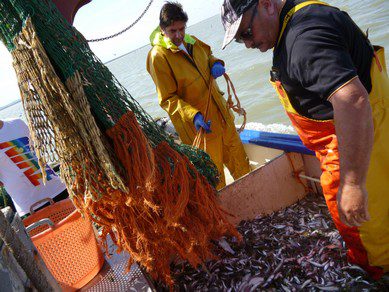
The landing obligation has since tied up the bureaucratic resources of government on the European stage to such an extent that the benefits of the regionalisation framework have yet to be felt in any major way. The top-down nature of the policy means that, as it is progressively introduced, neither fisheries managers nor the industry can yet see how parts of the fleet are going to be able to operate viably and lawfully. As an exasperated fisherman reflected to me in one of our regional committee meetings recently, “are they wanting to turn us into criminals?”
That sentiment is highly instructive. Fisheries policy should have learned from the past mistakes that led to the dark days of black-fish. Put people’s backs against the wall and prevent them from making a living and any sense of buy-in to the objectives of management and support for the rules evaporates, and governance breaks down. What else would you expect? Fortunately, those dark days, borne out of policy failure that had led to fisheries over exploitation, are now behind us and today we are an industry that by and large is over overwhelmingly law-abiding.
From Sustainable Fisheries Exploitation to the Discard Ban and Habitat Conservation
But while the basic fisheries exploitation issues are being resolved, the landing obligation represents a new challenge where the blunt nature of remote decision making threatens to foist unworkable rules on parts of the industry that could up-end fishing livelihoods and result in unintended consequences. At a more localised scale, another is represented by the emerging approach to manage fisheries in Marine Protected Areas (MPAs).
At least in the case of discards, waste is something that does easily chime with our industry. But while you won’t find many disagreeing with the sentiments to reduce it, the prerequisite has to be for the management system to effectively enable the industry to deal with it. The problem is that in the form of the landing obligation, we seem unlikely to be getting a workable arrangement.
The case for halting fishing in MPAs is different. With the exception of fragile and vulnerable habitats like reefs, where there is often common understanding, the case for withdrawing fishing from traditional fishing grounds on sediment habitats such as mud, sand and mixed sediments is a much more difficult sell to our industry. In many instances, local fishing communities have had no say at all over the location of an MPA that has landed on their historic fishing ground.
I’ve attended many a meeting with marine managers on MPAs where one of the first questions from industry is “what are you trying to protect?” When the answer comes back mud, sand or the like, it is typically met with an understandable furrowed brow, dumbfounded reaction, followed by “but it’s been there for umpteen years/decades with fishing activity taking place”, “its churned up by the weather what can I possibly be doing to it?” and “why are you picking on us and trying to put us out of business when you are letting the aggregates industry remove millions of tonnes of the stuff or allowing giant wind farms to be built on top of it?”
Interestingly, it seems it’s not only fishermen who are perplexed about the need or motivations for managing their activities in MPAs. At the start of the English process to build the network of Marine Conservation Zones (MCZs), a US practitioner reporting on the experience of completing California’s network of MPAs had reflected that the general public’s reaction there had been “well, so what?”
Some managers are toying with the idea of educational awareness raising. If only the people can be made to understand why feature A, B, C, etc needs protecting then they will buy-in to it so the logic goes. I have to say that was the attitude of conservationists in the 1980s and it was usually found wanting. I can’t think it’s going to have any more chance of success today, especially if it is unrelated to how the industry is expected to operate profitably and viably in the face of new restrictions.
Notwithstanding whether or not it is appropriate that traditional fishing grounds should be off limits as a consequence of an MPA, the problem is that few within government are planning on how the industry can continue to operate in the face of restrictions or giving the industry time to adapt. It is expected to work that out for itself. True, fishermen are opportunists by nature and have found ingenious ways of working with rules, but there is a limit. And if management is only about preventing people from carrying out their activities, for what is seen as a dubious objective, it hardly instils a sense of buy-in.
Co-management
An alternative strategy is co-management. This is one that brings industry within the ambit of the decision-making process and it in turn takes a degree of responsibility over the design of management and its implementation. When regulators and those who are regulated share the same agenda, there is less likely to be a compliance problem. The majority are likely to see the rules as norms and work against those who do not follow them. This instils a culture of compliance with a degree of self-policing.
For us, the regionalisation framework within the CFP is a prerequisite for enabling this to happen, whereby the central European institutions set the framework for management and its objectives, but industry working with scientists and managers, design measures in order to achieve those objectives; so called results-based management.
IFCAs
For inshore waters in England, the bodies who should be best placed to foster co-management solutions are the Inshore Fisheries and Conservation Authorities (IFCAs). When I first became involved in domestic fisheries in the early noughties, the IFCAs’ precursors, the Seas Fisheries Committees (SFCs) were in existence; local institutions to manage inshore fisheries with a heritage going back to the nineteenth century.
On paper they had the potential attributes for building successful co-management institutions, including operating at the right scale that brought with it an ability to build trust through easy communication and assimilation of local knowledge, and the ability to allow resource users to participate in management decision-making and have a degree of self-determination recognised by higher authorities. The idea of co-management was certainly in vogue as a response to the experiences of past management failure, and some SFCs, to greater or less extents, engaged with co-management strategies, although I think it is fair to say there were many false starts.
The MPA Bureaucratic Burden
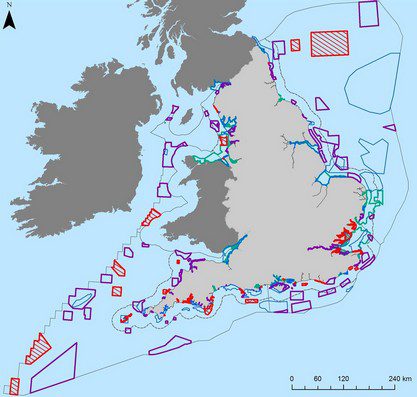
Then, in 2009, the Marine and Coastal Access Act came along and SFCs were replaced by the IFCAs. With strengthened legislative powers, and in particular a much stronger remit for conservation, they soon set out to devote the largest part of their work to the preparation of measures for the protection of Marine Protected Areas. Such areas now cover around a quarter of coastal waters (<12nm) with still more to designate.
As a consequence of this, you won’t hear anyone among the IFCAs talking about building co-management institutions these days. “There’s no time for it” one officer told me. It’s easy to see why when you take a look at the masses of bureaucracy that accompany each MPA designation.
Following the threat of legal challenge to the management of fisheries within MPAs by NGOs, government has been implementing a “revised” approach that has led to a raft of assessment and rule making procedures that Defra, the IFCAs and MMO are currently working through. In our efforts to defend the industry with a strengthened evidence base, we ourselves have dabbled in the fisheries risk assessments process associated with MPAs and I have just received 600 pages of assessments with the results of this work. The former head of marine at Natural England once referred to an “evidence arms-race” over MPAs. The mountain of paperwork currently being produced is testament to that.
Who are the Stakeholders?
But it’s not just that IFCAs are now preoccupied with things other than managing fisheries. The make-up of the Committees themselves has also seen a relative marginalisation of fishing industry interests as IFCAs have accommodated greater numbers of other stakeholders compared to their SFC predecessors.
The word “stakeholder” is a horrible term and it has typically been used by government in a vacuous way to mean anyone with an interest, but to my mind there is a clue in the word to what it should mean – i.e. someone who has a “stake” in the outcomes of the decisions being taken. An academic friend recently referred me to a presentation he had seen that deals with this issue by identifying that some stakeholders should really be classed as “opinion-holders” as they don’t have a direct stake in the decisions being taken, but who nonetheless have become an adopted and officially accepted part of management decision-making in fisheries.
A Retreating Government in the face of Lawlessness
The side-lining of the fisheries co-management agenda is of course also being influenced by ongoing cuts in public spending and we have yet to see where Defra intends to implement a further 15% of pending cuts.

The growing burden of new regulation, together with cuts to front-line enforcement duties is conspicuous and has not gone unnoticed by our industry. Many of our members lament that there has been a long-standing, but steadily growing lawlessness among unlicensed operators illegally trading fish. It’s not a victimless crime, commercial fishermen are losing out. Illegal bass, for instance, has been depressing the commercial markets and draconian measures proposed by the Commission for bass for next year will have no effect on this underworld.
Leave lawlessness festering for too long and at some point law-abiding people struggling under a mountain of rules will decide that they are better off on the other side. Once it becomes culturally embedded it becomes far more difficult to change behaviour. I’ve heard on a number of occasions of “untouchables” in unlicensed fishing that the police or enforcement authorities won’t go near, even if they do have time to allocate resources, which increasingly they don’t.
Government is in retreat. This ought to be seen as an opportunity to build institutions for co-management based on shared objectives between those being managed and those doing the managing. This would strengthen governance and buttress compliance at a time when there are fewer public enforcement resources.
Instead of doing that, top-down discards and conservation policies are taking up the finite public resources, and fisheries management institutions, which are less able or inclined to engage with the fishing industry, are about to become the bearer of rules that run against the grain of paying the bills and making a living. Managers are hoping that electronic monitoring is going to fill the void created by failing to build a foundation for acquiescence. It’s a poor alternative and relations between industry and managers look set to be in for a testing time. Perhaps those NGOs more interested in litigation and high level political lobbying than supporting people’s livelihoods should ask themselves “are we really helping?”.
Since 2014 the New
Economics Foundation has published a series of publications claiming that
European ministers consistently set fishing opportunities at levels higher than
scientific advice. The research is based
on comparing final Total Allowable Catch (TAC) decisions with the single stock
advice provided by ICES.
This analysis is misleading as it fails to account
for critical contextual considerations associated with using the ICES single
stock advice and falsely implies that it represents the entirety of the scientific
advice upon which Ministers’ should make TAC decisions.
The following aspects of the scientific assessment
advisory process applied in recent years have been ignored:
1. ICES first introduced Maximum Sustainable Yield
(MSY) advice for TACs in 2011 based on transitioning to MSY by 2015. As fisheries were not being managed to MSY reference
points before this date it is unsurprising that many were not being fished at
MSY at the time and that there would be the need for a period of
adjustment. Since 2014 ICES’s MSY advice
has been based on transitioning to MSY in the year that the advice
applies. The Commission acknowledges
that in cases where applying MSY would seriously jeopardise the social and
economic sustainability of the fleet, it is appropriate to reduce fishing
opportunities to align with MSY at a more gradual pace.
2. Advice is produced on a single stock basis but
most fisheries catch a mixture of species.
According to ICES“this
does not remove the need to modify stock-specific advice to take account of
technical interactions (e.g. bycatch in mixed-species fisheries) or of
biological interactions (e.g. predator–prey relationship)… For stocks exploited by mixed-species
fisheries, it may not be possible to achieve the single-stock MSY catch advice
for all the stocks simultaneously. Either the advised catches for some stocks
will be exceeded in trying to catch the TACs of other stocks, or the TACs for
some stocks will not be caught in order to prevent overshooting the TACs of
other stocks.” (1)
In the
case of the North Sea and Celtic Sea demersal stocks, ICES now present the
results of a mixed-species model, which according to ICES“provides information on catch composition
of different fisheries strategies to illustrate the trade-offs between the
strategies” (1). This is expected to be
applied by fisheries managers alongside the single species advice.
3. The single stock advice will usually describe
discards in the context of its advice, but other than assuming that fisheries
coming under the landing obligation will land the component of the catch that would
have previously have been accounted as discards, the advice takes no account of
the ability of the fleets concerned to be able to effectively reconcile the
implied TAC with the abundance of a stock on the fishing grounds. This can be at significant variance in cases
of sporadic recruitment spikes, for example, or in cases where the implied
single species TACs in mixed fisheries will generate heavy discarding of one or more species. The mixed fishery advice helps to scientifically inform this issue. Given that the landing obligation is now an integral part of the Common Fisheries Policy (CFP), addressing this matter is critical to the coherence of the whole CFP.
If fisheries were heading in the wrong direction and steadily depleting the resource, the aims of your analysis may have value, but on the whole in the north east Atlantic steady progress is being made towards high yield fisheries. UK fisheries are witnessing what is probably an unprecedented rate of recovery of stocks. 47% of our stocks were at full reproductive capacity in 2007 (2). By 2014, 91% of North Sea and 72% of western waters stocks had reached that mark (3).
In this context, a narrow fixation on only the divergence between ministers’ decisions and the outputs of single stock assessments at best only diverts attention from the complex issues associated with delivering the CFP, such as balancing the most radical change in fisheries management ever under the CFP, the landing obligation, with ensuring high yield fisheries and maintaining a viable fleet. These are not mutually exclusive issues, as your analysis assumes, they are interconnected. Your prescription, therefore, of a wholesale blind adherence to the outputs of these assessments would be no triumph of science over political short-termism. It would in reality be a triumph of dogma that in time would lead to a systemic failure of the CFP to deliver its objectives.
Your report, Landing the blame: Overfishing in EU waters 2001-2015, published in September calls for better transparency to improve the reputation of the CFP and the fishing industry. If organisations such as your own reported the correct understanding of the scientific-management process that must inform Ministers’ decisions beyond ICES initial single stock advice, and did not draw sweeping conclusions about one element of that advice and the final TAC decisions, then you could help to dispel some of the negative reputational myths that surround fisheries management, rather than add to them.
As an organisation that presents itself as a think tank that forms policy positions based on high quality ground-breaking research, we would suggest that you examine your own motives and reputation for undertaking a campaign on the basis of such a narrow analysis of the evidence.
Yours sincerely,
Dale Rodmell
Assistant Chief Executive
(1) Advice basis, ICES advice, 2015. http://www.ices.dk/sites/pub/Publication%20Reports/Advice/2015/2015/General_context_of_ICES_advice_2015.pdf
Discard Ban
The EU landings obligation represents a major threat to the great progress that has been made in recent years to put our fisheries on a sustainable footing. This is not because progressively moving towards the elimination of discards is a bad thing in itself but rather because of the way that the EU has gone about it. With no meaningful impact assessment, pitifully little has been done to understand how this, top-down, media inspired policy will be implemented.
The most serious aspect of the landings obligation is its potential to “choke” mixed fisheries; meaning that the exhaustion of one (potentially minor) quota would require vessels to tie up for the rest of the year, foregoing their main economic quotas. This could be disastrous yet we have yet to hear how chokes will be avoided. The tools and instruments currently available (quota flexibilities and exemptions) contribute but do not add up to a comprehensive solution.
This is of critical importance as so much hinges on it.
Fortunately we have been able to secure a degree of phasing and so are not faced with a Big Bang in 2016. However, 2017 and 2018 is a different story. It is going to take a great deal of work and political will to find a way through the massive series of problems created by an ego-driven chef and an opportunist Commissioner. The whole irony is that in most fisheries where the discards had been problem great progress had already been made in tackling it before Hugh’s Fishfight arrived on the scene. For example, in the North Sea round fish fishery for cod, haddock and whiting, the absolute level of discards had been reduced by 90% over the last 20 years; and progress was still being made. The other noteworthy statistic is that around 80% of EU discards were of only two species – plaice and dab.
The EU’s blundering policy, supported it has to be said, by UK fisheries ministers, has the capacity to derail our fisheries and put us back decades if not handled very sensitively from here on in.
Scientific Advice and Ministers’ Responsibility to Manage Fisheries
Jockeying for position in the run up to decisions on quotas for 2016 has already begun. The Council of Ministers is sometimes criticised for departing from the scientific recommendations on quotas. It is worth examining this claim because it’s frequently used to imply that ministers, under pressure from a powerful fishing lobby, duck their environmental responsibilities and are therefore directly responsible for stock depletion.
Taking a broad view, if it is true that the Commission and the Council of Ministers routinely set quotas that are unsustainable, it is a little difficult to explain how our fisheries are doing so well. At the annual State of the Stocks meeting, in Brussels, the Chairman of the ICES Advisory Committee, provided the definitive overview:
“Over the last ten to fifteen years, we have seen a general decline in fishing mortality in the Northeast Atlantic* and the Baltic Sea. The stocks have reacted positively to the reduced exploitation and we’re observing growing trends in stock sizes for most of the commercially important stocks. For the majority of stocks, it has been observed that fishing mortality has decreased to a level consistent with Maximum Sustainable Yield (MSY) – meaning levels that are not only sustainable but will also deliver high long term yields.”
(Our emphasis)
Eskild Kirkegaard,
Chair of the Advisory Committee,
International Council for Exploration of the Seas
This is an exceptionally important statement, not just because it was made by the authoritative international body with responsibility for assessing our fish stocks, but because it signals quite unambiguously that, as an industry, we are already on track to deliver high sustainable yields (maximum sustainable yield, in the jargon). There are of course individual stocks that buck these general trends and it is important to address the reasons for this. But there is no mistaking the signal coming from the scientific advice: after many years of difficulties and sacrifice, we are harvesting our stocks at a sustainable level that will deliver high quality food to the table in the long term. That is really something to celebrate.
Ministers’ Responsibilities
But turning to why quotas are sometimes set by ministers at levels different from the scientific recommendations: Is this irresponsibility, or are there justifiable reasons for this departure?
Essentially there are three main reasons why the quotas adopted might not align with the scientific advice:
The first relates to the fact that the scientific advice is for the most part provided on a single species basis. However, many species are caught in mixed fisheries which capture a range of species in the same gear. Cod, haddock and whiting for example are often caught together, although the ratios between the species can vary considerably from trip to trip, and even haul to haul. This means that a judgement must be made by fisheries managers on where to set the individual species quotas to secure the optimum outcome across all of the species caught. Sometimes this will mean setting an individual quota higher than would be the case on a single species basis; but the converse can be true: where individual quotas are set quotas are set lower than the single stock advice in order to reduce pressure on another species in the group.
Another reason why ministers might wish to set quotas higher than the single stock advice is for socio-economic reasons. Often this is related to timing. Rebuilding a biomass over two years rather than one year can make a huge difference for the livelihoods of the fishermen dependent on that stock but will mean that the same result is achieved over a slightly longer timeframe. Eastern Channel sole is a good example of this at the moment. ICES are obliged to provide their quota advice in relation to achieving maximum sustainable yield within the following year. The choice for managers therefore is a drastic reduction in quota in one year, or a more modest reduction spread over a slightly longer period. The scientific projections suggest that both options will deliver the biomass to maximum sustainable yield within the legally set timeframe (2020); but the mix of small-scale fleets and larger vessels dependent on this stock are more likely to maintain their viability under the second option. So ministers might decide to depart from the short-term advice secure in the knowledge that over the slightly longer term, the biomass targets will be reached.
Finally, given the public focus on discards in recent years, it is not unnatural that ministers will want to take into account when setting quotas whether their decisions will increase or reduce discards. The quota for North Sea cod has been set towards the upper end of the scientific catch options in recent years exactly in order to avoid wasting the resource by generating discards in mixed fisheries. The biomass has continued to build steadily.
All of this means that although quotas are fundamentally set in relation to the individual stock scientific advice, fisheries managers (in this case the Commission, the Council of Ministers and where relevant Norway) have a management responsibility that is broader than blindly following the unrefined scientific recommendations. In this ministers are acting to meet the legal requirements of the reformed Common Fisheries Policy: “The CFP shall ensure that fishing and aquaculture activities are environmentally sustainable in the long-term and are managed in a way that is consistent with the objectives of achieving economic, social and employment benefits, and of contributing to the availability of food supplies. “ Article 2:1 of the CFP Basic Regulation EU/1380/13.
The Challenge of Managing Mixed Fisheries
There is no doubt that managing fisheries which exploit more than a single species presents a range of extra challenges. In any given year the abundance of individual species within a mixed fishery assemblage might be going in divergent directions. It is also true that management decisions on quotas are also going to be more demanding in future. Fisheries managers will be legally required both to set quotas consistent with achieving maximum sustainable yield, and at the same time facilitate the progressive introduction of a landings obligation. Finding some way to bring coherence to setting individual quotas in a mixed fishery under these conditions is not for the faint hearted.
ICES has developed the concept of fishing mortality ranges to address this situation. Maximum sustainable yield is not necessarily best understood as a single point at the peak of the yield curve but an area at the top of the curve. Interpreting MSY in this way provides fisheries managers with a degree of flexibility to balance the quotas set for individual species caught within a mixed fishery. Coherence between TACs will be particularly important in the context of the landings obligation because vessels will no longer be permitted to discard a species for which the quota is exhausted.
F ranges are likely to be an important tool in the future but it is highly unlikely that they will on their own be able to completely resolve the problem of chokes under the landings obligation. Some NGOs have advocated the lowest common denominator solution: They argue that fishing should stop when the first quota in a mixed fishery is exhausted. Given that in many mixed fisheries there are many small bycatch quotas in place that could prevent fishing vessels, nations or the whole EU, from catching its main economic quotas, this would represent the Armageddon option. It would also be contrary to Article 2 of the CFP Regulation, as discussed above.
It is clear that if we want socially and economically, as well as an environmentally, sustainable fisheries, something is going to have to give. One idea would be to group minor species under a single quota heading, such as is already done in the Norwegian sector under ‘Norway others’. Care would have to be taken to prevent unacceptable over-exploitation of any individual species within the group and careful monitoring would be required. But this would be a way of avoiding chokes whilst still managing the exploitation rate of the stocks concerned. Another, more radical, suggestion would be to remove TAC status from a number of stocks that are not targeted as such but taken as bycatch. Again, monitoring the conservation status of these stocks and putting in place additional measures where necessary would be a necessary corollary of removing TAC status.
Finally, as fishing pressure has been progressively reduced, interspecies predation has increased in overall significance and will increasingly have to be taken into account in the future. In the North Sea this kind of natural mortality is already more significant that fishing mortality. All this highlights some of the issues currently being debated on how to best manage mixed fisheries in the future. None of this is easy. There is no silver bullet that removes the complexity inherent in managing mixed fisheries. We have some of the most complex fisheries in the world: multi-species, multi-gear and multi-jurisdiction.
NGO agenda
The task, however, is being made more difficult by a top-down agenda pursued by the NGO community. A steady determination to use Europe’s co-decision process to impose a rigid legal framework on the management of mixed fisheries has become evident. This is currently generating a great deal of heat in relation to the Baltic multi-annual management plan. This is important to us because the Baltic plan will be followed shortly after by proposals for North Sea and Western Waters mixed fishery plans. The NGOs want:
- To make biomass targets mandatory. However the CFP already requires the exploitation rate to be set at a level that provides a good probability that a low fishing mortality rate will deliver high biomass. The concept of biomass MSY is regarded as scientific illiteracy by mainstream fisheries scientists because there are so many other factors at work in the marine environment that it is not possible to guarantee that biomass targets would be achieved.
- To oblige ministers to use the lowest common denominator in setting TACs (in other words under-exploiting the main economic species in order to reduce exploitation on a minor bycatch species). If taken literally and put into practice this would have catastrophic social and economic consequences for fleets and ports. It would also be contrary to Article 2 of the CFP basic Regulation which explicitly requires the Commission and ministers to secure employment, economic and social benefits of sustainable exploitation of fish stocks.
- To remove some of the flexibility in setting quotas in relation to F ranges suggested by ICES: This would of course undermine the point of using ranges in the first place.
- More broadly, to constrain the jurisdiction of ministers to set TACs at an appropriate level taking all the factors mentioned above into account. (this issue has been referred to the European Court which will be asked to interpret the meaning of the Lisbon Treaty on this issue).
- Essentially these tactics, if successful, would reduce the scope for the kind of adaptive, pragmatic but scientifically informed, management of mixed fisheries that is required and replace it by an inflexible legal framework. This is all very unhelpful and dangerous not least because of the influence the NGOs have within the European Parliament.
Weird Timing
It is more than a little bizarre that this battle has emerged now, at a time after all the hard work has been done and 80% (by tonnage) of our stocks are already at MSY. Leaving aside the ongoing dispute over who has jurisdiction to set quotas, the debate about MSY is now focused on how to harvest the 5% or 10% at the top of the yield curve. This happy situation contrasts with the extreme rhetoric being used in the debate that would suggest that what is at stake is nothing less than the exposure of European fisheries to crass over-exploitation, stock depletion and potential collapse. But as we have seen above no less an authority than ICES has already explained that because of the measures already taken, we have already travelled the journey, not just to sustainable fishing, but to a position where we can deliver high long-term yields.
Just why the NGOs and their allies in the European Parliament have chosen to take this adversarial and legalistic approach, rather than celebrate the progress we have made, is another question which we will analyse elsewhere; but in an already complex area their public position is, to say the least, unhelpful.
Bass Requires Action not Overreaction
The Federation writes to the Minister on the need for a proportionate response to bass management.
Dear Minister
We would make four points as we move towards the December Council and critically important decisions on bass.
- The emerging scientific advice on bass indicates that successive below-average year classes and an overall fishing mortality that is too high, requires remedial action.
- Landings statistics make plain that a very large number of fishermen, using a range of gears, depend on bass for a significant part of their annual income.
- The history of the CFP is littered with examples where clumsy measures have made things worse rather than better.
- The Commission’s Proposal, which amounts in effect to a moratorium on bass, is driven by the legally binding but wholly arbitrary requirement to reach MSY by 2016 or 2020 at the latest.
Against this background we consider that it is important that the UK takes a measured and proportionate position at the December Council.
A moratorium would have devastating social and economic consequences. The science on bass gives cause for concern; but it does not justify overreaction. Catch limits, an increased minimum conservation reference size and bag limits have been in place for under a year; it takes time for the effect of measures to work through.
Against this difficult background, we urge you to position the UK to:
- Reject the Commission’s proposal.
- Support proportionate step-wise measures – but only after the efficacy of those measures that have already been put in place have been properly evaluated.
- Recognise the multi-faceted dimension of the bass fishery and therefore the need for measures tailored to the specifics of each fishery.
- Take account of the potential for unintended consequences, not least the scope to generate a significant discard problem where none existed.
On this latter point, it is important to learn the lessons of the recent past, where ministers have not infrequently agreed eye-catching blanket measures that deliver much less than hoped for. The obvious example is North Sea cod, ministers’ actions resulted in a dramatic increase in discards, which can only have impeded recovery. A more intelligent and effective approach only emerged later. We think that this is an important lesson that has significance for bass.
The most important step to be taken in the present circumstances is to establish an effective dialogue between fishermen who rely on bass for their livelihoods, fisheries scientists and fisheries administrators as to what measures would work and which not work in their fleet sector. Because of the complexity of the bass fishery it is metier specific measures that are required and the old discredited blanket knee-jerk carries a risk of making things worse.
Tony Delahunty
NFFO Chairman
Pew Response Fails to Address EU Fishing Sector Concerns Over Misleading Information
It is disappointing that your response fails to address the issues that we have raised. We drew attention to the startling divergence between the International Council for the Exploration of the Seas (ICES) view and Pew’s claims about
fishing pressure and the state of the stocks off North Western Europe.
To reiterate, ICES is unambiguous:
“Over the last ten to fifteen years, we have seen a general decline in fishing mortality in the Northeast Atlantic and the Baltic Sea. The stocks have reacted positively to the reduced exploitation and we’re observing growing trends in stock sizes for most of the commercially important stocks. For the majority of stocks, it has been observed that fishing mortality has decreased to a level consistent with Maximum Sustainable Yield (MSY) – meaning levels that are not only sustainable but will also deliver high long term yields.”
Eskild Kirkegaard, Chair, ICES Advisory Committee
By contrast, Turning the Tide, makes the assertion that:
- Fishing in recent decades, in pursuit of food and profit, off North West Europe has dramatically expanded
- Calls by scientists and environmentalists to reduce fishing pressure have been ignored
- Many fish stocks collapsed throughout the region
- The reformed CFP should prove a successful first step in restoring and maintaining the health of the fisheries and fish stocks
Both descriptions cannot be true.
It is not clear from your letter whether you consider that ICES science is wrong, or inadequate, or whether you think there has been a dramatic recovery in fish stocks since March. We still remain in the dark about your motivations for publishing such a misleading report.
The above graph representing 50 stocks is taken from ICES and illustrates that from the year 2000 there has been a dramatic reduction in fishing mortality in the North East Atlantic and this accounts for ICES’ conclusions that we are not only fishing sustainably but are on track to deliver high long term yields (MSY).
We look forward to your response.
Javier Garat Pim Visser
President of Europêche President of EAPO
Death Throes of the Drift Net Ban
A rather bureaucratic exchange of letters between Commissioner Vella and the Chairman of the European Parliament Fisheries Committee signals the demise of the ill-founded proposal to ban small-scale drift nets. The proposal has been hanging around for the best part of two years waiting for someone to finish it off.
A rather bureaucratic exchange of letters between Commissioner Vella and the Chairman of the European Parliament Fisheries Committee signals the demise of the ill-founded proposal to ban small-scale drift nets. The proposal has been hanging around for the best part of two years waiting for someone to finish it off.
The proposal to ban small-scale drift nets emerged at the tail end of the previous Commissioner’s period of tenure before she left to take up a highly paid position with an international NGO. Her going-away present to the fishing industry has been a huge embarrassment to her successor who now is keen to bury it with as little fuss as possible.
A poorly considered, top-down, blanket measure, published with next to no consultation, the proposed ban was a reminder that the reformed CFP still has the capacity to make clumsy and frankly, stupid, legislation. If adopted it would have spelt the end of a significant number of sustainable small-scale fisheries.
The NFFO led a delegation of small-scale drift net fishermen from various parts of the UK to meet the Commission in September 2014 to argue strongly against a ban. The North Sea Advisory Council shortly afterwards adopted a very good paper, prepared by RSPB, opposing a blanket ban and recommending a case by case approach by regional member states.
Member states voiced uneasiness in Council and it was clear that the proposal was going nowhere.
The Commissioner’s letter now suggests that any issues relating to drift nets could be dealt with within the context of the new Technical Conservation framework, which we expect will emerge shortly and which will provide scope for a regionalised approach. The
“current drift net proposal would …. be overtaken by this new proposal, said the Commissioner.”
Tony Delahunty, Chairman of the NFFO, said in statement,
“It was vital that we won this one. The Commission’s blanket proposal had no supporting evidence and emerged to address problems in the Mediterranean. It was the worst example of inappropriate, top-down, measures that we had seen for a while. We can’t relax completely but it is very important that we have successful defeated this proposal and this letter is an important marker. And in the meantime small-scale drift-net fishermen can continue to fish sustainably.”
A Diverse Fleet
Fisherman David Warwick explains why the diversity in the British fleet is one of the industry’s greatest strengths.
I’ve been in the industry for 27 years, the last 19 as the skipper of my own boat, the Valhalla. She’s 10.5 metres long and there’s just two of us in the crew. My catch is quite mixed, picking up cod and haddock, as well as whiting, lemon sole, plaice, cuttlefish, monkfish and squid. Fishing out of Mevagissey and landing our fish in Plymouth means that we regularly come into contact with boats of all sizes – and we can see just how valuable each type is to the industry.
You often hear people attacking big boats for being ‘unsustainable’ but the truth is it doesn’t matter how big your vessel is – sustainability is about how you fish, not size.
Of course there are quota shortages for small and inshore fishermen, but I’ve heard the argument for reallocating quota from big boats to boats such as mine, and put simply it just doesn’t make sense. I wouldn’t be able to catch the shoals they target if I tried.
Give me quota for Atlanto-Scandian Herring and there’s not a chance in hell my little boat could safely make the trip to reach those grounds, let alone land enough to make it worth my while. Bigger boats are far more suited to fishing on the open sea and that’s the fact of the matter, having a big boat fleet is also really important when it comes to landing our fish. A lot of people don’t realise the scale of the port infrastructure required, and how many employees are needed, to efficiently process all the fish that are landed. These businesses rely on boats regularly landing a large volume of fish and if they aren’t getting that they tend to pack up and leave – which can really damage the businesses of small fishermen. This happened in Lowestoft in the mid-1990s – the large trawlers left and took the port facilities with them as they just couldn’t operate sustainably anymore. Fishermen like me were badly hit, with many having to switch ports or simply tie their boats up. We all need to work together to ensure that our industry is resilient – and diversity is one of the most important ways of doing this.
I am a proud British fisherman; you just have to look at the history of our fleets, and the quality and variety of fish we land to see that it sets us apart from many others. We’ve built that reputation for quality over the years and it’s great that being British still holds some weight in the international arena. I’d hate to see our fleet become divided and cut down, and our reputation along with it.
In over 25 years in the fishing industry I’ve seen a lot of changes and learnt a lot of lessons – and one thing still sticks out in my mind, big and small boats need each other for the UK to have a balanced fishing industry. Certain environmental groups claim to be supporting small scale fishermen against big boats but they clearly don’t understand the importance of the interdependence between different sectors of the British fleet.
In any event, after many false starts, the signs are that
the Commission’s proposal for a new technical conservation framework regulation
will shortly see the light of day.
The description of the regulation as a framework is significant because the idea is that, over time, the new
Regulation will provide for regionally distinct technical measures, developed
for each sea basin by member states working collaboratively. In that sense this
regulation will be very different from its predecessor and represents something
of a shift away in concept from centralised top-down control and
micro-management.
The soon-to-be-replaced regulation amounts to a series of
“thou shalt not” rules. By contrast, the new framework regulation will aim to
be a vehicle for:
- Simplification
- Consolidation
- Regionalisation
- Compatibility with the landings obligation
- Deletion of a number of ruled where they are no
longer justified
The aim is that the new regulation will be about managing the transition to a new era in fisheries
management in which regionalisation and the landings obligation take centre
stage, along with multi-annual management plans. Leaving aside, for the moment,
the potentially massive issue of chokes in mixed fisheries, the logic of the
landings obligation will mean that there will be a very strong economic
incentive for vessels to reduce unwanted catch to a minimum. In its purest form
this should mean that no rules on gear selectivity or minimum conservation
sizes will be necessary – so long as there is confidence that all catches of
quota species are recorded and count against quota.
But pending regionalisation and a fully operational landings
obligation, the Commission wants to see a number of baseline technical measures
retained as a kind of safety net.
Structure
Coverage: the new regulation will cover all EU waters and
will also apply to EU vessels operating in NEAFC waters and in the
Mediterranean.
Objectives: The objective of the regulation will be linked
to a number of measurable targets. What these targets will mean in practice is
unclear as yet.
Common measures: A number of measures to protect seabirds,
cetaceans and vulnerable habitats will be included, along with scope to include
provisions on the construction of fishing gears, if necessary, through
delegated act
Drift nets: The proposed blanket ban on drift nets has been
withdrawn and replaced with scope for regionally specific measures, where
justified
Regionalisation: There will be scope for a regional annex for
each sea basin. Regional measures will have to meet certain objectives and
targets linked to the CFP; there will be a number of default measures for each
sea basin which for the most part align with the current status quo.
Nature Conservation: Where regional member states wish to go
further that the basic levels of protection for sensitive habitats etc.
Technical Rules: including repeal of redundant regulations,
no catch composition rules; baseline mesh sizes; minimum conservation reference
sizes
Next Steps
The new proposal is currently in inter-service consultations
but it is expected that it will be adopted by the College of Commissioners
shortly. A period of consultation will follow with the new regime coming into
force in around 18 months. It is to be hoped that the European Parliament is
not tempted to add layers of complexity to the new regulation as it passes
through the co-decision process. The one thing that we have learned, above all
others, from past mistakes is that in the area of technical conservation,
top-down blanket measures rarely make sense at the level of individual fishery.
The attached photo is taken of a
typical days catch from my vessel during last year’s spring fishery. I use
100ml sole trammel nets: please note the amount of bass.
Two points of significance: In this
fishery bass can’t be avoided and would have to be discarded if a moratorium
on bass comes in force. Secondly, bass in my area have increased over the last
few years from just odd fish some times, perhaps half a box of mainly small
fish, to three, sometimes four or five boxes of large mature fish suggesting a
large increase in the stock, not the drastic decrease claimed. I have fished
the same spot, shooting the nets from March to June on the same
tracks for over twenty years now so have a good knowledge of
fluctuations in the local stocks.
This year’s O group recruitment
is reported to be very good, this is backed up to me by a friend whose eel
fluke nets have been clogged by thumb nail sized bass at the top of the river
Stour this summer. This at least raises questions about the the evidence to
justify the draconian measures the EU are threatening to put in place.
In my mind it is non- negotiable that
what is in place is already way over the top as it is and not another
single restriction should be even discussed .
The
increase in landing size to 42cm earlier this year, has effectively closed
down all inshore and estuary fisheries in the Stour and Orwell upper
Thames and Medway estuaries, (along with traditional small fish
fisheries like the Solent and many such places all around the UK) as 99%
of bass targeted in these waters would have been under 42 cm. With a ton a
month restricting the higher catchers and juvenile bass protected EU wide what
more could possibly be needed ?
I’ve been in the industry for 27 years, the last 19 as the skipper of my own boat, the Valhalla. She’s 10.5 metres long and there’s just two of us in the crew. My catch is quite mixed, picking up cod and haddock, as well as whiting, lemon sole, plaice, cuttlefish, monkfish and squid. Fishing out of Mevagissey and landing our fish in Plymouth means that we regularly come into contact with boats of all sizes – and we can see just how valuable each type is to the industry.
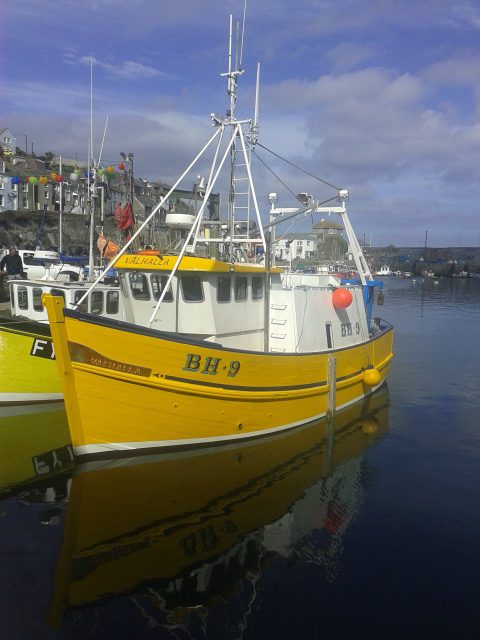
You often hear people attacking big boats for being ‘unsustainable’ but the truth is it doesn’t matter how big your vessel is – sustainability is about how you fish, not size.
Of course there are quota shortages for small and inshore fishermen, but I’ve heard the argument for reallocating quota from big boats to boats such as mine, and put simply it just doesn’t make sense. I wouldn’t be able to catch the shoals they target if I tried.
Give me quota for Atlanto-Scandian Herring and there’s not a chance in hell my little boat could safely make the trip to reach those grounds, let alone land enough to make it worth my while. Bigger boats are far more suited to fishing on the open sea and that’s the fact of the matter, having a big boat fleet is also really important when it comes to landing our fish. A lot of people don’t realise the scale of the port infrastructure required, and how many employees are needed, to efficiently process all the fish that are landed. These businesses rely on boats regularly landing a large volume of fish and if they aren’t getting that they tend to pack up and leave – which can really damage the businesses of small fishermen. This happened in Lowestoft in the mid-1990s – the large trawlers left and took the port facilities with them as they just couldn’t operate sustainably anymore. Fishermen like me were badly hit, with many having to switch ports or simply tie their boats up. We all need to work together to ensure that our industry is resilient – and diversity is one of the most important ways of doing this.
I am a proud British fisherman; you just have to look at the history of our fleets, and the quality and variety of fish we land to see that it sets us apart from many others. We’ve built that reputation for quality over the years and it’s great that being British still holds some weight in the international arena. I’d hate to see our fleet become divided and cut down, and our reputation along with it.
In over 25 years in the fishing industry I’ve seen a lot of changes and learnt a lot of lessons – and one thing still sticks out in my mind, big and small boats need each other for the UK to have a balanced fishing industry. Certain environmental groups claim to be supporting small scale fishermen against big boats but they clearly don’t understand the importance of the interdependence between different sectors of the British fleet.
“We are still absorbing the measures that were put in place
for this year. It is important that we understand their effect before putting
additional measures forward.”
He added that it is important that the fishing
industry does not splinter and fragment over bass.
“There are signs of splits and fragmentation within the
industry about what to do about bass”, he said, “especially on social media.”
“The science points to a number of poor year classes, and
overall fishing pressure is too high. There is no escaping the reality that we
need to take our foot off the accelerator to ensure that the downward trends
are reversed. However, the focus is in danger of slipping from what sensibly should be done and what steps
taken, to a destructive argument over who is to blame and who should bear the
weight of additional conservation measures. The Commission’s overreaction in
the form of a proposal to apply a moratorium on bass fishing, would carry
devastating consequences right around the coast.”
“We need to stay united as an industry and not dilute our
demand for effective but proportionate, and above all intelligent measures. We know what damage can be done both to the
industry and effective conservation, when political knee jerks win the day: clumsy
measures; unintended consequences; and perverse outcomes, such as discarding of
a valuable resource.”
“A huge number of fishermen are dependent on bass for a
significant part of their annual income. We are all in this together and we
should fight together. The burden of rebuilding the stock should be fairly
shared. Because there is no silver bullet
for bass, rebuilding the stocks will require a range of tailored sectoral
measures to put things back on track. It may take some time but the most
important thing is to ensure that we are moving in the right direction.”
The Federation has written to the Minister on the need for a proportionate response to bass management.
Dear Minister
We would make four points as we move towards the December
Council and critically important decisions on bass.
1. The emerging scientific advice on bass indicates that
successive below-average year classes and an overall fishing mortality that is
too high, requires remedial action.
2. Landings statistics make plain that a very large number
of fishermen, using a range of gears, depend on bass for a significant part of
their annual income.
3. The history of the CFP is littered with examples where
clumsy measures have made things worse rather than better
4. The Commission’s Proposal, which amounts in effect to a
moratorium on bass, is driven by the legally binding but wholly arbitrary
requirement to reach MSY by 2016 or 2020 at the latest.
Against this background we consider that it is important
that the UK takes a measured and proportionate position at the December
Council.
A moratorium would have devastating social and economic
consequences. The science on bass gives cause for concern; but it does not
justify overreaction. Catch limits, an increased minimum conservation reference
size and bag limits have been in place for under a year; it takes time for the
effect of measures to work through.
Against this difficult background, we urge you to position
the UK to:
1. Reject the Commission’s proposal
2. Support proportionate
step-wise measures – but only after the efficacy of those measures that have
already been put in place have been properly evaluated
4. Recognise the multi-faceted dimension of the bass fishery
and therefore the need for measures tailored to the specifics of each fishery
5. Take account of the potential for unintended
consequences, not least the scope to generate a significant discard problem
where none existed
On this latter point, it is important to learn the lessons
of the recent past, where ministers have not infrequently agreed eye-catching
blanket measures that deliver much less than hoped for. The obvious example is North
Sea cod, ministers’ actions resulted in a dramatic increase in discards, which
can only have impeded recovery. A more intelligent and effective approach only
emerged later. We think that this is an important lesson that has significance
for bass.
The most important step to be taken in the present
circumstances is to establish an effective dialogue between fishermen who rely
on bass for their livelihoods, fisheries scientists and fisheries
administrators as to what measures would work and which not work in their fleet
sector. Because of the complexity of the bass fishery it is metier specific
measures that are required and the old discredited blanket knee-jerk carries a
risk of making things worse.
Tony Delahunty
NFFO Chairman
To reiterate, ICES is unambiguous:
“Over the last ten to fifteen years, we have seen a general decline in fishing mortality in the Northeast Atlantic and the Baltic Sea. The stocks have reacted positively to the reduced exploitation and we’re observing growing trends in stock sizes for most of the commercially important stocks. For the majority of stocks, it has been observed that fishing mortality has decreased to a level consistent with Maximum Sustainable Yield (MSY) – meaning levels that are not only sustainable but will also deliver high long term yields.”
Eskild Kirkegaard, Chair, ICES Advisory Committee
By contrast, Turning the Tide, makes the assertion that:
- Fishing in recent decades, in pursuit of food and profit, off North West Europe has dramatically expanded
- Calls by scientists and environmentalists to reduce fishing pressure have been ignored
- Many fish stocks collapsed throughout the region
- The reformed CFP should prove a successful first step in restoring and maintaining the health of the fisheries and fish stocks
Both descriptions cannot be true.
It is not clear from your letter whether you consider that ICES science is wrong, or inadequate, or whether you think there has been a dramatic recovery in fish stocks since March. We still remain in the dark about your motivations for publishing such a misleading report.
The above graph representing 50 stocks is taken from ICES and illustrates that from the year 2000 there has been a dramatic reduction in fishing mortality in the North East Atlantic and this accounts for ICES’ conclusions that we are not only fishing sustainably but are on track to deliver high long term yields (MSY).
We look forward to your response.
Javier Garat Pim Visser
President of Europêche President of EAPO
A rather bureaucratic exchange of letters between Commissioner Vella
and the Chairman of the European Parliament Fisheries Committee signals the
demise of the ill-founded proposal to ban small-scale drift nets. The proposal
has been hanging around for the best part of two years waiting for someone to
finish it off.
The proposal to ban small-scale drift nets emerged at the tail end of
the previous Commissioner’s period of tenure before she left to take up a
highly paid position with an international NGO. Her going-away present to the
fishing industry has been a huge embarrassment to her successor who now is keen
to bury it with as little fuss as possible.
A poorly considered, top-down, blanket measure, published with next to
no consultation, the proposed ban was a reminder that the reformed CFP still
has the capacity to make clumsy and frankly, stupid, legislation. If adopted it
would have spelt the end of a significant number of sustainable small-scale
fisheries.
The NFFO led a delegation of small-scale drift net fishermen from
various parts of the UK to meet the Commission in September 2014 to argue
strongly against a ban. The North Sea Advisory Council shortly afterwards adopted
a very good paper, prepared by RSPB, opposing a blanket ban and recommending a
case by case approach by regional member states.
Member states voiced uneasiness in Council and it was clear that the
proposal was going nowhere.
The Commissioner’s letter now suggests that any issues relating to
drift nets could be dealt with within the context of the new Technical
Conservation framework, which we expect will emerge shortly and which will
provide scope for a regionalised approach. The “current drift net proposal
would …. be overtaken by this new proposal, said the Commissioner.”
Tony Delahunty, Chairman of the NFFO, said in
statement, “It was vital that we won this one. The Commission’s blanket
proposal had no supporting evidence and emerged to address problems in the
Mediterranean. It was the worst example of inappropriate, top-down, measures
that we had seen for a while. We can’t relax completely but it is very
important that we have successful defeated this proposal and this letter is an
important marker. And in the meantime small-scale drift-net fishermen can
continue to fish sustainably.”
Steve
said: “I am pleased to be joined by
prominent industry representatives from around the coast. We have a diversity of shellfish and finfish
fisheries in the region and it is important that all are represented when
undertaking our work and forming policy positions”.
“There
is a lot of work to do. The region has
one of the greatest concentrations of designated and proposed MPAs in the
country, as well as offshore wind farms, and it is essential that we defend our
fishing grounds by having a collective voice making our case with reasoned
argument.”
“The
job is no less demanding to protect fisheries themselves. New proposals from the Commission on bass for
2016 that include a 6 month prohibition have come as a big shock. Although there is a need to return the
fishery to long term sustainability, it has to be done in a way that does not
sacrifice the very existence of the industry that is highly dependent upon it”,
he said.
Back
in the spring, when the Committee was formed, it was quick out of the starting
blocks to respond to the emergency whelk byelaw introduced by the Eastern IFCA
and in formulating a long-term proposal for the management of the
fisheries. Steve said: “this is the
first test to see the region’s industry as a whole come together to put forward
its own well thought out policy proposals that keeps the active fleet viable,
whilst maintaining the productivity of the stocks. This will be an important litmus test to see
how the Eastern IFCA reacts to our suggestions.
We are keen to build up a productive working relationship with the IFCA
and I think it is in all of our interests to see that happen.”
At
its meeting on Thursday, the Committee moved on from the whelk fishery to start
to examine brown crab management with view to developing its policy position
further at future meetings of the Committee.
In addition, the Committee:
- reviewed
emerging MPA proposals and management measures, as well as recent marine
renewables licence applications and fisheries liaison practices. - assessed
the progress of measures to introduce the demersal landing obligation and
potential difficulties for the local fisheries, including managing brown shrimp
by-catch, and zero TAC stocks such as spurdog as the landing obligation is
progressively introduced. - discussed
proposals for the under 15m safety code of practice regulations and the provision
of safety equipment and training support to members.
The next meeting of
the Committee is tabled for 4th February.
The report makes the assertion that:
- Fishing in recent decades, in
pursuit of food and profit, off North West Europe has dramatically
expanded - Calls by scientists and
environmentalists to reduce fishing pressure have been ignored - Many fish stocks collapsed
throughout the region - The reformed CFP should
prove a successful first
step in restoring and maintaining the health of the fisheries and fish
stocks
The unambiguous view of the scientific community has been clearly stated, most
recently at the State of
the Stocks Seminar in Brussels:
“Over the last ten to
fifteen years, we have seen a general decline in fishing mortality in the
Northeast Atlantic and the Baltic Sea. The stocks have reacted positively to
the reduced exploitation and we’re observing growing trends in stock sizes for
most of the commercially important stocks.
For the majority of
stocks, it has been observed that fishing mortality has decreased to a level
consistent with Maximum Sustainable Yield (MSY) – meaning levels that are not
only sustainable but will also deliver high long term yields.”
(Eskild Kirkegaard, Chair, ICES Advisory Committee)
In fact, the data confirming these general trends has been available in the
ICES advice for several years, for those who wished to look with unbiased eyes.
The motives for Pew to publish misleading and untrue statements, remain obscure
but this is not a matter of misinterpretation of data or different opinion.
These statements are clearly part of an organized coherent campaign to
influence legislators. But they are untruths and Pew must know that they are
untruths.
We all have our different opinions and different constituents to please. But it
is becoming increasingly difficult to accept that Pew acts in good faith when
it publishes deliberately misleading reports like this. Neither should it have
escaped your notice that the scientific community at a recent conference on MSY
in Athens, also expressed concern about the lack of transparency in NGOs’ use
of science.
For the record, we firmly believe that eNGOs have a legitimate and important
role to play in fisheries. It is healthy for the industry and fisheries
managers to be held to account for their actions and practices. There is always
room for improvement and there is a legitimate role for NGOs to suggest where
improvements could be made.
However, even if you are openly contemptuous of the opinion of the fishing
industry, we urge you to examine your own motives, tactics and reputation and
ask yourselves what is achieved by these publishing deliberately misleading
statements. It goes without saying that organisations publishing so far beyond
obvious realities and scientific facts are losing out to more serious and
rational NGOs and are undoubtedly relinquishing all impact and credibility in
influential fora such as the Advisory Councils.
Yours sincerely,
Javier Garat
Pim
Visser
President of Europêche
President of EAPO
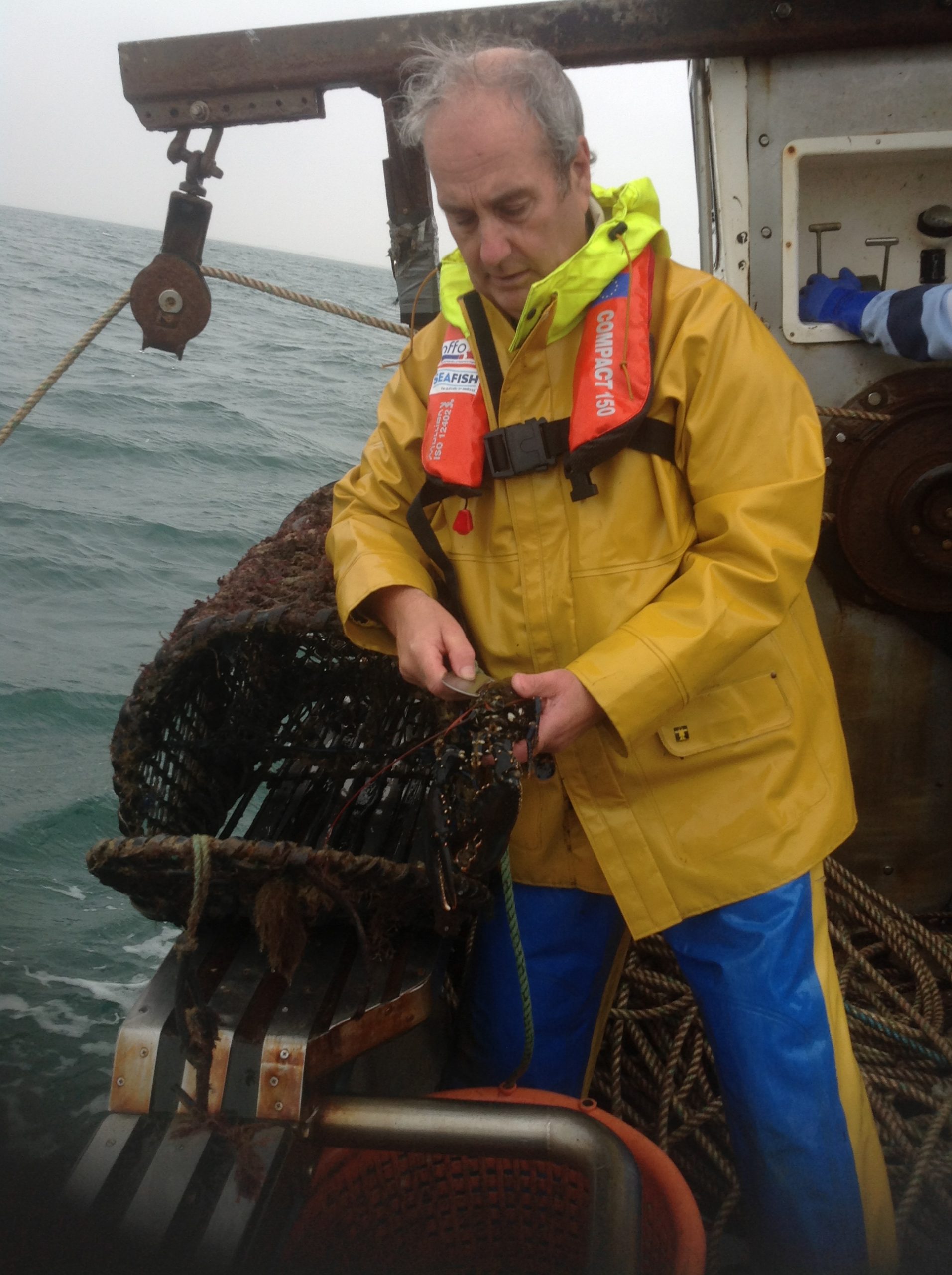
After more than 40 years as the skipper owner of a small boat fishing out of Selsey, a tight knit community, I’ve seen the industry undergo a huge number of changes – but I also have a great deal of hope for the future.
Selsey’s fishing community has been established since Roman times and is famous for crabs, lobster and prawns. One of the old fishermen, who has since passed away, used to sell his prawns and lobsters to the Queen Mary liner at a princely sum of a guinea a pound – which shows how far things have come! All the boats at Selsey are 12 metres and under and some of the fishermen come from fishing families that go back generations. Even now my son Peter is an integral member of our small crew of three, along with Wayne who has been with me since he left school.
A typical day for us can vary a lot. We start anytime between 3:00am – 7:00am, depending on the weather and tide. I often ring my son to check he’s up and ready!
As my boat is on an open sea mooring, we reach it from a tender, a boat that looks like a dinghie, launched from an exposed beach, which can certainly be a challenge. We fish up to an eight mile radius and the boat is usually at sea for 6 – 8 hours per trip. The grounds where we fish for crab and lobster are made up of large rocky reefs with depths varying from 100 feet to drying out on a spring tide. The pots are left out 52 weeks of the year and are hauled as frequently as weather allows. Even though our main catch is crab and lobster, during the course of the year we also catch whelks, cuttlefish, bass, soles, plaice, skates and rays.
At Selsey we are committed to fishing sustainably and all the boats have voluntary fitted escape hatches to our pots. This allows juvenile crabs and lobster to escape, which cuts mortality to a minimum. After each string of pots is hauled any lobster and crabs that meet the minimum landing size are stored in bins with running sea water to avoid any stress and keep them in prime condition. When landed they are taken directly to market in a refrigerated van. I sell my shellfish to Brighton and Newhaven Fish Sales, a company I have dealt with for over 25 years. They market my product to local hotels and restaurants along the South Coast and some famous restaurants in London. Our product is fresh daily and sustainable with the bonus of a low carbon footprint, which is good news for me as I get a premium price for my catch.
I feel the future looks good for the next generation of fishermen in our area and across the UK and Europe. The number of stocks at Maximum Sustainable Yield (a key measure of sustainability) has now reached 36 – up from just two in 2003. The much maligned North Sea cod has now also been taken off the red ‘do not eat’ list by a key industry body, showing a vast improvement in the health of that stock. Among these and other key sustainability measures it shows the industry is acting positively to contribute to sustainability – and it’s having the right effect.
Taking
a broad view, if it is true that the Commission and the Council of Ministers
routinely set quotas that are unsustainable, it is a little difficult to
explain how our fisheries are doing so well. At the annual State of the Stocks meeting, in Brussels, the Chairman of the ICES
Advisory Committee, provided the definitive overview:
“Over
the last ten to fifteen years, we have seen a general decline in fishing
mortality in the Northeast Atlantic* and the Baltic Sea. The stocks have
reacted positively to the reduced exploitation and we’re observing growing
trends in stock sizes for most of the commercially important stocks. For the
majority of stocks, it has been observed that fishing mortality has decreased
to a level consistent with Maximum Sustainable Yield (MSY) – meaning levels
that are not only sustainable but will
also deliver high long term yields.” (Our emphasis)
Eskild Kirkegaard,
Chair of the Advisory Committee,
International Council for
Exploration of the Seas
This is an exceptionally important
statement, not just because it was made by the authoritative international body
with responsibility for assessing our fish stocks, but because it signals quite
unambiguously that, as an industry, we are already on track to deliver high
sustainable yields (maximum sustainable yield, in the jargon). There are of
course individual stocks that buck these general trends and it is important to
address the reasons for this. But there is no mistaking the signal coming from
the scientific advice: after many years of difficulties and sacrifice, we are
harvesting our stocks at a sustainable level that will deliver high quality
food to the table in the long term. That is really something to celebrate.
Ministers’ Responsibilities
But turning to why quotas
are sometimes set by ministers at levels different from the scientific
recommendations: Is this irresponsibility, or are there justifiable reasons for
this departure?
Essentially there are three
main reasons why the quotas adopted might not align with the scientific advice:
The first relates to the
fact that the scientific advice is for the most part provided on a single
species basis. However, many species are caught in mixed fisheries which capture a range of species in the same gear.
Cod, haddock and whiting for example are often caught together, although the
ratios between the species can vary considerably from trip to trip, and even
haul to haul. This means that a judgement must be made by fisheries managers on where to set the individual species quotas to
secure the optimum outcome across all of the species caught. Sometimes this
will mean setting an individual quota higher than would be the case on a single
species basis; but the converse can be true: where individual quotas are set
quotas are set lower than the single stock advice in order to reduce pressure
on another species in the group.
Another reason why
ministers might wish to set quotas higher than the single stock advice is for
socio-economic reasons. Often this is related to timing. Rebuilding a biomass
over two years rather than one year can make a huge difference for the
livelihoods of the fishermen dependent on that stock but will mean that the
same result is achieved over a slightly longer timeframe. Eastern Channel sole
is a good example of this at the moment. ICES are obliged to provide their
quota advice in relation to achieving maximum sustainable yield within the
following year. The choice for managers therefore is a drastic reduction in
quota in one year, or a more modest reduction spread over a slightly longer
period. The scientific projections suggest that both options will deliver the
biomass to maximum sustainable yield within the legally set timeframe (2020);
but the mix of small-scale fleets and larger vessels dependent on this stock
are more likely to maintain their viability under the second option. So
ministers might decide to depart from the short-term advice secure in the
knowledge that over the slightly longer term, the biomass targets will be
reached.
Finally, given the public
focus on discards in recent years, it is not unnatural that ministers will want
to take into account when setting quotas whether their decisions will increase
or reduce discards. The quota for North Sea cod has been set towards the upper
end of the scientific catch options in recent years exactly in order to avoid
wasting the resource by generating discards in mixed fisheries. The biomass has
continued to build steadily.
All of this means that
although quotas are fundamentally set in relation to the individual stock
scientific advice, fisheries managers (in this case the Commission, the Council
of Ministers and where relevant Norway) have a management responsibility
that is broader than blindly following the unrefined scientific
recommendations. In this ministers are acting to meet the legal requirements of
the reformed Common Fisheries Policy:“The CFP
shall ensure that fishing and aquaculture activities are environmentally
sustainable in the long-term and are managed in a way that is consistent with
the objectives of achieving economic, social and employment benefits, and of
contributing to the availability of food supplies. “ Article 2:1 of the CFP
Basic Regulation EU/1380/13
The challenge of managing mixed fisheries
There is no doubt that
managing fisheries which exploit more than a single species presents a range of
extra challenges. In any given year the abundance of individual species within
a mixed fishery assemblage might be going in divergent directions. It is also
true that management decisions on quotas are also going to be more demanding in
future. Fisheries managers will be
legally required both to set quotas consistent with achieving maximum
sustainable yield, and at the same time facilitate the progressive introduction
of a landings obligation. Finding some way to bring coherence to setting
individual quotas in a mixed fishery under these conditions is not for the
faint hearted.
ICES has developed the
concept of fishing mortality ranges
to address this situation. Maximum sustainable yield is not necessarily best
understood as a single point at the
peak of the yield curve but an area at
the top of the curve. Interpreting MSY in this way provides fisheries managers
with a degree of flexibility to balance the quotas set for individual species
caught within a mixed fishery. Coherence between TACs will be particularly
important in the context of the landings obligation because vessels will no
longer be permitted to discard a species for which the quota is exhausted.
F ranges are likely to be an important tool in the future
but it is highly unlikely that they will on their own be able to completely
resolve the problem of chokes under the landings obligation. Some NGOs have
advocated the lowest common denominator solution: They argue that fishing
should stop when the first quota in a mixed fishery is exhausted. Given that in
many mixed fisheries there are many small bycatch quotas in place that could
prevent fishing vessels, nations or the whole EU, from catching its main
economic quotas, this would represent the Armageddon option. It would also be
contrary to Article 2 of the CFP Regulation, as discussed above.
It is clear that if we want socially and economically, as well as an
environmentally, sustainable fisheries, something is going to have to give. One
idea would be to group minor species under a single quota heading, such as is
already done in the Norwegian sector under ‘Norway others’. Care would have to
be taken to prevent unacceptable over-exploitation of any individual species
within the group and careful monitoring would be required. But this would be a
way of avoiding chokes whilst still managing the exploitation rate of the
stocks concerned. Another, more radical, suggestion would be to remove TAC
status from a number of stocks that are not targeted as such but taken as
bycatch. Again, monitoring the conservation status of these stocks and putting
in place additional measures where
necessary would be a necessary corollary of removing TAC status.
Finally, as fishing
pressure has been progressively reduced, interspecies predation has increased
in overall significance and will increasingly have to be taken into account in
the future. In the North Sea this kind of natural mortality is already more significant
that fishing mortality.
All this highlights some of
the issues currently being debated on how to best manage mixed fisheries in the
future. None of
this is easy. There is no silver bullet that removes the complexity inherent in
managing mixed fisheries. We have some of the most complex fisheries in the
world: multi-species, multi-gear and multi-jurisdiction.
NGO agenda
The task, however, is being made more
difficult by a top-down agenda pursued by the NGO community. A steady
determination to use Europe’s co-decision process to impose a rigid legal
framework on the management of mixed fisheries has become evident. This is
currently generating a great deal of heat in relation to the Baltic
multi-annual management plan. This is important to us because the Baltic plan
will be followed shortly after by proposals for North Sea and Western Waters
mixed fishery plans. The NGOs want:
- To
make biomass targets mandatory. However the CFP already requires the exploitation rate to be set at a level
that provides a good probability that a low fishing mortality rate will deliver
high biomass. The concept of biomass MSY is regarded as scientific illiteracy
by mainstream fisheries scientists because there are so many other factors at
work in the marine environment that it is not possible to guarantee that
biomass targets would be achieved, even if fishing was reduced to zero - To
oblige ministers to use the lowest common denominator in setting TACs (in other
words under-exploiting the main economic species in order to reduce
exploitation on a minor bycatch species). If taken literally and put into
practice this would have catastrophic social and economic consequences for
fleets and ports. It would also be contrary to Article 2 of the CFP basic
Regulation which explicitly requires the Commission and ministers to secure
employment, economic and social benefits of sustainable exploitation of fish
stocks. - To
remove some of the flexibility in setting quotas in relation to F ranges
suggested by ICES: This would of course undermine the point of using ranges in
the first place - More
broadly, to constrain the jurisdiction of ministers to set TACs at an
appropriate level taking all the factors mentioned above into account. (this
issue has been referred to the European Court which will be asked to interpret
the meaning of the Lisbon Treaty on this issue)
Essentially these tactics, if
successful, would reduce the scope for the kind of adaptive, pragmatic but
scientifically informed, management of mixed fisheries that is required and replace
it by an inflexible legal framework. This is all very unhelpful and dangerous
not least because of the influence the NGOs have within the European
Parliament.
Weird timing
It is more than a little bizarre that
this battle has emerged now, at a time after all the hard work has been done
and 80% (by tonnage) of our stocks are already at MSY. Leaving aside the
ongoing dispute over who has jurisdiction to set quotas, the debate about MSY
is now focused on how to harvest the 5% or 10% at the top of the yield curve.
This happy situation contrasts with the extreme rhetoric being used in the
debate that would suggest that what is at stake is nothing less than the
exposure of European fisheries to crass over-exploitation, stock depletion and
potential collapse. But as we have seen
above no less an authority than ICES has already explained that because of the
measures already taken, we have already travelled the journey, not just to
sustainable fishing, but to a position where we can deliver high long-term
yields.
Just why the NGOs and their allies in
the European Parliament have chosen to take this adversarial and legalistic
approach, rather than celebrate the progress we have made, is another question
which we will analyse elsewhere; but in an already complex area their public
position is, to say the least, unhelpful.
*Includes
the North Sea

The Channel 4 series The Catch is doing a lot to restore fishermen’s reputation after several years of unfair and generally ignorant media criticism that undoubtedly damaged the industry’s reputation. Following the fortunes of the boats and crews of the netter Govenek of Ladram, the beamer Our Miranda and the scalloper Van Dijck, the programmes so far have provided a realistic, and rounded picture of what it means to earn your living from the sea.
This is no picture postcard portrayal of fishing. The discomforts and dangers are made evident but so is the excitement and comradeship, the highs and the lows of the men and vessels engaged in catching the fish that feeds the nation.
The inherent gamble that is involved in share fishing as co-adventurers on every trip, the pressures, the personalities, the commitment and determination are portrayed sympathetically but fairly and accurately.
Above all, the series captures the real human beings who are engaged in this enterprise. The crews’ sympathetic treatment of bewildered deckie learners, the constant balancing of risk and reward by skippers, conveys a reality that dry statistics can never do.
People who watch this series will at least begin to understand what lies behind the appearance of monk, sole, hake, turbot and scallops when they appear in the fishmongers, or on their plates. And that is a very good thing.
Along with the scientists’ recent confirmation of the very positive general stock trends in our fisheries, this series makes me hopeful that we have turned some kind of corner.
The project, supported with funding from Seafish
and the European Fisheries Fund, is aiming to develop understanding of the effects
of fishing gears on conservation features at selected MPA sites in order to inform
the design of appropriate site management measures.
The Government’s revised approach to fisheries
management in European Marine Sites (EMSs) in English inshore and offshore
waters assesses the impact of fisheries on protected features and aims to introduce
management measures where necessary by 2016.
Interactions between fishing gear and EMS
conservation features are subject to an assessment; conducted on a precautionary
basis at a site-specific level Such assessments must be evidence-based but
there are uncertainties around the impacts of some gear types on some
designated features, the spatial extent of some features and of fishing
activity.
The project is exploring whether site-specific
evidence about fishing gears and their operation can be collected cost
effectively to improve decision making.
In consultation with fishermen and other fisheries stakeholders, shadow assessments
for fishing activity in three sites before and after the collection of site-specific
data to assess whether the improved level of information can lead to more
targeted management decisions. A range
of methodologies are being trialed to reduce uncertainty and to contribute to the
evidence base for assessing fishing activity.
The sites and fisheries considered by the project
are:
- Beam trawling in North Norfolk Sandbanks and Saturn Reef
SCI; - Shrimp trawling in The Wash and North Norfolk Coast SAC;
- Otter trawling in Margate and Long Sands SCI.
Dale Rodmell, Assistant Chief Executive of the NFFO
said: “Ensuring there is an appropriate evidence base is crucial to the
successful management of Marine Protected Areas that protect both conservation
features of concern, whilst supporting sustainable fishing livelihoods to
remain viable and prosper. By helping to
bring to bear our fishing industry activity data and knowledge, we hope to
demonstrate a win-win approach to protected area management.”
Suzannah Walmsley, Principal Fisheries Consultant
at ABPmer said: “We are delighted to be undertaking this work for the
NFFO.
Although substantial amounts of literature are
available regarding the interaction between fishing gear and the associated
target habitats, limited information for management exists for specific gear/habitat interactions, distinguishing
between natural and fishing disturbances and their effects, and on ways to
minimise the impacts different components of fishing gear have on the seabed. The results of this project will have
benefits for both conservation interests and for the future of the fishing
industry by determining more definitively the risk posed by fishing activities
to EMS conservation features.”
The project will hold a Fishing Gear Impacts
Workshop on 16-17 September 2015, where leading international gear experts,
ecology experts, regulators, advisers and industry will come together to
consider the impacts of the specific gears in use in the sites. The outputs of
the workshop will feed into the assessments to be able to better assess the
impacts of the gears in use on the habitats and species present in the sites.

The sight of a Newlyn trawler having to come into harbour a few weeks ago to clear its overloaded net of spurdog, because there was simply no other safe option available, highlighted once again the ongoing nonsensical and counter-productive nature of policies that ban the landing of accidental by-catch in the name of conservation. Elsewhere, fishermen risk prosecution if they report an inadvertent catch of a basking shark.
Valuable data and knowledge is lost with each unreported incident and each dead animal that is thrown overboard. But despite the fishing industry continuing to witness the steady recovery of species like spurdog, which is making it more and more difficult to avoid them, the cycle of management induced data deficiency leading to perceived precautionary, but ill-informed management goes on.
These vexing issues were aired at a workshop of the
Shark By-Watch UK 2 project held in London on 1st September. The workshop brought together a range of science, policy, industry and NGO interests in order to review the current state of knowledge on existing by-catch reduction work and consider potential measures to reduce the incidence of by-catch of protected elasmobranch species, including spurdog, porbeagle, basking shark and common skate.
Avoiding the Fish
The
Federation has campaigned for sensible alternatives to these short-sighted measures for some time. Last year we teamed up with Cefas under the Fisheries Science Partnership to develop a proposal for a UK pilot project as an alternative to the 0 TAC for spurdog that currently persists, which in the absence of a change of policy risks becoming the ultimate choke species under the landing obligation.
The pilot project, which has started this year in the Celtic Sea, is centred on a communications platform that the
Cornish Fish Producers Organisation will operate as a warning system to enable skippers taking part to communicate the locations of aggregations of spurdog, so that they in turn can take actions to avoid catching them. The hope is that changes in the operation of the fisheries will be able to demonstrate a reduction of fishing induced mortality of spurdog, and will minimise the amount of dead discarding that the industry is forced to undertake. It will also generate much needed information on spurdog-fishery interactions that was lost with the introduction of the 0 TAC. To ensure the longevity of the pilot project, the Council of Ministers will need to agree to reintroduce an appropriate dead spurdog by-catch allowance for the pilot project in 2016.
Avoiding Getting Caught
The approach follows in the footsteps of other fisheries spatial avoidance trials, including the catch quota scheme for the English North Sea demersal trawl fleet that has been in operation for the last few years. But by looking at the problem from the animal’s perspective, the Shark By-Watch UK 2 workshop also drew attention to a range of other potential approaches that are aimed at triggering a behavioural response in the species in question, so that they avoid getting caught by fishing gears. These are based around various stimuli triggering sense induced responses in the animals. One particularly promising area of research for elasmobranchs is the potential use of electromagnetic stimuli that could act as either a repellent or as an attractant if deployed as a decoy on baited long lines, for instance.
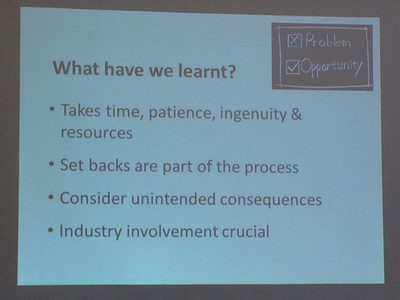
Moving Forward
These possibilities, together with potential physical gear modifications to facilitate escape, have received relatively little scientific investigation to date in the UK and it is clear that we are only beginning to scratch the surface to find technological solutions to resolving protected species by-catch issues. Solutions are often likely to be specific to individual species and individual fisheries and will require detailed testing and fine tuning at sea. Much more coordinated effort and collaboration between scientists and policy makers working closely with industry will be needed.
Lazily sidestepping applied research based solutions and ruling in favour of simplistic bans, which can come at the expense of supplying seafood to feed a growing world population, is not a viable proposition and ultimately amounts to gesture politics and a conservation dead-end.
Allowing a single Guernsey vessel to catch skates
and rays unrestricted, threatens a premature closure of the UK’s non-sector
Skates and rays, threatening fishermen’s livelihoods; and undermines any notion
of rational conservation and management of shared stocks.
Tearing up the Fisheries Agreement by the Defra
Fisheries Minister was the only reasonable response left, after Guernsey refused
to either implement what they had already agreed to; or discuss quota limits
meaningfully.
If the matter can’t be resolved through discussion;
then it will have to be resolved in the law courts. Whatever the arcane
constitutional arrangements involved, it would be a complete nonsense to allow
Guernsey to undermine every conservation initiative for shared stocks in the
Eastern Chanel because of what did or didn’t happen in the 11th century.
Although Skates and Rays are the immediate focus,
these issues could apply to any quota stock. This is not crab or lobster, whose
limited pattern of movement make them amenable to localised management. This is
part of a stock that is shared by Jersey, UK and French vessels, amongst others.
That is why shared management in necessary and why when one party chooses to
behave like a spoilt child, boundaries must be applied firmly.
Our concern is also what happens in the meantime. An
early closure of the important skates and rays fishery would be highly
disruptive and damaging.
The MMO has assured us that it is doing everything
possible in terms of swaps and transfers to keep the fishery open but it is
like trying to fill a sink with the plug out – unless the Guernsey issue can be
resolved.
It is quite plain that the terms of the Fisheries
Management Agreement envisage that quota rules apply to Guernsey vessels, even
if the detailed arrangements are left for further discussion. The fact that
catches by Guernsey vessels count against the UK’s quota seals the issue.
This running sore must be brought to a conclusion as
soon as possible to protect fishermen’s livelihoods; on grounds of rationality
and fairness; and ultimately to protect stocks from a rogue statelet.
If this conflict goes to the courts it is likely to
carry broader ramifications that the Guernsey authorities may not like. Much
better that this unfortunate spasm is brought to a close, quickly, over the
negotiating table.
FISHERIES MANAGEMENT
AGREEMENT
Preamble
This Agreement is made between the Department for
Environment, Food and Rural Affairs (“Defra”), Marine Scotland, the Welsh
Assembly Government and the Department of Agriculture and Rural Development
Wales on the one hand, and the States of Guernsey Commerce and Employment
Department, the Chief Pleas of Sark Sea Fisheries Committee and the States of
Alderney General Services Committee on the other.
It sets out the main aspects of
the arrangements for the management of fisheries between the United Kingdom and
Bailiwick of Guernsey in British fishery limits adjacent to the Bailiwick of
Guernsey; namely:
- The implementation of Common Fishery Policy
rules and regulations in Bailiwick waters. - The system through which the Bailiwicks can
introduce fishery management measures in Bailiwick waters. - Fair access for Bailiwick and UK vessels to each
Administration’s respective waters. - How the relationship between the Bailiwicks and
UK fisheries will be managed.
Location
Fishery Limits: British fishery limits adjacent to the Bailiwick of Guernsey shall be construed as a reference to that part of those limits not exceeding 12 international nautical miles of 1,852 metres from the baselines from which the breadth of the territorial sea adjacent to the Bailiwick of Guernsey is measured, but not extending beyond a line every point of which is equidistant from the nearest points of such baselines and the corresponding baselines of the Bailiwick of Jersey and France, and shall be referred to in this Agreement as “the 3-12 mile area”;
Legislation: fisheries matters in the 3-12 mile area must take account of relevant Bailiwick of Guernsey, United Kingdom, European Union and international obligations, and whereas fisheries (as defined below) in the 12 mile area should be managed in a manner consistent with UK and EU legislation and procedures;
Access Rights: the 3-12 mile area is not an exclusive fisheries zone and the rights of fishermen from the UK, the Isle of Man and the Bailiwick of Jersey generally and the particular rights of fishermen from France under the various conventions should be respected, and technical conservation measures should not discriminate between fishermen by reason of nationality;
Governance: the States of Guernsey Commerce and Employment Department (referred to in this agreement as “the Department”) will be responsible for the administration and enforcement of a fishing vessel licensing scheme and fisheries management/enforcement for British fishing vessels wishing to fish in the 3-12-mile area.
Bailiwick Fisheries Management Commission: the Department, the Chief Pleas of Sark Sea Fisheries Committee and the States of Alderney General Services Committee will form a body known as the Bailiwick Fisheries Management Commission (BFMC) (referred to in this Agreement as “the Commission”). The Commission will (subject to the functions conferred on the Department by the preceding paragraph) manage the living marine resources within the 3-12 mile area under a Bailiwick Fisheries Management Agreement (BFMA).
The Commission will be the sole conduit for communications between the Bailiwick and Defra when the Bailiwicks wish the UK Government to consider fisheries legislation they wish to introduce (though the Islands can contact Defra on an individual basis to discuss specific issues).
Definition: this Agreement sets out the main aspects of the arrangements for fisheries between the UK and Bailiwick of Guernsey in respect of shellfish (which expression in this Agreement shall include crustaceans and molluscs of any kind other than nephrops) and sea fish (which expression in this Agreement shall include nephrops and any other TAC stock) and provides for a regular consultation process to deal with routine business and particular issues as they arise; and in this Agreement “fisheries” means shellfish and sea fish.
General
1. Except as may otherwise be agreed, and always subject to paragraphs 19-22 below, members of the Commission agree:
a. to keep the rules and laws relating to the regulation of fishing and the management and conservation of seafish and shellfish in the 3-12 mile area consistent with the requirements of enforceable European Union law relating to sea fishing and UK policy in relation to such matters, allowing for any additional conservation measures which may be imposed by local legislation on British registered fishing vessels or by licence condition on British registered fishing vessels in relation to such stocks as the Commission deems necessary for the purpose of managing the inshore fishery at a sustainable level;
b. to accept that there will be concurrent UK and Bailiwick of Guernsey jurisdiction in relation to fisheries in the 3-12-mile area;
c. and for the purposes of this Agreement the expression “British registered fishing vessels” means fishing vessels registered in the Bailiwick of Guernsey and the UK.
2. Proposals for future fisheries management and technical controls in that part of the 12 mile area beyond 3 international nautical miles from the baselines referred to in the first recital above (referred to in this Agreement as the “extended territorial sea”) will be presented, by the Commission prior to any wider consultation, to Defra for views and will normally be of Bailiwick wide application.
3. However, should Guernsey, Alderney or Sark require specific legislation to deal with fisheries management or socio economic factors in their own part of the extended territorial sea, the proposal will be presented to Defra by the Commission with an explanation as to why it is required and why it will not be of Bailiwick wide application.
4. The Bailiwicks will take account of Defra’s views and provide the Department with any revisions prior to wider consultation.
Memorandum of Understanding
5. Guernsey, Alderney or Sark will agree a Memorandum of Understanding with the Marine Management Organisation (MMO) on operational aspects of fishery management. This will include agreeing how the Islands will manage the licensing of vessels, quota management, the supply of statistical data and data transfer between the Islands and the MMO and enforcement.
6. The MoU shall accompany the FMA and agreement on the FMA is subject to the MoU being in place.
7. The MMO and the Commission shall consult on practical arrangements with regard to the enforcement of fisheries laws within the 3-12-mile area. This will be set out in the MoU.
8. The Islands, MMO and Defra will meet annually to review the MoU (the latest copy of the MoU is attached at Annex 1 of this agreement). The MoU will cover the following aspects of the Islands fisheries management:
Fishing vessel licensing
9. Within the 3-12 mile area the Commission shall operate a restrictive licensing scheme for British registered fishing vessels parallel with that operated in the UK.
10. Owners of vessels registered in Guernsey and holding a valid licence to fish within the 12 mile area (a “Guernsey Waters Licence”) may apply for and will normally be granted by Defra an equivalent licence to fish in UK waters outside the 12 mile area (a “UK Waters Licence”). The Department agrees to operate reciprocal arrangements for UK registered and licensed vessels wishing to fish within the 3-12 mile area. When determining licence applications to fish in the 3-12 mile area the Department may have regard to whether vessels have an established record of fishing in those waters.
11. The issue and transfer (including aggregation) of licences that are transferable between fishing vessels registered in the Bailiwick of Guernsey and those registered in the UK shall be subject to the same rules as apply to equivalent English licences, as set out in the MoU.
However, in this respect Defra acknowledges that the legal powers necessary to apply rules equivalent to the UK rules do not exist in the Bailiwick.
12. Except insofar as is allowed by paragraph 1(a), the Department shall ensure at all times that fishing vessel licences issued by it contain conditions and limitations equivalent to those contained in comparable English licences.
Fisheries quota management
13. The Commission and the MMO will hold annual meetings to discuss yearly quota for key species in the Islands fisheries.
14. TAC stocks caught by any registered fishing vessels within or without the 12mile area shall count against the quotas allocated to the UK under the Common Fisheries Policy.
15. Defra and the MMO will actively involve the Commission in any policy or operational discussions on the management of fisheries in ICES Division VIIe.
Supply of statistical data
16. The Commission shall supply to the MMO all statistical data necessary to enable the UK Government to carry out its quota management and vessel licensing responsibilities and to fulfil its EU obligations.
17. The MMO and the Commission will work to ensure data transfer work effectively between both organisations.
Consultation on Fisheries Measures
18. The Commission shall:
Consult, and take account of the views of Defra and the Devolved Administrations, prior to consulting more widely with industry and other interested parties on new fishery measures.
Ensure that new regulations are justifiable, evidence based and non discriminatory.
Produce Impact Assessments for new measures;
Follow UK Government best practice guidance when consulting;
Ensure that measures are consistent with concordats and other agreements we have with the DAs, and ensure that equal access continues to apply for UK and Island vessels in each other’s waters.
19. Defra will advise the Commission about any measures, additional to quota management, which in their view should apply in the 3-12 mile area.
20. On fisheries measures being proposed by the EU, which would affect fishing in ICES Division VIIe, Defra will advise the Commission of these whenever possible and will take any points the Commission makes into consideration when preparing the UK position.
21. After such consultation provided for above, each party may issue consultation documents, if appropriate, to their industries and will liaise with the other on the handling of the outcome of such consultations and the development of any measures arising.
Meetings
22. The parties shall meet at least once each year (as set out in paragraph 7) and more frequently if appropriate.
Commencement
23. This agreement will take effect on the date when the relevant legislation has been enacted.
NFFO Chief Executive Barrie Deas said after the meeting:
“It is no secret that we have been highly critical
of the MMO and have called for an independent review of the organisation. The
fishing industry needs and deserves a regulator that is effective, responsive
and professional. At best the MMO has been sub-optimal and at worst
dysfunctional.”
“This meeting felt different from those in the past
when we have been fobbed off with assurances, promises and management-speak. Time will tell, but with the new MMO Chief
Executive, there seems to be a new dynamism and willingness to address
fundamental issues rather that treating the symptoms of malaise. It feels like
some sort of watershed has taken place.”
“Experience has shown that effective regulation
requires a minimum of consent from those whose activities are being regulated.
The best regulation is based fully on a comprehensive partnership approach. It
was refreshing, therefore, that the MMO were themselves suggesting joint
initiatives with the NFFO on delivering an EMFF grants system that is easily
accessible by working fishermen; a campaign against the illegal sale of fish
from unlicensed angling boats; and industry involvement right at the start of
policy initiatives and the application of new technologies.”
“The current Government spending review, which seeks
cuts of 40% is going to force regulators to become more streamlined and to cut
out duplication and overlaps and seek efficiencies. The NFFO signalled its
willingness to work closely with the MMO to ensure that whatever comes out at
the end of this process of change is effective, practical, and respected by the
fishing industry.
“Over the last decade, the NFFO has been at the
forefront of a change in the way that fisheries scientists work with the
fishing industry and there is now reason why we can’t achieve the same with the
fisheries regulators.”