

The news of David Linkie’s untimely death will have saddened hearts across the UK fishing industry. As journalist, photographer and editor for Fishing News, David forged a breath-taking range of friendships and contacts across nations, regions, ports, vessel sizes and sectors.
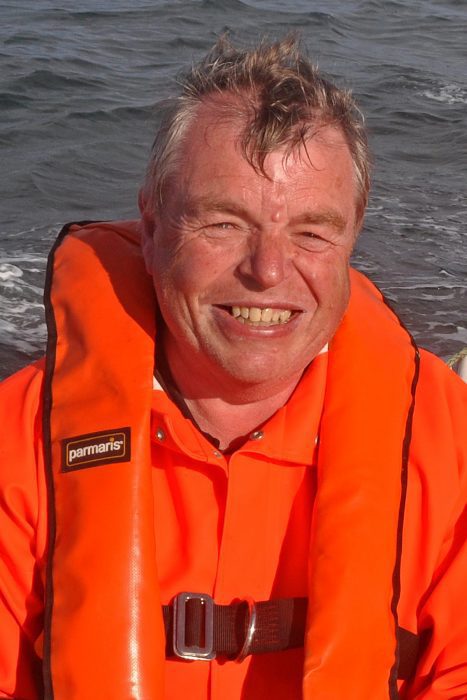 When he undertook his detailed vessel reviews for the pages of FN, he was as engaged with and enthusiastic about the small Northumbrian coble every bit as much as the latest pelagic trawler. The detailed information that he captured and conveyed was fascinating, especially to those who need the technical information to help make their own decisions. It is doubtful whether any other person was so well connected and so well respected across the whole UK fishing industry.
It was the word enthusiasm that most people who met David will recognise and associate with him. And from that enthusiasm came a deep knowledge which allowed him to be an effective editor of the industry’s trade newspaper.
Committed, immensely likeable and knowledgeable, David’s presence aboard the latest vessel, or on the quayside, or in the pages of Fishing News, will be sorely missed.
Our deep sympathies go to his wife and family.
Seabass measures can be found here.
News story on new fisheries technical measures can be found here.
Total Allowable Catches and Regulatory Autonomy
Total Allowable catches for jointly managed stocks have now been agreed as part of the deal but these only reflect the provisional determinations already set unilaterally by the UK in May. A formula within the TCA linked to the most recent ICES advice constrains the range within which autonomous quotas can be set.
It is in details like the conditions attached to particular TACs that the political trial of strength is visible. The UK’s determination to go its own way on fisheries (within the confines of the TCA) and the EU’s efforts to constrain divergence as much as possible, are apparent in the compromises made. The TCA requires the parties to work together on the management of shared stocks but also enshrines recognition that in the final analysis each party has the right to regulatory autonomy to manage the fisheries within its own respective zone.
The issues which have delayed reaching a deal until almost 6 months into the year to which it applies all relate to this fundamental tension.
https://www.nffo.org.uk/uk-eu-fisheries-agreement-for-2021/
Non-quota Stocks
The issue which reflects the terms of the TCA, but also throws up the most difficult management issues for the future, are the tonnage limits which will apply to catches of non-quota species like scallop, crab, red mullet, sardine, whelk, lemon sole and many others. The parties have fought themselves to a standstill and have now agreed that it is too late in the year to apply the tonnage limits. Designed as a cap to prevent the displacement onto stocks that are economically valuable but for which data is limited, the implementation of the tonnage limits will now be referred to the Specialised Committee on Fisheries (SCF). Get used to those initials because they will be where most bilateral fisheries management issues will now be addressed.
Seabass
The influence of regulatory autonomy is evident not only where the UK overtly adopts its own management measures (which will apply to all vessels operating within the UK EEZ), but also where the negotiation outcomes have been shaped by the new balance of power.
An example is in the agreed negotiation outcome on bass. Although this was an agreed common approach, it is one which shifts the conservation measures more towards the UK’s preference to allow more scope to land a higher proportion of unavoidable bycatch rather than discard them dead. This will not go far enough for those who are seeing an abundance of seabass in their local waters but does point to the fact that the UK is no longer a supplicant member state, easily corralled, by the Commission.
Celtic Sea Technical Measures
The agreement for 2021 acknowledges that the UK will unilaterally apply strengthened selectivity measures in the Celtic Sea. There is a suspicion that the Commission is not unhappy with this development, as its own plans faced opposition from member states. The views of some member states may differ.
Mixed Fisheries Management
The annual agreement contains language on the future management of mixed fisheries which also points to UK influence and movement towards a more reality-based approach which recognizes the need for carefully balanced trade-offs, rather than one-size-fits-all CFP rigidity. This could represent a breakthrough after years of trying to fit zero-TAC advice to complex mixed fisheries situations. In truth, the EU routinely departed from zero TAC advice based on single stock assessments. We can see in the agreed record, though, the beginnings of a refreshing reality-based approach which can balance rebuilding weak stocks in a mixed fishery configuration, whilst maintaining the socio-economic fabric of the fishing communities dependent on those stocks. Looking back, we may see this as an important, even historic, breakthrough.
Discards
Another area in which the fresh shoots of divergence can be seen is in the treatment of discard policy. The EU landing obligation has proved (as anticipated by many) to be a crude, ineffectual, approach to minimising unwanted catch. Whilst the EU is tied into maintaining its landing obligation for the immediate future, the UK is now in a position to develop more agile alternatives which reduce the threat of chokes in mixed fisheries. An initial departure can be seen in relation to the treatment of exemptions and TAC reductions in the annual agreement. Developing a tailored discard policy, most likely as part of individual fisheries management plans, as envisaged by the Fisheries Act will be a UK priority.
Specialised Committee for Fisheries
An idea of the range and significance of the new Specialised Committee for Fisheries is seen in the Committee’s first work programme
The Delegations identified the following issues to be discussed in the SCF:
Skates and rays, paragraph 5(e)
- Terms of reference for Celtic sea mixed fishery advice
- Deep sea stocks
- Stocks with no ICES advice
- Geographic flexibility
- Picked Dogfish (spurdog)
- Footnotes
- Prohibited species
- Management of discards, landing obligation and TAC deductions
- Technical measures
- Multi-year strategies for non-quota stocks
- Later exchanges of data on non-quota stocks
- Seabass monitoring, management and assessment
Big Picture
The annual negotiations with the EU are one important part of a bigger set of negotiations that ultimately have a profound influence on where we can fish, and how, and how much.
The TCA obviously sets the framework for fisheries relations with the EU and enshrines the asymmetric balance on access to each other’s waters and quota shares was at the heart of the Common Fisheries Policy and continues under the TCA. Until 2026, the TCA will shape the outcome of annual negotiations. What happens after that date is an open question. The EU is confident that there are sufficient dissuasive powers within the TCA to make the UK think twice about acting as any other normal coastal state. Time will tell.
The failure to reach fisheries agreements with Norway or Faroes, reflects the turbulent adjustment period before things settle down into a new equilibrium.
Where fishing sits in the Government’s priorities in the interim and around 2026 will be critical. Few predicted that fishing would become a totemic issue within the UK’s departure from the EU, but it was the last issue to be “settled” in the TCA and leaves a lasting and potentially toxic legacy.
Our immediate request will now be for a meeting with Defra/MMO to understand were we have got to in the wake of the TCA and annual negotiations, and what our options might be from moving forward from here.
The full written record of the agreement can be found here.
https://www.gov.uk/government/publications/fisheries-consultations-between-the-uk-and-the-eu-in-2021
Defra Press Release
FOR IMMMEDIATE RELEASE:
UK and EU sign agreement on catch levels for 2021
- Agreement covers catch limits for 70 shared fish stocks worth approximately £333m in fishing opportunities to the UK fleet
- Deal ensures certainty for UK industry with fishing levels set for remainder of 2021
- UK and EU to work together on shared sustainability objectives through the Specialised Committee on Fisheries
The UK has now concluded annual fisheries negotiations with the EU, providing certainty for the fishing industry on catch limits for the remainder of 2021.
The catch limits known as Total Allowable Catches have been set for 70 fish stocks and supersede the previous provisional catch limits for 2021.
The agreement provides stability for UK fleets with all Total Allowable Catches remaining in line with the provisional catch limits set earlier this year, apart from 8 that have small increases.
The annual negotiations for 2021, in which the UK participated as an independent coastal State outside of the Common Fisheries Policy, follow the signing of the Trade and Cooperation Agreement between the UK and EU.
The agreement announced today means:
- The total value of the UK-EU fishing opportunities for the UK in 2021 is approximately £333 million. This equates to around 160,000 tonnes.
- As a result of the Trade and Cooperation Agreement and these negotiations, the UK fleet will have around 26,000 tonnes more quota for these stocks compared to quotas allocated in 2020. This increase is estimated to be worth around £27 million.
- Both parties have also committed to exchanging fishing quota on an interim basis ahead of a longer-term exchange system which will be set up by the Specialised Committee on Fisheries.
The Specialised Committee on Fisheries established under the Trade and Cooperation agreement will provide a forum for discussions on fisheries matters between the EU and UK and will meet for the first time in June.
The Environment Secretary, George Eustice said:
“As we move forward as an independent coastal State, we have been steadfast in representing the interests of our industry and seeking to manage our fisheries more sustainably.
“This agreement provides certainty to our fishing industry and we now have a stable platform in place for managing our fisheries this year and in future years.”
As a responsible coastal State, the UK is committed to increasing the sustainable management of fish stocks in UK waters.
The agreement with the EU also provides a framework, via the Specialised Committee on Fisheries, for continued cooperation on fisheries management to support conservation and sustainable fishing. The agreement also adjusted measures for the management of seabass to reduce the level of wasteful discards without affecting sustainability.
The Written Record for these negotiations will be published following the EU’s internal ratification processes.
Notes to Editors:
- The UK will have roughly £27m more quota in these 70 stocks than that which was allocated in 2020. This figure takes into account the UK’s new, larger, shares of quota under the Trade and Cooperation Agreement as well as Total Allowable Catch reductions which were made for sustainability reasons.
- As an independent coastal State with a commitment to achieving sustainable fisheries the UK is taking a more rigorous approach to assessing Maximum Sustainable Yield in relation to negotiated outcomes.
- As a result of an independent review of the assessment method these figures are not comparable to previous years, a more detailed report will be published shortly outlining the assessment method and a comparison of this year’s negotiated outcomes to previous years.
- This ‘Maximum Sustainable Yield review’, initiated by Defra, demonstrates ministerial commitments to strengthening sustainable fisheries management for the benefit of our marine environment.
Trilateral annual fisheries negotiations between the UK, EU and Norway concluded on 16 March
The NFFO will reserve comment on the package as a whole until after the agreed record has been published. In the meantime, the information that has been made available is reproduced below.
It is worthy of note that the following factors have been significant both in the content of the agreement and how the negotiations were conducted:
- The terms of the UK/EU trade and cooperation agreement
- The UK’s insistence on its right of regulatory autonomy as an independent coastal state
- The EU’s efforts to limit divergence from the CFP
- The constraints applied by having to negotiate remotely because of Covid related restrictions
TACs
One of the central purposes of the agreement, setting TACs for 2021, had already been taken out of the equation after the UK, at the beginning of May, autonomously set provisional quotas for the UK fleets; these will now be formally adopted into the agreement without significant change.
Precedents
The main points of disagreement between the two parties (now resolved) eventually boiled down to:
Area flexibility
The following changes to Area flexibility apply North of 58.30’, between Area 6a (West of Scotland) and Area 4 (North Sea). Otherwise, existing flexibilities continue to apply.
East to West West to East
Anglers 30% 20%
Haddock. 10% 25%
Ling 20% 40%
Megrim 20% 25%
Saithe 15% 30%
Tusk 25% 10%
Hake 6% 100%
Mackerel 60% 100%
Quota Exchanges
Both parties have committed to engage urgently on interim quota exchanges and to a clear timeframe ahead of the establishment of the Specialised Committee. The Specialised Committees (yet to be established) will formulate arrangements for a more permanent exchange mechanism.
Non-quota species
Both parties have agreed that notwithstanding the terms of the TCA, and reflecting the late stage in the year, tonnage limits on catches of non-quota species in each respective EEZ will not be enforced for 2021. Instead, catches on non-quota species will be monitored and work on a long-term management plan will be initiated within the context of the Specialised Committee
Seabass management measures
Arrangements for seabass have been amended:
- Trawl/seine catch limits have been changed from 520kgs per two-month period to 380kgs per month, within a 5% per trip limit
- The ban on bycatch of bass by shore nets has been removed, subject to close monitoring and limitation to those involved in this fishery prior to 2017
- There is no change to the recreational bag limit for bass
- Joint work on bass will continue in the specialised committee
Celtic Sea technical measures
The UK will apply new technical measures in the Celtic Sea which will apply to all vessels operating in that zone. These will apply from 3rd September 2021. Details to follow.
Industrial Species
Notwithstanding the UK’s principled opposition to industrial fishing, the following TACs were agreed:
- Sandeel 92,500 tonnes
- Norway Pout 128,300 tonnes
Skates and Rays
Better ways of managing the various skates and rays stocks will be referred to the specialised committee
Mixed Fishery Advice
It is expected that the agreed record will contain wording on a more rational approach to managing mixed fisheries in the future.
Written Record
All of the above is based on oral information and may be subject to adjustment when the UK/EU written record is made available.
EIFCA is seeking information on the levels of fishing activity in the areas under consideration for management to understand the impact that any new measures may have.
The Lincolnshire Coast
It is investigating the need for closures to bottom-towed gear in the inshore section of the Inner Dowsing, Race Bank and North Ridge Special Area of Conservation (SAC).
North Norfolk Coast, Cromer Shoal Chalk Beds Marine Conservation Zone (MCZ)
It is investigating the need to restrict netting activity (fixed nets and drift nets) within the zone.
The consultation closes at midday 28th June 2021.
More information about this consultation can be found here.
Net Zero, the Blue Economy and MPAs
The 2019 Offshore Wind Sector Deal, the government’s industrial strategy for offshore wind, and a succession of ever more ambitious announcements that have followed places offshore wind front and centre in meeting the government’s Net Zero commitments. The present target is for 40GW of generating capacity of full commercial-scale offshore wind by 2030 and a further 1GW for the development of pre-full commercial-scale floating wind projects. But that is just a start. The Climate Change Committee has planning scenarios to meet Net Zero with up to 140GW of offshore wind by 2050, implying an acceleration of deployment beyond 2030. If that scenario is realised it would translate to more than a 13-fold increase over the current operational generating capacity of 10.5GW. And the expansion of offshore wind is not only in the UK; the EU has ambitions for 60GW of generating capacity by 2030 and 300GW by 2050, with the largest proportion of this foreseen for deployment in the North Sea.
The colossal scale of this ambition is hard to comprehend. There is, as yet no clearly defined analysis on what it means in terms of the proportion of our seas that would host wind farms, but undoubtedly its scale would mean a complete transformation in the use of marine space that inevitably will encroach extensively on customary fishing grounds.
And of course, it is not only the wind farm structures themselves that present an issue for fisheries. At least as important is the network of inter-array and export cables necessary to convey their output to the electricity grid or to electrolysers to produce hydrogen – another significant strand in the drive to net zero – and also the expansion of cable interconnectors to link national grids more extensively.
Fishing activity is already obliged to operate in an increasingly crowded marine space, encompassing existing constructed wind farms, the oil and gas and aggregates sectors, the telecoms cables sector, which is also presently undergoing a large expansion, and other fledging but growing sectors such as mariculture and potentially other types of marine energy. To top it off, this unprecedented expansion in the blue economy is taking place within the context of the network of MPAs that now cover 38% of UK seas.
But in contrast to the support given by the government to the various blue economy marine sectors, strategic attention to the spatial needs of commercial fisheries have received close to no attention. In fact, in the wake of Brexit it has been quite the reverse, with a signalling of a hardening stance against accommodating fisheries within existing MPAs, to be followed with an expected announcement of plans for highly protected marine areas that will be no-take zones.
An Agenda for Co-existence
Setting aside, for the moment, the squeeze on fishing grounds from other industries and MPAs, if the government is to avoid mass displacement of fishing activities from a rapidly expanding offshore wind sector, the planning system will need to be a lot smarter and agile than it currently is. Most English waters still await the formal adoption of draft marine plans, expected later this year, but it is already clear that on their own they are not up to the task of guiding marine development on this scale. Forward planning is needed with a sufficiently long-term view.
So far, this has been limited. Scotland has recently developed a new wind sectoral plan, but this is limited to 10GW generating capacity, with the expectation that future iterations will earmark further development. Outside of Scotland, there is no sectoral planning system, with the void occupied by a piecemeal seabed leasing system administered by the Crown Estate. The latest Round 4 for nearly 8GW of seabed rights was the least inclusive to date, focussed on a market-facing competitive tendering process with other marine stakeholders excluded from decisions on site selection.
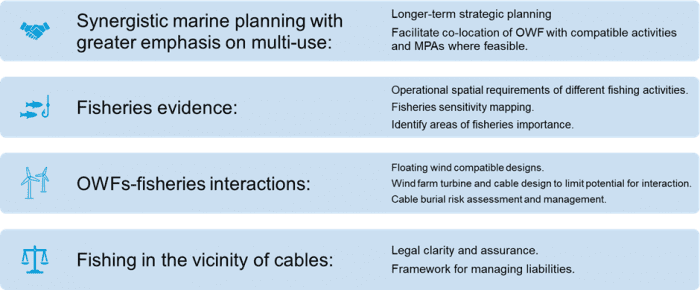
Crucially, the planning system needs to give much greater prioritisation to co-existence and be savvier in delivering on it. Although the issue is referred to in the Marine Policy Statement and covered in all marine plans in some way, implementation is largely passive and limited solely to the planning application/marine licencing processes.
One development in the last few years has been requirements for Fisheries Liaison and Co-existence plans in England or Fisheries Management and Mitigation Strategies in Scotland. While these are useful, they are concerned principally with the coordination of day-to-day operational activities in the vicinity of the wind farm, prepared late in the planning process or even post-consent. This is too late to address fundamental issues about wind farm design and location.
Windfarm Design
Wind farm design, including turbine spacing and layout, are more fundamental determinants of whether fishing activities can co-exist with offshore wind. Relative to an open sea state, a wind farm sited on fishing grounds will inevitably impede fisheries to some degree, as will associated installation and maintenance activities. Under current fixed wind farm turbine spacings, fishing methods that require wide areas in order to deploy gear such as large seine netting and pair trawling are incompatible. On the other hand, pot fisheries have been found to be able to operate in some constructed projects. For other fishing methods, such as single trawling and static nets, the jury is still out. There is presently a lack of evidence demonstrating significant numbers of vessels operating these gears within projects.
While the Maritime and Coastguard Agency (MCA) requires two lines of orientation to assist navigation through wind farms sites, turbine spacing is predominantly driven by the technology, not by an inherent objective to promote co-existence. Nonetheless, as the capacity rating of turbine technology continues to grow, turbine spacing is increasing, which potentially could provide more opportunities for co-existence.
Cable routing is a feature of offshore wind development where the planning system could provide more and better direction. The fishing industry could usefully feed into evidence on seabed conditions, whilst designs limiting the number of crossings between consecutive rows of turbines and/or bundling them could be prioritised. This would minimise the potential for bottom towed fishing gears from potentially interacting with an exposed cable. Due to the application of the Rochdale Envelope approach that provides post-consent flexibility to a developer over the design of the wind farm, such decisions are not presently given direction by the planning authority, even though they may impinge on co-existence.
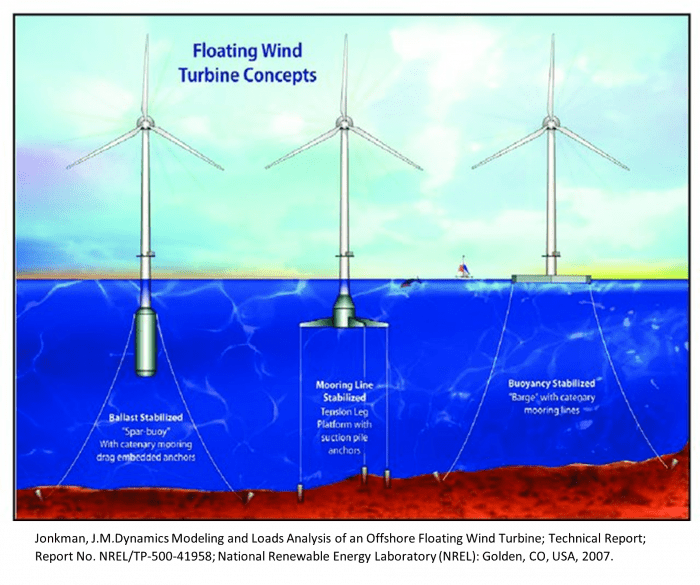
Compared to fixed wind, where the question of co-existence is influenced by many factors, the advent of floating wind technologies threatens total fisheries exclusion, an issue that has not yet been recognised in government policy. This is because current commercial designs (left and right examples in the figure) use anchored catenary mooring lines extending out from the turbine platforms that would conflict with fishing gears. So-called “tension-leg” designs (figure, centre) with the mooring lines attached vertically to the platforms offer greater co-existence potential, but these are not yet commercially proven. The selection of the Celtic Sea for the build-out of the first generation of early commercial-scale floating wind projects is one of the most diverse and dense regions of fishing activity in the UK and will pose significant challenges.
Cable Interactions
If there are few planning constraints on cable routing, that is partly due to policies on burial and protection, which in theory should place cables out of harm’s way from interactions with fishing gears. Delivering on this policy is ultimately down to delivering good engineering practice. In areas where physical processes acting on the seabed routinely shift sediments, like in much of the southern North Sea, burial needs to account for topographic changes to the seabed that would over time lead to cables becoming exposed. Given the occurrence of cable exposures in recently constructed projects, it is questionable whether current target burial depths, especially for inter-array cables that have shallower target burial depths, are adequately accounting for this issue.
Beyond cable installation, ongoing management of cable exposure risk is fundamental to ensuring safe fishing practice. This can be achieved through monitoring and the timely communication of marine hazards to the fishing fleet. Warning systems are in place for this through the Kingfisher Bulletin, but improvements are possible in the future with the expansion of in-wheelhouse warning systems such as the FishSafe unit, which is currently used to alert of marine hazards associated with the oil and gas sector. The communication to the fishing industry of information on “as laid” depths of cables and changes following monitoring surveys would also help to better manage any emerging risks.
Good risk management should provide the means to minimise the potential for incidents occurring. However, the legal position on fishing in the vicinity of cables in the context of co-existence lacks clarity. Cables are protected in law against damage resulting from willful intent or culpable negligence. However, the underpinning legislation, the Telegraph Act (extended to other types of cables under the Continental Shelf Act) dates back to the nineteenth century when telegraph cables were first installed. It was not designed for the circumstances of the wide-ranging and growing networks of cables that are now in our seas.
Interpreting this archaic legislation, and failing to account for co-existence matters, the MCA advises that in order to minimise risk as much as possible, vessel operators should avoid fishing at a minimum distance of 0.25NM from submarine cables. In practice, this would effectively preclude fishing in the vicinity of all wind farms and the wide-ranging networks of cables beyond them. It serves to highlight that arrangements for governing cables-fisheries co-existence need significant refinement if the fishing industry is to have the assurance that is needed when returning to fishing grounds once turbine arrays are installed. Similarly, there is a need to ensure there is a system for managing liabilities and insurance indemnity that will be fit for purpose for the scale of projects and the density of cabling in our seas in the future.
A Vital Piece of the Marine Planning Jigsaw
Co-existence should not be left as an afterthought reserved only for consideration as part of the planning application process. It needs to be more purposefully built into forward and sectoral planning functions to work out what can and cannot successfully co-locate so that marine space may be allocated more efficiently for different purposes.
For fisheries, this means developing a better understanding of the use of marine space by fishing activities at micro and macro scales. At the micro-scale, this is about the space needed to operate different types of fishing activities practically and safely. To skippers of fishing vessels, the spatial patterns and requirements of their fishing activities are second nature, but for marine planners, these matters are not yet documented to inform decision-making. For offshore wind farm planning purposes, expert knowledge on the spatial operating requirements of different fishing types needs to be documented, whilst understanding of spatial use in the vicinity of wind farms can be enhanced over time through monitoring data.
At the macro scale, the challenge is to improve understanding of the sensitivity of different fisheries to the loss of access to fishing grounds. Presently, the examination of such issues occurs only as part of planning applications’ commercial fisheries and cumulative impact assessments. This is too late to influence project siting decisions and assessment methodologies are based on a relatively subjective and superficial examination of the issues. These essentially are based on a visual comparison of the scale of the footprint of current projects in the planning process with that of affected fishing grounds as defined by vessel monitoring system data of a particular gear group or piecemeal information on fishing grounds for the <12m fleet. The approach discounts projects and proposals that have been completed, assuming any impacts from these to be reflected in the baseline data (an approach that is endorsed by planning guidance). The result is the setting up of a shifting baseline problem where the analyst really does not understand the significance of the successive loss of access to fishing grounds that may have occurred up to that point.
A more thorough and focussed examination of the use of fishing grounds by different fleet segments would help to improve understanding of their sensitivity to loss. It would also provide vital information to be then used to identify persistent and sensitive fisheries and areas of importance. These areas may then be elevated within the marine planning system and assigned specific safeguarding policies; an approach examined by the Marine Management Organisation in 2014, but not yet progressed. The combination of this micro and macro-scale evidence on fisheries sensitivity can then be applied to sectoral planning, and cascade through to planning application processes. This should be supported by forward planning exercises that are inclusive of other marine stakeholders, not just the wind sector, to help inform site identification.
There is scope for applying this approach beyond fisheries, to other marine uses. Given the scale of the MPA network, if impacts to other marine users are to be minimised, then the potential to co-locate wind farms in areas within MPAs, where other activities such as fisheries are precluded, is essential. As a pre-requisite is for wind farm projects to be compatible with MPA conservation objectives, there is, therefore, a need for evidence-based guidance that can help to identify the areas and types of projects that are likely to fit the bill.
In the final analysis, if ultimately there is a failure to achieve co-existence, affected fishing communities should not be expected to bear the resulting costs and losses. However, for compensation for permanent and temporary loss of access to fishing grounds, there is no overall national framework that addresses the issues or provides for a dispute resolution mechanism. Unlike in other countries such as Denmark, these matters are left to be typically handled in an ad-hoc and relatively haphazard fashion where developers and the impacted fishers are left to sort things out locally. There is a growing need for this unsatisfactory state of arrangements to be formally addressed by the government.
Since the climate emergency has turbocharged offshore wind policy with the adoption in 2019 of the 2050 net zero commitment by the government, a flurry of policy initiatives to identify the changes needed and to chart paths to get there are now emerging. It is essential that our fishing communities see comparable leadership and change at the marine planning end of the equation so that these ambitions do not turn into an emergency for fishing livelihoods.
After successes with pop-up transmitting data tags in previous seasons, we will be deploying acoustic tags and receiver stations in summer 2021. These acoustic tags have a lifespan of up to 10 years and these fish will be “heard” by passive listening stations distributed throughout the northeast Atlantic and Mediterranean Sea.
To achieve our aims, we are now seeking formal Tenders to supply a vessel(s) from which to catch and tag ABFT in 2021. Interested parties should follow the instructions detailed in the attached document and submit their responses by 2359 BST on the 10th of June.
All queries should be sent to bluefin@exeter.ac.uk. Please be aware that Thunnus UK will make clarification questions and answers available to all bidders.
The Thunnus UK Team
The aim of the questionnaire is to gather anecdotal information from commercial whelk fishermen around the UK on local variations in whelk populations. The research is being undertaken by the Whelk Management Group (WMG) and was developed by Heriot-Watt University, Bangor University, Seafish, Cefas, Defra, Daera, and the IOM government.
By gathering anecdotal information on whelk populations, the WMG science subgroup aims to better understand to what extent whelk populations vary across the UK. Gathering knowledge from fishers, who work with these animals every day, means that it will be possible to target biological sampling effort in the future to make sure that important populations are surveyed.
Access the questionnaire here
To this point, our approach has been to challenge the Government’s shift from an evidence-based, adaptive, approach to one with more resemblance to a bulldozer. The appointment of the author of the highly partisan Benyon Report on Highly Protected Marine Areas1 to ministerial responsibility is a tipping point and suggests that this approach is a pointless furrow to plough.
There is only one question now. What is Government policy towards the many hundreds of fishermen who will now be displaced from their fishing grounds? In English waters, Defra/MMO’s intention is to introduce management measures for 40 offshore MPAs over the next three years – an insanely rushed approach that will leave no time for careful consideration, collation of evidence, or dialogue. Inshore, the picture is worse. Inshore vessels tend to have a more limited range and IFCAs are already overwhelmed by the task of implementing MPAs within the 6mile limit. 60% of their activities now relate to MPAs.
Meaningful discussion with the fishing industry on how to achieve the conservation objectives for each MPA site, whilst maintaining fishing activities consistent with those objectives, offers the most equitable and effective way to manage MPAs. This approach has now been abandoned in England. Scotland, meanwhile, remains committed to a measured, careful, policy focussed on implementing MPAs whilst minimising the impact on fishing businesses and communities.
Put bluntly, Defra is now intent on a reckless gung-ho approach to the implementation of MPAs in English waters. Serious displacement of fishing activities will be an unavoidable consequence.
This ministerial appointment makes it clear that for English waters there will be no turning back to dialogue, evidence and collaboration. Defra Ministers are not going to go against the recommendations made by one of their number. Only questions relating to displacement remain:
- What will be the scale of displacement effects as vessels are forced off their grounds in a kind of marine Highland Clearance?
- What is the Government’s policy to deal with the social, economic and environmental fallout of the new approach?
- How does this fit with the Government’s levelling up agenda?
At present there is no policy on displacement. There is a void. Silence. Nothing has been done to assess the extent of displacement. Nothing has been done to mitigate displacement. Nothing has been done to assure the fishing industry that its interests will be seriously taken into account or its views listened to.
Form
For those that think that our response to the shift in policy is alarmist, even a little hysterical, we would point to the debacle that is the EU landing obligation. Here was a policy in 2012 driven by a media campaign and political opportunism. Eight years on, it is widely recognised as an utter failure, a classic example of form over substance. It has destabilised fisheries management. The jury is out on whether it has reduced discards2. Choke risks3 are a substantial and serious threat that distorts fishing activity and management measures. And all because of dishonest presentation of statistics whipping up a public hysteria. The Government is now looking for a way out of the disastrous policy that it advocated and supported without losing face.
It will not escape notice that the Defra minister leading the charge on the landing obligation and taking the green glory was – Richard Benyon MP.
Evidence
How this new approach sits with the Fisheries Act, which requires that fisheries policy should be science-based, who knows? Not us. There seems to be a flat contradiction. The absence of an equivalent to the EU’s Scientific, Technical and Economic Committee, which provides as an authoritative, if not entirely independent, scientific filter for management policies is palpable. The nearest equivalent, conservation advisors, JNCC and Natural England, lack the independence or transparency to fulfil this role. Besides, they have not been tasked to study displacement effects.
It seems that the precautionary approach, or at least the Defra/MMO extreme interpretation of the precautionary approach, can be used as cover for anything. One can only suppose that the precautionary approach is the Government’s get out of jail card for the lack of an evidence-based policy. But it does rather make a mockery of the Fisheries Act, before that piece of legislation has got into first gear.
Scale
The new Defra policy on MPAs represents another violation of trust between the Government and the fishing industry. Marine conservation zones4 in English waters were designated on the explicit understanding that they would not be automatically closed to fishing. Assurances were made verbally and in writing that the social and economic impacts on the fishing industry would be front and centre in shaping management approaches that would achieve conservation objectives without unnecessary harm. Those assurances and commitments have been left behind, like so much offal. It is inconceivable that the fishing industry would have agreed to the designation of MCZs on the current scale had it been told honestly that these would be closed areas for fishing. A whole consultative exercise stretching over several years has been rendered null and void.
New Era
Our conclusion is that we have entered a new era. There will be no meaningful discussion on MPAs. There will be displacement of fishing activities on a huge scale. Our efforts as a Federation and as an industry must be focused on forcing the Government to face up to the consequences of its policies. Ministers must explain:
- What work has been done to assess the scale of displacement of fishing activities from MPAs?
- What will the cumulative effect of displacement be, when offshore wind and other marine infrastructure are included in the assessment?
- What will the social and economic consequences of displacement be?
- What will the environmental consequences of displacement be outside MPAs?
- How will those whose livelihoods have been impacted be compensated?
This Government is already earmarked to go down in history as Edward Heath Mark II for its betrayal of fishing in the Trade and Cooperation Agreement. A £100 million bung will not erase that stain. A bungled landing obligation has already been forgotten by the general public, but we are still dealing with its perverse and unintended consequences. Defra ministers are now about to embark on a further reckless and harmful policy to harvest the green vote. The bill will be paid by the fishing industry, vessels large and small, and £100 million for lost fishing opportunities in perpetuity will be chicken feed. More corrosive than the financial and economic impact will be the erosion of the fabric of our industry. Once a key component in the food security and cultural understanding of itself as a nation, fishing is being steadily relegated and displaced. Other national priorities, such as a trade deal with the EU and the development of offshore windfarms take precedence. A reckless approach to MPAs is just another thing on the list. There will be a reckoning but by then the damage will have been done.
Marine Protected Areas and Fishing Communities
MPAs have a valid and important role to play in the protection of vulnerable marine habitats and biodiversity. They are not a panacea or alternative to other conservation measures, but they do have an important role to play. Best practice in other parts of the world suggests that effective MPAs can coexist with certain types of fishing activity and that dialogue based on sound science can identify conservation strategies that minimise impacts on fishing activities and in particular avoid displacement effects and unintended consequences.
Hollowed-out fishing communities, replaced by second homes, can be the only result of the Government’s policies. For clarity, we don’t think that it is the Government’s MPA policy to force fishermen out of their communities and homes to make way for second-home owners. But that will be the effect.
At the very least, it is difficult to understand how Defra’s policy choices are compatible with its alleged levelling up agenda.
Learning from History/Institutional Memory
The Government may be flying blind, but we do have some notion of what could happen when fleets are displaced on a large scale. In 2003, under an emergency EU measure, a large area of the North Sea was closed to demersal fishing to protect spawning cod. The closure was driven by the worst of motivations: “The Government must be seen to be doing something”, always a recipe for superficial half-measures and unintended consequences.
Cefas scientists analysed the effects after the event. There were three:
- Nothing much was done for the conservation of cod because most of the same fish were caught shortly after the seasonal closure was lifted
- The Scottish demersal fleet was displaced onto areas rich with immature haddock where there was a massacre – with huge levels of discards
- The Dutch beam trawl fleet was displaced onto pristine areas never fished before – with extensive damage to biodiversity and the ecosystem
This example should have acted as a warning against policies driven by emotion and the drive for green credentials – without a proper attempt to understand the real-world consequences of policy.
The Government of the time had learnt the lessons but there is no sign that this administration has taken them on board.
The lessons that had been learnt were the importance of:
- A careful site-by-site analysis of how the conservation objectives for each site could be achieved whilst minimising the impacts on the fishing industry
- Close dialogue with those who would be affected by management measures
- Close collaboration in the design of management measures
- An adaptive approach – meaning that lessons are learned as you go and management measures adjusted accordingly
Lack of institutional memory is clearly a feature affecting both Defra and the MMO and we will all pay the consequences for it.
Devolution
The NFFO is no fan of devolution, which has added layers of complexity to managing fisheries in the UK EEZ. Nevertheless, it has to be conceded that Marine Scotland have got it right and Defra/Marine Management Organisation have got it wrong. Scotland has adhered to its collaborative, careful, evidence-based approach.
Meanwhile, south of the border, the earlier systematic, collaborative, adaptive approach has been ditched in favour of an extreme interpretation of the precautionary approach. The consequences of this change are already being seen. The proposed blanket ban on bottom-trawling on the Dogger Bank Special Area of Conservation is the first offshore example. Whereas previous work pointed to a zoned approach which allowed that bottom trawling on some parts of the SAC would be consistent with achieving the conservation objectives, the UK government in flexing its post-Brexit muscles has proposed a blanket ban. But what then? Where will that fishing activity be diverted to? What will the consequences be there?
Similarly, the Secretary of State has approved the Sussex IFCA ban on inshore trawling on flimsy evidence and flawed procedure which doesn’t pass the smell test.
There are examples of good practice prior to Defra’s policy flip. In the Wash and North Norfolk Coast SAC, Eastern IFCA adopted a zoned approach combined with an effort cap of the brown shrimp fishery after a rigorous examination of the evidence. There is an implicit recognition that the Wash towns are dependent on the historic Wash fisheries and deserved fair treatment. The MMO and Kent and Essex IFCA managed to find a solution in a zoned approach to the Margate and Long Sands SAC, like the Dogger Bank, another sandbank MPA, but a vital fishing area for the Thames coastal communities, simultaneously under pressure from huge levels of marine development.
Marine Protected Areas
To repeat ourselves, marine protected areas in their various forms, (SACs, MCZs, etc) are important. Where vulnerable marine habitats and sensitive features are identified, carefully designed and implemented marine protected areas can play an absolutely essential protective role. They are less useful for highly migratory species, but fortunately other tools are available to minimise adverse impacts of certain fishing gears.
What is missing in the new Defra approach is a sense of balance or appreciation of the trade-offs necessary to achieve the best overall outcomes.
Fishing plays an important role in providing food security, and in sustaining coastal communities and a wide range of economic activity. Like all forms of food production, fishing has an environmental footprint. The challenge is to maintain food production whilst minimising adverse ecological impacts. MPAs have an important role to play in managing fishing’s impact – but there is such a thing as good policy ruined by poor implementation.
There is a widespread misconception that marine protected areas are or should be devoid of all forms of fishing. But the pursuit of conservation on land in our national parks and nature reserves does not necessitate nor involve the wholesale cleansing of those who work there and nor should it just because it is offshore. A wide range of sustainable farming and forestry are considered compatible with protected status.
What is important is to have a clear idea of what is being protected and the best way to do it. Some forms of fishing will be incompatible with a site’s conservation objectives or might only be considered sustainable with certain adaptations.
The essential point is to have the process in place that allows for the evidence to be gathered and the discussions held that would lead to the best outcomes – and where possible avoiding displacement effects.
Repercussions
The repercussions of this volte-face will be profound. Aside from the consequences for individual fishing businesses and fishing communities, as the noose tightens on the inshore and offshore sectors, conflict and adversarial relationships can be expected to replace cooperation and collaboration. Competition for space, already intense in some areas, will become acute. MMO and IFCAs will become enforcers – the equivalent of bailiffs – rather than be enabling and facilitating regulators. The concept of co-management will remain on the drawing board rather than the aspirational lodestar that we had hoped for.
Crossroads Industry
The fishing industry is being buffeted by European, national and world politics and stands at a dangerous crossroads.
In the case of European politics, it is all too easy to understand that the UK fishing industry was made the poster child for the UK’s departure from the EU and “taking back control” – until it was dumped on the shore very far away from a future as a genuine autonomous independent coastal state that it had been promised by the Prime Minister and a slew of cabinet ministers.
In the case of national politics, the fishing industry also risks becoming a political football as Scotland edges towards independence and the Westminster Government throws concession after concession northwards to stem the tide.
On the world stage, saving the planet from irreversible climate catastrophe means lots of changes, including a massive expansion of offshore wind – which has the potential to cause massive displacement effects for the fishing industry. Even the miracle of global connectedness through the internet has consequences for fishers – as multiple trans-oceanic fibre optic cables are laid across the sea floor – another obstacle to avoid.
Standing at a crossroads can be a dangerous location.
Change is unavoidable. It is the only constant. But change can be ushered in in a good way or a bad way. The government could live up to its commitments to the fishing industry. The siting and development of offshore infrastructure projects can be done with the involvement of the fishing industry to mitigate the worst effects. All parts of the UK fishing industry could be treated fairly.
And a network of marine protected areas could be introduced to protect vulnerable marine ecosystems, without displacing fishers in a new kind of marine clearance. The Government has chosen a different path and the consequences will be profound.
Notes
- How “independent” can an independent review be, when the review panel is utterly unbalanced, the chairman is on the board of Blue Marine Foundation, and will now be part of the ministerial team which makes judgement on whether its recommendations should be implemented? It does not pass the smell test.
- By contrast, the 20 years prior to the Landings Obligation saw discards in England across all fisheries reduced by 50% and in the North Sea groundfish fishery (all member states) by 90%
- Chokes occur in mixed fisheries when under the landing obligation the exhaustion of quota for one species (out of perhaps up to 25) means that the vessel, or group must tie up for the rest of the year, foregoing the economic benefit of the other species.
- Marine Protected Areas is a generic term that covers:
- Marine Conservation Zones – in English waters
- Special Areas of Conservation – adopted from EU environmental legislation
- Special Protection Area – adopted from EU environmental legislation
Commsave Credit Union has been operating for nearly 30 years and has helped its 30,621 members to save over £86m. In January, the existing members agreed to support the UK’s fishing community by extending the Credit Union’s affordable financial services to all fishers, fish processors and fishmongers throughout the UK – in effect supporting the entire ‘catch to plate’ fishing community. Regulatory approval has been obtained and the Credit Union is now open to workers throughout the fishing industry.
The Seafarers’ Charity has awarded a grant to the Credit Union to support the development of the Credit Union’s new services for the fishing industry. They have worked closely to understand and respond to the financial needs of fishing communities. In addition to savings and loans accounts which are available to all members, the Credit Union has created financial products designed to suit the financial needs of fishers. These include:
- A Stormy Reserve Fund– a savings account in which money can be set aside and accessed immediately at times when unable to earn an income from fishing.
- A HMRC Budget & Bill Payment account– this savings account enables regular amounts to be set aside to pay the annual tax and National Insurance bill. At the end of the financial year, the Credit Union can transfer the amount saved to HMRC.
- A special loan schemeto support access to government grants that require an up-front capital contribution.
The Credit Union pays a competitive annual dividend on members’ savings and, for the current financial year, expects the return on members’ savings to be 1.5%. They also provide a free Bereavement Fund for all members. On death (from any cause) this Fund writes off any outstanding debt to the Credit Union. In addition, the Bereavement Fund can make a payment to a nominated beneficiary ranging from £500 to £5,000, dependent on the average savings balance of the member over the 12 months prior to death. For those who do not have life assurance, this will provide a welcome and free benefit with an expediated payment at the time it is most needed, as the payment is not subject to probate.
Amanda Ivey, Chief Executive of Commsave Credit Union said, ‘We are proud to be able to offer our services to those working in the fishing industry. We have worked with The Seafarers’ Charity to understand the needs that exist and how we can offer the right products to meet those needs. We have 30 years’ experience in enabling members to access the financial services they need, and we look forward to welcoming new members from fishing communities all over the UK.’
Catherine Spencer, CEO, The Seafarers’ Charity, said, ‘Our partnership with Commsave Credit Union demonstrates our new approach to tackling need at source and preventing potential problems. Our research demonstrated that fishers experience a high incidence of priority debt problems which can have unfortunate consequences if left unpaid.
‘This includes outstanding debts for tax and national insurance payments which have longer-term consequences when trying to access welfare benefits or a state pension, as well as impacting the ability to obtain a mortgage or a car loan. A lack of holiday pay and difficulty obtaining financial products providing protection for sickness, critical injury, and life assurance have also been identified within the research as areas of concern.
‘In addition, some fishers find it difficult to establish and contribute to a personal pension plan, missing out on the tax efficiency and tax relief attached to this type of long-term saving. Government grants requiring an upfront financial contribution also created a barrier for those who did not have spare capital available and struggled to access a bank loan. We think this partnership is revolutionary and will provide a safety net and create financial resilience which will enable more fishing families to thrive.’
The fishing industry has faced unprecedented challenges with COVID-19 impacting sales to domestic and overseas hospitality, followed swiftly by the need to adjust to new export regulations arising from our trading relationship with Europe post Brexit. The Seafarers’ Charity’s research ‘Fishing Without a Safety Net’ revealed the precarious nature of reliance on a fishing income. It highlighted how economic necessity drives fishers out to sea even when seas are at their most dangerous. And that many fishing families lack a financial safety net to fall back on when the weather, illness or repairs prevent them from going to sea.
The Seafarers’ Charity (King George’s Fund for Seafarers) was previously known as Seafarers UK, it changed its name on 15 March 2021.
Further information about Commsave Credit Union is available at www.commsave.co.uk/fish
The project is looking for 4-6 south-east England based inshore netters to be involved in testing the equipment and collecting data for this project. There is a financial incentive being offered to the boats involved.
If you are interested in participating in this project or have any questions, could you please contact Tony Delahunty, ideally by the 31st May. His contact details are;
Email: no_thumbs_tone@hotmail.com
Mobile: 0797 4254248.
Training Trust Chairman, Bob Casson said:
“I am delighted to be able to announce this further round of support for our industry. This is possible entirely because of the hard work of Ian Rowe and his team in NFFO Services, and the generosity of the NFFO Services Board in its donations to the Trust.”
“Since 2001, the Training Trust has made grant offers of £860,000 – all generated from the profits of our dynamic services company.”
“We intend to use the tried and tested way of distributing our funds by inviting member producer organisations and regional (non-sector) committees to apply for uses consistent with the Trust’s objectives. In the past this has primarily been for various kinds of fishermen’s training and certain types of safety equipment. Each group will be able to spend up to a ceiling set in proportion to the NFFO subscriptions received. This approach ensures a fair and balanced approach across sectors and regions. A decentralised approach also ensures that the monies are being spent on what fishermen locally think is important.”
“The focus on safety and training is entirely appropriate. Although progress has been made in recent years this can still be a dangerous industry and recent tragedies are a bitter reminder that there can be no room for complacency.”
See the Sussex IFCA website for full details of the proposals and how to get involved https://www.sussex-ifca.gov.uk/live-consultations
Closing date is the 17th June.
The flyer covers a fatal accident to a crewman on board the scallop dredger Olivia Jean (TN35), north-east of Aberdeen, Scotland on 28 June 2019, see https://www.gov.uk/government/publications/safety-lessons-close-monitoring-of-crew-safety-on-fishing-vessels/safety-flyer-to-the-fishing-industry-olivia-jean
Vessel owners, crew and families are invited to take a 5 minute survey at https://wh1.snapsurveys.com/s.asp?k=162022111305 with a chance to win a £100 high street voucher.
TCA
The wider issue is that the Trade and Cooperation Agreement, concluded towards the end of last year, includes elements that are now only being properly understood – by both sides – as the terms of the agreement are applied. How the fishing of non-quota species is managed through tonnage limits is an entirely new area in which the implications of the TCA are being slowly understood and worked out. Another is the scope that the UK has to apply its own management measure within the UK EEZ.
Regulatory Autonomy
Clearly the French fishing industry hadn’t appreciated that the phrase regulatory autonomy used in the TCA means that both the EU and the UK (and by extension the Jersey authorities) have new powers to apply management measures in their own waters – as long as those are genuine management measures, informed by science and are not discriminatory. The measures applied by the Jersey authorities appear to be entirely consistent with the TCA and have been introduced for sound management reasons. More widely, it is likely that the UK (and its constituent parts) will over time, progressively diverge from the Common Fisheries Policy as it develops and applies tailored management measures.
Measures
There are several elements to the Jersey dispute:
- EU vessels fishing within UK (and Jersey) waters now require a UK (or Jersey) licence; vessels are only eligible for a licence if they can meet qualifying criteria, mainly that they can demonstrate activity in those areas during the reference period. Some vessels have submitted that proof and been issued a licence; some haven’t and will not be issued a licence until they do.
- There is an associated issue related to replacement vessel; it cannot make sense to allow a vessel of 80 metres replace a vessel of 8 meters. Discussions between the UK and the EU continue on how appropriate safeguards should be expressed
- Conditions attached to licences are one of the main methods through which fisheries are managed. New licence conditions for vessels operating within Jersey waters seem to be one of the complaints raised by the French industry but as long as these are applied for fisheries management reasons and apply equally to all vessels operating in that area, they are both legitimate and consistent with the TCA
- Gear restrictions and seasonal closures, likewise, are legitimate management measures, if they are evenly applied.
Jersey
The unique constitutional arrangements which apply to Jersey and the other Channel Islands mean that Jersey has independent authority to manage its fisheries. Perhaps better communications on both sides could have helped reduce frictions before they arose but the bottom line is that the French are fundamentally unhappy that the world has changed in ways that they do not like. One can sympathise, whilst still recognising that some level of adjustment was always going to be on the cards as the UK left the Common Fisheries Policy, even under the umbrella of the highly contentious and imperfect Trade and Cooperation Agreement.
This will mean that UK vessels will have no access to fish in Norwegian waters, north or south of 62o. Norwegian vessels will not be permitted to fish in UK waters. For the rest of 2021 It will also mean that quota exchanges will not take place. Traditionally, Norway has been interested in mainly pelagic quota, whilst the UK has been interested in demersal species, both in the North East Arctic and for North Sea stocks.
Explanation
At an industry briefing immediately after the talks collapsed, the NFFO indicated that it would now be important to have full scrutiny and analysis of the negotiations. As both parties have much to gain from an annual fisheries deal, we are anxious to understand why it was not possible to find agreement. A meeting with fisheries ministers has been arranged.
Consequences
The loss of very significant fishing opportunities will carry direct consequences for the vessels and fishing businesses concerned but also a range of indirect consequences, including fleet displacement.
Whilst the frustration and disappointment surrounding the Trade and Cooperation Agreement with the EU was mainly driven by thwarted expectations, the failure to reach agreement with Norway will mean a significant and absolute reduction in fishing opportunities for our fleets.
Together with the failure of talks with Faroes to secure an agreement, there is likely to be a significant displacement effect as vessels try to make a living in the constrained waters of the North Sea and West of Scotland.
How to support vessels and fleets impacted, through what is turning out to be a very difficult year, will be at the forefront of the Federation’s points to ministers.
Positioning
Until we receive a full briefing it will be difficult to understand the negotiation dynamic that led to this outcome but, as with the UK/EU negotiations, all parties will have an eye to the precedents set for the future. Access to fish in UK waters and post CFP adjustments are certainly part of the mix. Negotiations for an agreement for 2022 are expected to begin in the Autumn.
UK/EU
There are signs that the UK/EU negotiations for an agreement in 2021 are also coming to a head. Negotiations will resume tomorrow (30th April) and the EU is expected to respond to a UK final offer. The issue of access is not on the table but throughout the negotiations there has been a tension between the EU’s efforts to bind the UK back into CFP-type arrangements, and the UK’s scope to use regulatory autonomy when this is the preferable option. At some point this divergence is likely to become apparent, where agreement can’t be reached.
The NFFO is presently represented on its national steering group.
If you are interested in getting involved contact them here.