

The Marine Management Organisation (MMO) has opened applications for a new grant scheme that will support the fishing and seafood sector in England.
The Fisheries and Seafood Scheme will provide £6.1 million over the next 12 months to support England’s seafood sector, coastal communities and marine environment.
The first panel for 2021 is scheduled to be held in the week commencing 21 June 2021.
To see Seafish’s full response click here
Please find the full press release here.
Becoming an independent coastal state, the one consolation prize for fisheries from the dire outcomes of Brexit, carried with it the idea that fishing communities be brought more successfully into the orbit of a co-managed approach to fisheries. Gone would be the days of faceless Commission bureaucrats making decisions, without any dialogue, over matters they only half understood, while generating a host of unintended consequences in their wake. Now with these powers repatriated, rather than the UK government working through the Common Fisheries Policy (CFP), the Marine Management Organisation (MMO) has gained responsibility for managing fisheries for conservation purposes, including within MPAs, through its newly acquired byelaw making powers under the Fisheries Act.
But just two months in, instead of laying the groundwork for delivering co-management, it has replaced a UK government-backed proposal under the CFP to close to most bottom towed fishing gears around a third of the Dogger Bank, a large shallow sandbank in the central North Sea, with a complete ban on such gears. The proposal it replaced had received stakeholder input into its design. The MMO’s has had none. Rather than moving forward to bring resource users closer to decision-making, the punishing reversal and the remote-control way it arrived at it, harks back to the playbook of the Commission’s most tin-eared past.
It is also a reversal for risk-based decision-making based on best available evidence. A read through the MMO’s consultation documents reveals that a hard-line language of precaution has replaced one of balance and managed risk. Under this approach, the nuances of the effects of towed gears on the most dynamic and resilient marine habitats in the North Sea count for zero. Validating what effects fishing really has through a monitoring programme that compares areas fished from those that are not – nowhere to be seen. The unintended consequences of displacing all this activity elsewhere in the North Sea and beyond is reserved to little more than a footnote ending with a question mark.
All of this comes as construction starts on four of the largest offshore wind farms in the same area about to be cleared of fishing, and Greenpeace, following its illegal and dangerous boulder dumping vigilantism on the Dogger Bank last year, starts a new campaign in the Channel. Fired up by its unsanctioned actions – it received not even the equivalent of a fixed administrative penalty (FAP) from the MMO (fishermen can expect much more for much less), Greenpeace’s bravado that “it works” (1) is hard to refute.
So as fishing communities pick themselves back up from this hammer blow, how did it come to this?
From Co-designers to the Outcasts of Management
Planning fisheries measures for the Dogger Bank started off with high ambitions for a co-managed approach. Despite, or perhaps because it was a complex site to administer, spanning UK, Dutch and German waters, it was the first of any size containing sedimentary habitats to be progressed through the machinery of the Common Fisheries Policy (CFP). The North Sea Regional Advisory Council (now NSAC), a product of the 2002 reform of the CFP aimed at fixing the broken relationship between the Commission and those that it managed, was charged in 2011 with coming up with a management proposal. Although significant progress was made between industry and NGO members of the NSRAC to produce a consensus proposal based on zoning areas where gear restrictions would be applied, without the guiding hand of official scientific input and without the actual decision-makers being in the room this proved not possible (2). Last year, the NSAC reviewed its experience with the process and made a series of recommendations to improve how stakeholder participation may be best married with science-based decision-making (3).
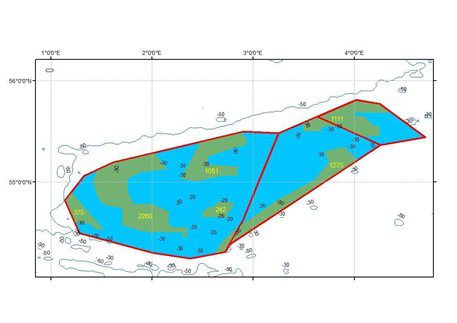
Although the NSAC industry, nor NGO representatives, were to have any further hand in the design of management measures, these proposals were used as the starting point for informing a joint recommendation between the UK, Dutch and German governments to close around a third of the adjoining SACs to bottom towed gears, which incorporated around a half in German waters. There were disagreements over precluding seine nets from the management restrictions with the UK and Netherlands arguing that they did not need to be included versus Germany which thought they did; Germany, therefore, precluded seines in the management zones whilst the UK and the Netherlands did not. Following the submission of the Joint Recommendation to the Commission in 2019, a review by STECF (4) the Commission’s scientific advisory body, also highlighted seines as an issue, that further attention is paid to fishing effort displacement and control and that coordinated monitoring programme be implemented so that after a 6-year review period the appropriate location and size of management areas may be revaluated. Notwithstanding this, it considered “the final proposal represents a trade-off between protection of the sandbanks and socio-economic interests, in line with Article 2 of the Habitats Directive 92/43/EEC.”
While all of this was progressing, in 2013 Defra began to introduce what it termed “the revised approach” to managing fishing in MPAs in English waters in response to a challenge that it was not being sufficiently proactive. This identified high-risk features for which management measures should be prioritised such as reef features and seagrass beds, whilst sedimentary habitats would be subject to more detailed assessments. Habitats subject to high levels of natural disturbance such as sediments in shallow water “where natural disturbance may be significant relative to anthropogenic impacts” were singled out where an adaptive management approach as an alternative to blanket prohibitions “may be considered disproportionate and unnecessary to meet the requirements under Article 6(2) of the Habitats Directive to take appropriate measures to prevent deterioration to the site.” This approach was regarded as consistent with the “draft proposals for the management of the Dogger Bank SCI” (5). Subsequently, only last year, the MMO together with the government’s conservation advisors completed a project that developed and tested a participatory process using an adaptive management framework for making management decisions (6).
History Forgotten
All of this has been instantly forgotten like a dream in the post-Brexit new dawn. It has happened when there has been no fundamental change to the evidence base on the effects of fishing. If anything, where the MMO has undertaken additional work to quantify the fishing footprint on the Dogger Bank, it has demonstrated that it is smaller than might have been expected from a visual inspection of fishing track data. Nor has there been a fundamental change in the legal framework which governs MPAs that owe their origin to the Habitats Directive; this is all retained EU law. Nor can the government reasonably claim (as it has done (7)) that agreement from EU Member States made it difficult to introduce measures under the CFP; Germany had taken a harder stance than it had done. In the wake of the EU referendum, except for the Dogger Bank, it had also held off pressing forward with draft plans for a host of other offshore sites, all of which had been through a process of stakeholder engagement (8).
This matters not only for the Dogger Bank and the precedent it signals for the rest of the MPA network, with the potential for mass displacement of fishing activities risking negative environmental impacts and chaos and conflict as fleets come into conflict with one another for years to come, but also because it undermines the vital signs of good fisheries governance – trust and cooperation. After all, what is the purpose of fishing communities working with fisheries managers when after a decade of cooperation on generating a common understanding of the evidence and basis for management, if at the 11th hour it is to be swept over the side by the illegal activities of Greenpeace and threats of legal action?
In a timely reminder of the potential sustainability benefits of co-managed approaches (9), Paul Hart, Emeritus Professor at the University of Leicester draws on several characterises of human behaviour from the fields of experimental and observational behavioural economics that may underpin successful management outcomes, including that:
– Those involved in designing systems for fisheries management and who have frequent interactions between members of a group involved in such an endeavour are more inclined to have a sense of ownership over it and ensure its maintenance.
– Those involved in contributing towards the management process (and evidence associated with its maintenance such as stock evaluation) are contributing to a public good that in turn legitimises their right to fish from which they exercise a greater interest in maintaining a suitable system of sanctions against free riders who undermine the system.
As Hart points out, giving more responsibility to the industry entails changes to the functions of management institutions where institutional path dependency to preserve status and power means that when changes do occur, they are often just incremental. It took a serious breakdown in the system of fisheries governance in the 1990s for the Commission to take a hard look at what was wrong, and even then, did not introduce reforms that gave industry any actual direct power over its own management; the work of the Advisory Councils is just that, advisory.
The Marine Management Organisation, a decade-old institution, is a relative newcomer to fisheries management and one that has only just been given expanded responsibilities. Notwithstanding the playing out of higher politics, this perhaps goes some way to explaining why in the face of the political signals of a green Brexit and coaxed by Greenpeace’s dangerous antics, it has so easily swung into a lowest common denominator remote control mode of management. A longer-term view, both backwards and forwards is desperately needed if post-Brexit fisheries governance is not going to head down the same cul-de-sacs of its CFP predecessor. Fishers who are to be expelled from customary fishing grounds deserve a better and a more just response than this, as does the sustainable management of our seas.
References
1. Greenpeace blocks destructive fishing with new ‘boulder barrier’ off the coast of Brighton https://www.greenpeace.org.uk/news/live-greenpeace…
2. Position paper on fisheries management in relation to nature conservation for the combined area of 3 national Natura 2000 sites (SACs) on the Dogger Bank https://www.noordzeeloket.nl/publish/pages/126227/…
3. NSAC Advice on lessons learned from the Dogger Bank Process https://www.nsrac.org/wp-content/uploads/2020/06/0…
4. Review of Joint Recommendations for Natura 2000 sites at Dogger Bank, Cleaver Bank, Frisian Front and Central Oyster grounds (STECF-19-04). Publications Office of the European Union, Luxembourg, 2019, ISBN 978-92-76-11227-3, doi:10.2760/422631, JRC117963 https://stecf.jrc.ec.europa.eu/reports/env-impacts…
6. Developing a participatory approach to the management of fishing activity in UK offshore Marine Protected Areas https://jncc.gov.uk/our-work/mpa-adaptive-manageme…
7. Defra (2020) Our response to Greenpeace’s action at Dogger Bank https://deframedia.blog.gov.uk/2020/09/23/our-resp…
8. These include North East of Farne Deeps MCZ, Swallow Sands MCZ, Inner Dowsing Race Bank and North Ridge SAC, North Norfolk Sand Banks SAC, Haisborough Hammond and Winterton SAC, Canyons MCZ, South West Deeps (West) MCZ, Greater Haig Fras MCZ, East of Haig Fras MCZ, Offshore Brighton MCZ, Offshore Overfalls MCZ, Bassurelle Sandbank SAC, South Dorset MCZ, Croker Carbonate Slabs SAC, Pisces Reef Complex SAC.
9. Hart, P. (2021) Stewards of the Sea. Giving power to fishers, Marine Policy, 126 https://www.sciencedirect.com/science/article/abs/…
Header photograph: JNCC
The UK has today reached agreement with Norway and the European Union on catch limits in 2021 for six jointly-managed fish stocks in the North Sea.
The agreement promotes the sustainable management and long-term viability of cod, haddock, plaice, whiting, herring, and saithe stocks in the North Sea. The catch levels agreed for 2021 are worth over £184 million to the UK fishing industry.
This is the first time the UK has participated in the talks as an independent coastal State. Throughout negotiations, the UK has pressed for catch limits – known as total allowable catches – to be set sustainably to ensure the long-term future of the fisheries industry.
Fisheries Minister Victoria Prentis said:
“Today we successfully concluded the first trilateral fisheries negotiations between the UK, EU and Norway.
“As an independent coastal state we are committed to managing our fisheries sustainably, to the benefit of the fishing industry across the UK and our marine environment, now and in the years to come.”
UK Government Minister for Scotland, David Duguid said:
“For the first time in decades we have concluded our first trilateral negotiations as an independent coastal state with the EU and Norway.
“The outcome represents an increase in the total allowable catch of certain key stocks for Scotland – such as Haddock and Whiting.
“Agreements have also been made which safeguard the long-term viability of some other key stocks such as cod.
“We remain committed to supporting the industry and being a champion for our coastal communities on the world stage.”
Of the stocks jointly-managed with the EU and Norway, five out of six have been set in line with or lower than the catch level advised by ICES, the International Council for the Exploration of the Sea. This results in catch reductions for North Sea cod (-10%), plaice (-2%), saithe (-25%) and herring (-7.4%) compared with 2020, but increases in haddock (+20%) and whiting (+19%).
The agreed catch limit for haddock is well within the sustainable limits advised by the scientific body ICES. This will encourage the recovery of other key stocks in the North Sea mixed fishery.
North Sea cod will be subject to a slightly smaller reduction than the -16.5% recommended by ICES. The three parties supported this approach as it would allow the stock to recover at a similar pace to that set out in the scientific advice. Furthermore, the catch limit is accompanied by the UK’s ongoing cod avoidance plan which applies to all vessels in UK waters. The plan establishes measures to support the long-term recovery of the stock in UK waters, these include ‘real-time closures’ to protect high abundances of cod and selective fishing gear.
The UK Government has worked closely throughout the negotiations with the Scottish Government and other administrations to reach this consensus.
This trilateral agreement marks the conclusion of the first in a series of annual fisheries negotiations. Bilateral negotiations are underway with the EU, Faroes Islands and Norway to confirm access arrangements and quota exchanges, where applicable.
Towards the end of a recent NFFO meeting with the management authorities (MMO/Defra and nature advisors, JNCC) it was revealed that it is the Government’s intention to implement management measures in 40 offshore marine protected areas over the next three years. That amounts to more than one per month. Because there is insufficient knowledge about the sites or the impact of different fishing gears, the government will rely on what is emerging as an extreme interpretation of the precautionary principle to justify its approach.
“The careful, methodical, evidence-based approach that we have been working on with scientists and fisheries administrators has been thrown out of the window”, said Dale Rodmell, NFFO Assistant Chief Executive, who is the Federation’s policy lead on marine protected areas. “A mature, steady approach in which we have invested huge amounts of time and effort has been left behind. We are now into the realm of gesture politics and vanity projects. The focus is site-by-site and no one is looking at the cumulative effects and damage to the fishing industry through displacement.”
This tempo is politically driven and precludes the dialogue and engagement necessary to design well-crafted management measures and avoid where possible fleet displacement. It amounts to a further breach of trust by a government which has already betrayed the fishing industry by its capitulation on the TCA. It will pose a huge threat to the notion of co-management.
Precautionary Principle
The precautionary principle can enshrine the eminently sensible notion that it is not wise to wait for every last piece of evidence before taking protective measures. The current imbroglio over the safety of the AstraZeneca vaccine demonstrates, however, that it is capable of elasticity of interpretation that can lead to perverse and even fatal outcomes.
Marine Protected Areas
Marine protected areas play an important role in efforts to protect the marine environment from a range of human activities, from aggregate extraction to major offshore infrastructure projects like offshore wind. The NFFO maintains, and this was a view shared by Government until recently, that it is possible to reach the conservation objectives for each site, whilst minimising adverse impacts on the fishing industry. This does, however, require close cooperation and evidence of the sensitivity of various conservation features to different fishing methods. It is the approach that will deliver the best outcomes for conservationists and fishers. This is the approach that has now been abandoned for a further, faster approach.
Burden of Proof
Not all European Marine Sites (SACs/SPAs) and Marine Conservation zones will become closed areas for fishing. But replacing a careful, evidence-building approach for a binary black and white interpretation of whether fishing activity is compatible with conservation features will inevitably sweep fishing out of customary areas, whether this is ultimately required or not. Worldwide best practice favours a more careful approach to managing the level and type of fishing activity over time. Progressively adjusting management as the evidence base improves ultimately delivers better results than a disproportionate approach to precaution that sets fishing industry and environmental objectives at odds.
Several existing site plans that have been developed by the government with input from stakeholders will now be abandoned. These were to have been progressed through the CFP, but except for the Dogger Bank SAC, which had been put on hold in the wake of the EU referendum. These are now to be swept away and replaced with a timetable that is frankly absurd and will deny fishing communities the opportunity to propose alternatives.
A policy approach that sweeps fishing from its customary areas to accommodate protected areas is easier and more straightforward than on land where there are legal protections associated with property rights. At sea, there are no such protections, and the result is rough justice for those who lose access to their grounds. Ignoring the consequences of displacement can be disastrous, with long term consequences as vessels are forced onto less prime fishing grounds, with knock-on impacts for other fisheries. The Government now seems impervious to the cumulative loss of grounds and their impact on dependent coastal communities.
Why?
One can only speculate at the political drivers behind the abandonment of a steady- but-sure approach and its replacement by a headlong rush, with utter disregard for consequences.
- There is undoubtedly a cohort of environmental zealots within the top echelons of the Conservative Party and close to the Prime Minister
- A childish greener-than-thou competitive strand is clearly evident in post-Brexit relations with the EU
- There are more green votes available than fishing constituencies can muster
- There may even be a naïve belief that the government is doing the right thing, missing or ignoring the evidence that a less spectacular but better-grounded policy would ultimately deliver better results
- Cowardice in the face of illegal vigilante action taken by Greenpeace on the Dogger Bank and in the English Channel, although what kind of signal that sends is disturbing.
Shared objectives
The fishing industry has a vested interest in a functioning marine ecosystem and shares many of the objectives held dear by environmentalists. Fishing puts food on the table and has one of the lowest carbon footprints of any form of food production. One would have thought that Government policy would be to carefully find trade-offs in which the fishing industry can continue to operate, whilst protecting vulnerable marine habitats and conservation features. It is a careful, balanced approach that we have just lost. The consequences will be grave.
Phot credit: Nina Constable Media
Was co-management just a word?
Are we fated to carry on with our incoherent, ineffectual, inshore management regime that is so utterly unloved by fishers, managers and fisheries scientists, because we don’t have the energy or initiative to break out of it?
Not Quite Dead
Despite the relative silence, it would be premature to pronounce the patient deceased. In the background, the wheels are turning. They turn slower than we would like but the lessons learnt over those two days in London, when fishermen and managers shared ideas and experiences have not been lost. They inform a programme of work with several strands that will one day, hopefully not too far away, begin to bear fruit in our inshore fisheries.
So, what has happened since the Conference?
1. The report of the conference was published and provides an important guide for the future; all that knowledge and experience has not been lost
2. A steering group was established and determined efforts have been made to include working fishermen, with direct experience of fishing in inshore waters in that group.
3. Fisheries managers, in the form of senior Defra officials have remained committed to the initiative
4. An action plan has been agreed
5. Progress has been made on mapping the maze of existing rules that apply in our inshore fisheries, as a prelude to understanding where change is required
6. Another mapping exercise is under way to understand the complexity of gears, fleets and target species in the various overlapping inshore fisheries – vital to define what it is we are trying to manage; these mapping exercises are perhaps best understood as ground-clearing exercises – unexciting but necessary preparation for the construction work ahead
7. Some pilot projects have been scoped out – to see how co-management might work in practice and develop through learning by doing – otherwise known as adaptive management
8. The Fisheries Act 2020 emerged from Parliament and provides a framework for fisheries specific management plans – highly relevant for the future management of diverse fisheries inside and outside the inshore zone
9. Inspiration has been taken from a range of existing co-management initiatives, which even though they don’t necessarily bear that title, carry at least some of the characteristics of co-management – at base a willingness for fishers, managers and scientists to cooperate in the management of their fisheries:
⦁ Isle of Man scallop fishery
⦁ Cornish Sardine Management Group
⦁ Shellfish Industry Advisory Group
⦁ The Scallop Industry Consultative Group
⦁ South Devon Static Gear Agreement
⦁ The experience of 40 years of delegated quota management by producer organisations, which at their best are active fishing cooperatives
⦁ The regional quota management groups which inform the MMO on setting limits for the under-10m and non-sector quota pools and which could take on an expanded role
10. The Seafish secretariat has provided coordination and leadership
11. The key to moving forward is the support of working fishermen. Unless there is active support in significant numbers, all co-management initiatives will founder and we will slip back into the usual sub-optimal way of doing things that pleases no one.
Choppy Waters, Bumpy Times
The FOIF is not dead but it has been mauled, as has the whole UK fishing industry, by seeing our hopes aspirations as an independent coastal state crushed by the terms of the TCA; terms accepted by a Government that promised a lot and delivered next to nothing.
The continued presence of large, modern, EU vessels within the 6-12nm zone is a daily reminder of the UK Government’s impotence and failure when push came to shove on fisheries.
In our frustration, it is important not to overlook two things important for the future management of our inshore fisheries:
⦁ The UK now has regulatory autonomy to set the ground-rules for all vessels fishing in UK waters, including non-UK vessels fishing within the 6-12m zone. Although, for the time being, we are subject to EU retained law (the CFP with a few adjustments) there is scope to move away from that body of rules over time – including those which affect inshore fisheries such as bass management measures and technical conservation rules
⦁ The UK is now an independent party in international fisheries agreements. That freedom of action can be used to depart from the CFP where we have no reason or desire to align with past or future European rules; this too has an important bearing on the future management of our inshore fisheries
What’s the Alternative?
There is no doubting the scale of the challenge we face in turning the management of our inshore fisheries around. They are amongst the most complex fisheries in the world and no country across the globe has got everything exactly right in managing their inshore fisheries. Also, we have been heading in the wrong direction for decades. Many of the problems that we face result from accretions of past policy decisions; many of them for wider purposes than strictly inshore fisheries but with impacts in the coastal zone. Then, it is important not to throw the baby out with the bathwater. Some things are working reasonably well, and we will want to keep them.
Despite the regrettable delays and obstacles faces in taking a new direction, do we really have any choice? We could continue to be subject to a top-down, command and control regime, but the best of fisheries managers agree and acknowledge that they will get it wrong if the fishing industry – the people who are subject to the rules – are not closely involved in the design and implementation of management measures. And do we really want to be stuck in (at best) a benign paternalist relationship with government? Or do we want to take our destiny in our own hands? Perhaps the highpoint of the FOIF conference was the inspirational example of British Columbia fisherman Wes Erickson, who with his colleagues turned the West Coast groundfish fishery from an unsustainable and unprofitable basket-case into an exemplar of sustainable fisheries management.
We can let ourselves be discouraged by the scale of the multiple challenges, or we can acknowledge those obstacles and set about removing them stone by stone. That takes a little time, but this is not the point at which we should give up. Here.
Future of Our Inshore Fisheries: Summary Action Plan
1. This paper provides a summary of the proposed next steps for the Future of Our Inshore Fisheries (FOIF) project. It is based on the discussions and presentations at the ‘Issues and Ideas’ workshop held 5 June 2019 and the conference held 8-9 October 2019.
2. Five main themes emerged from the conference discussion and presentations:
⦁ · Theme 1: Co-management
⦁ · Theme 2: Collaborative science
⦁ · Theme 3: Credible fisheries management
⦁ · Theme 4: Rights and access
⦁ · Theme 5: Effective compliance
3. The scale of change wanted and needed is significant. It will take time to develop and implement solutions. From the beginning we have recognised that this project will take a number of years. The project team has prioritised the following projects over the next 12–18 months. This work plan will be added to as the first round of actions are completed. A series of pilot studies will be used to test and refine the various initiatives. This will ensure that the experience and expertise of fishermen will directly inform the project, every step of the way.
4. The focus on this first phase of work is on establishing the framework that will enable better management of our inshore fisheries resources.
Theme 1: Co-management
5. Why this is important: Co-management ensures that fisheries management decisions are better informed by bringing industry knowledge and experience to the fore. Doing this should lead to a greater sense of collective ownership: management measures are more likely to be effective because they are supported and understood by the industry. Co-management runs as a constant theme through the FOIF work programme but also through the newly established Shellfish Industry Advisory Group (SIAG) and whelk/crab management groups.
6. Priority tasks:
⦁ · Establish a set of co-management principles which describe the
different stages of co-management and the roles and responsibilities of
government and industry at each stage.
⦁ · Pilot the application of these principles; the new SIAG, Whelk
Management Group and Crab Management Group will provide obvious case studies.
#FutureOfOurInshoreFisheries
Future Of Our Inshore Fisheries – Summary Action Plan
Theme 2: Collaborative science
7. Why this is important: We need to ensure that the right data and evidence is collected, at the right time, to the right standard and in a form that can be used to inform the right management decisions. This is more likely to happen when fishermen are active participants in the science and research process and are able to use their expert knowledge to help design research projects and review the results.
8. Priority tasks:
⦁ · Map our inshore fisheries by species, stock, management status etc.
and establish a database where this information can be updated annually. Produce information guides for fishermen and fisheries managers on status of key stocks.
⦁ · Develop and implement a research standard that establishes the protocols that will guide the collection and use of data, regardless of who undertakes it.
⦁ · Establish a formal peer review process that enables scientists, industry and policy makers to collectively review the science that is used to inform management.
Theme 3: Credible fisheries management
9. Why this is important: Ensuring the sustainable use of our inshore fisheries resources (in line with the objectives in the Fisheries Bill) means that we need to look at balancing environmental, economic and social outcomes. Credible fisheries management means that decisions are made with a clear line of sight to all three objectives.
10.Priority tasks:
· Define what fisheries will be managed as inshore fisheries:
o Focused principally on which sector is responsible for the majority of fishing mortality (as per the CEFAS presentation at the FOIF conference);
o Taking account of overlapping fishing activities and potential displacement effects.
⦁ · Develop a Harvest Strategy Standard (HSS) that will guide how inshore fisheries will be managed. Typically, a HSS means that each fishery has a management target in place that helps set fishing effort and a series of triggers that guide if management measures need to reduce fishing pressure.
⦁ · Guide to Fisheries Plans – setting out how fisheries management plans (as per the Fisheries Bill) could be drafted and implemented, who should be involved and what they should include. The SIAG has
#FutureOfOurInshoreFisheries
already agreed at its meeting on 3 March that it would develop a draft shellfish plan.
Theme 4: Rights and access
11.Why this is important: Open access fisheries are open to overexploitation and failure. The key to successful fisheries management is limiting fishing effort in line with stock sustainability. A fair and effective way to limit access to a fishery is therefore required. Alongside this, fishermen need to know that if they take the difficult management decisions, their access to the fishery is protected so that they can realise the benefits once a fishery improves.
12.Priority tasks:
⦁ Explore the feasibility of Community Quota Ownership schemes which will include establishing the principles that will guide how such a scheme will operate. Test the approach with a series of local pilots.
· For each inshore fishery start a review of access measures to determine the optimal arrangements that prioritise:
o The sustainability of the fishery;
o The need to deal with latent capacity and technological development;
o Delivering a fair and transparent means of allocating fishing opportunities.
Theme 5: Effective compliance
13.Why this is important: Successful fisheries management depends on fishermen having an opportunity to shape the rules that they work under. This ensures that the rules are clear understandable and increases the prospect that those subject to the rules will abide by them. There is an opportunity to establish a compliance system that delivers ‘policing by consent’ or earned recognition with a clear focus on actions to encourage compliance rather than traditional enforcement activity. Given the limited resources available to monitor fishing activity and to create an effective deterrent, fishermen also have a key role in encouraging community compliance.
14.No specific tasks are proposed on this issue over the next twelve months.
Future of Our Inshore Fisheries Steering Group June 2020
The MMO has stated that it will contact eligible businesses directly, in phases, by email from the week commencing 8 March 2021. The email will include a link to the online system where individuals can provide their details.
It advises that if you believe you meet the published eligibility criteria but have not been contacted by MMO directly by 21 March 2021, you will be able to submit your details and evidence of meeting the criteria via a link that will be published on this page from 22 March to 26 March 2021.
Further information can be found at: https://www.gov.uk/guidance/seafood-response-fund
Greenpeace’s recent vigilante activity in the Channel and Dogger Bank, supported by Charles Clover and Hugh Fearnley-Whittingstall, is but the most extreme symptom of this change in direction. Less directly reckless, but toxic nonetheless, is the hovering threat of judicial review against management authorities by environmental NGOs.
Vigilantism and legal terrorism signals a dramatic alteration in approach and modus operandi. Both fisheries regulators and the fishing industry will now have to adapt and respond to this new hostile operating environment.
Gone is any pretence of working with fishermen – or even the right kind of fisherman. Anyone in the industry who thinks that Greenpeace will stop at a ban on bottom trawling is deluded. Even fishing passively for crabs with pots is now in the spotlight for possible contravention of environmental legislation.
Having effectively destroyed the European advisory councils as functional representative organisations through entryism tactics, NGOs are moving on to deal with Brexit.
But where will these confrontational and litigious tactics take us?
It wasn’t always thus
Until 2012, it could be said that the green NGOs, speaking broadly, were interested in working with the fishing industry. After that date, not so much. In the first years of the century, for example, the NFFO and WWF worked collaboratively on the Invest in Fish campaign which cleverly married economic self-interest with environmental objectives. Within the regional advisory councils, relationships between fishing organisations and the environmental lobby were respectful and on the whole cordial. Information was shared. Consensus advice was the norm. RSPB and WWF in particular played prominent and constructive roles. That is all gone.
2012, and the run-up to the 2013 reform of the Common Fisheries Policy, marked a watershed – and the answer to what happened lies in one word. That word is money. Billionaires with money to burn, and presumably with guilty consciences, sought to solve both problems by directing large sums of money into shaping fisheries policy. This was done in the naïve belief (despite a mountain of evidence to the contrary) that a combination of top-down legislation and tough enforcement provides an effective way to manage complex multi-dimensional fisheries towards sustainability. Large amounts of money from charitable foundations were pumped into the NGOs for the express purpose of shaping the outcome of the CFP Review. That largesse has continued to flow. One day someone will obtain a Phd by researching the linkage between corporate surpluses, conditions attached to donations, absence of transparency and subversion of democratic process in the field of fisheries legislation 2012 – 2021.
The US based Pew Foundation (founded in the 1930s to oppose Roosevelt’s New Deal and promote American values) took pole position in facilitating this change.
The NGOs, working in tight formation and coordinated by Pew, were hugely successful in shaping the CFP reform. The Lisbon Treaty had radically altered EU legislative landscape and the EU landing obligation, along with a rigid (albeit scientifically illiterate) interpretation of maximum sustainable yield, was enshrined in EU law. These two legislative changes have worked their black magic ever since (1). The European fishing industry (which included the NFFO at the time) was simply outgunned and outclassed, particularly in the European Parliament.
The 2013 reform did include one positive element: decentralisation of fisheries policy. Regionalisation, however, was quickly swamped by having to deal with the populist but unworkable landings obligation. The work of regional groups of member states (operating at sea-basin scale) has been entirely swallowed by the task of designing and justifying exemptions from the requirement to land all catches of quota species, in order to avoid serious chokes (2) in mixed fisheries.
After the NGOs’ legislative goals within the CFP had been achieved, external funding continued to ensure that the “reformed” CFP was fully implemented. A new wave of NGOs joined the advisory councils after 2013, bringing with them a dogmatic mindset and an intense focus on procedural/legal detail rather than substance and outcomes. The advisory councils began to die at that point. Consensus advice could only be achieved at the very lowest of common denominators and any genuinely transformational role evaporated. Even the European Commission stopped pretending to pay them anything other than lip service.
Measured by results (rather than number of clauses in legislation) the 2013 reform can now be seen in retrospect as a turning point, but in some important respects for the worse rather than for the better.
It is significant that the Green Papers that the European Commission is obliged to prepare in advance of each CFP reform, in 2002 and 2012 both identified the top-down, command and control approach to decision-making as a principal reason why the CFP had under-delivered so spectacularly. These qualms seem to have been suppressed after the Lisbon Treaty introduced co-decision into fisheries – an emphatic and in retrospect, retrograde, reassertion of the top-down, command and control, prescriptive micro-management. This important development prepared the ground for a change in the environmental lobby’s tactics and approach to fisheries policy.
Johnny come lately
In fact, by 2012/2013 European fisheries, along with most fisheries in the North East Atlantic were doing alright. The early 1990s are best described as a basket case. But a turning point had been reached by 2000. By 2013 we still had some way to go, and a few stocks bucked the positive trends, but right-sizing the fleets in the 1990s had been the primary driver behind a dramatic reduction in fishing pressure from the turn of the century.
Fish stocks across the piece responded to lower fishing pressure. Some like Western hake and North Sea plaice, responded quite spectacularly, with biomass levels above anything seen in the historic record. We were on the right track.
So, when in 2011 Charles Clover published his catastrophe narrative The End of the Line, or when in 2012, the Pew Foundation plotted the reform of the CFP, they were Johnny-come-latelies. The heavy lifting had already been done and the big picture was one of fleet capacity in balance with available resources and steady improvement in the status of the stocks.
The UK as an Independent Coastal State
The UK-EU Trade and Cooperation Agreement keeps the UK tied into an exploitative and toxic relationship with the EU, but it does formally recognise that the UK is and independent coastal state with regulatory autonomy to manage the fisheries within its EEZ.
This poses a problem for those green NGOs which had abandoned collaboration and consensus in 2012 in favour of top-down EU legislation as the principle means of achieving their goals. Except as temporary EU retained law, (with a potentially short shelf-life) CFP legislation no longer applies to the UK EEZ. The passage of the UK Fisheries Bill through the Westminster Parliament therefore became the stage for a lobbying campaign by the environmental lobby with the aim of reinstating the essence of the CFP. The Government’s 80 strong majority (and a lot of parliamentary work by the NFFO) ultimately saw off the most damaging amendments. The Fisheries Act 2020 therefore provides a reasonable framework for the redesign of fisheries management in the UK. But it is largely a legal framework. A huge amount of work lies ahead in designing and implementing fisheries specific management plans and making the notion of co-management work in practice.
Trouble Ahead
If hit-and-run vigilante actions and litigation (actual and threatened) by environmental NGOs is to be the norm, as government and the fishing industry (in all its diversity) work on sustainable fisheries management plans, we are in for a rough time of it. Positions can only become entrenched. In such a context, can co-management survive, never mind thrive?
Urging Government to move further and faster in their preferred directions is what environmental NGOs do, and holding the fishing industry to account is a legitimate activity.
The difficulty arises when confrontation (legal or vigilante) gets in the way of steady progress and cooperation. Mutual respect, and dialogue are thrown out of the window. Evidence, instead of being an essential and common reference point, is used selectively to bolster partisan positions.
There is no sign that the flow of money into the environmental NGOs is drying up. On the present trajectory, there is no sign, either, that the NGOs are interested in cooperation and dialogue. Frankly, that is not what they are paid for. As long as the big money flows and it is made conditional on words in legislation rather than results on the ground, this impasse is likely to persist.
Market Share
There is a plethora of green NGOs out there. Not all of them are the same. Although they successfully coordinated their activities for the 2012 reform, there are inevitable tensions within the broad coalition, not least as they position themselves for funding. Greenpeace has largely followed a separate business model – spectacular media events designed to keep subscriptions flowing is their thing. Talking to the fishing industry, they are not interested in.
The arrival of the new kids on the block – Climate Extinction – with the trump card of climate change – must have disturbed the NGO ecosystem. They all have to make space for the newcomers – the new invasive species.
Careful Trade-Offs
It is ironic therefore that fishing – the form of food production with one of the lowest carbon footprints (lower that tofu) – is currently the focus of so much green attention. All fishing methods have an environmental footprint and our job is to minimise those impacts as far as possible, whilst still putting food on the plate. This requires close work with the scientists and close attention to the evidence base. It also requires balance and careful trade-offs. For example, a ban on bottom trawling in the North Sea would (the EU Commission have calculated) lead to a 1300% increase in the number of static nets – that is, if society still wants the fish to eat. Nobody thinks that is a good idea and this is unlikely to be the result that Greenpeace seeks. Unintended consequences like this are, however, very common when fisheries management is reduced to pulling remote legislative levers in the naïve and usually forlorn belief that good outcomes can be achieved without engaging with the people affected by that the rules.
Conclusions
It is difficult to see where we go from here. Well-designed fisheries management plans and co-management (where fisheries, scientists and fisheries managers work together), offer a viable and attractive way to make fisheries management effective and deliver its objectives. Ensuring that management measures are understood and supported by the people who are most directly affected by them is understood to be an essential touchstone of modern fisheries management. This requires dialogue and shared objectives – in other words, co-management.
The question must be whether co-management is viable within a context where government policy is unduly responsive to the green vote; where green vigilantes operate under an umbrella of apparent impunity; and where green lawyers hover, searching for a weakness to use as a legal baseball bat.
Trust is a vital ingredient for co-management to work and it is exactly trust that has been so badly strained by the terms of the Trade and Cooperation Agreement. Add to that the constant threat of litigation in the complex area of fisheries management and the road leads to entrenched positions, insecurities, a brake on honest dialogue and a focus on legislative texts rather than real-world outcomes.
Despite our differences over pathways to sustainability, the fishing industry and environmental NGOs share common ultimate objectives. A functioning ecosystem is a precondition for the high yield fisheries that the industry desires. Instead of working together to achieve these objectives and supporting an industry crucial to the food security of the country we have been set on a collision course. A fork in the road occurred in 2012. It remains to be seen if there is any way for those divergent pathways to merge.
Closing the gap will require the NGOs to step away from the well-remunerated trajectory that they have been on since 2012. It will also require the fishing industry to have the maturity to understand that environmentalists and fishers ultimately have the same goals and that the future lies with co-management, despite the not insignificant hurdles in its path.
Update: Legal Threat by Charles Clover
As if to underline the main thrust of the article we have received the following threatening message from Charles Clover who is Director of Blue Marine but apparently supported Greenpeace’s illegal activity on the Dogger Band “in a personal capacity”. Readers are left to make their own judgement.
The email from Charles Clover reads as follows:
“Can you please correct the bit about Blue Marine Foundation and Greenpeace? Blue did not support either action by Greenpeace. I said they could put my name on a rock on the Dogger in a personal capacity – which I carefully explained at the time – but BLUE the charity does not support these actions and didn’t even know they were happening. So your writer is putting two and two together and making 17. Blue is indeed bringing an action for JR against the government for failure to enforce the Habitats regulations on the Dogger Bank. The Sussex action has nothing to do with us. This is mentioned nowhere in your piece. On the Dogger, BLUE is trying to get the government to enforce the law, not creating a “hostile operating environment.” There is a massive amount of frustration in the NGO world that areas designated as MPAs about a decade ago are still not managed properly. You know that perfectly well.
My book, The End of the Line, was published in 2004 and contained material from my exposure of black fish in the North Sea dating back to 1997, when it was rampant. You should check your facts. So the bit about Johnnie come latelies is simply wrong. I had been covering fisheries and the environment since 1987. I sent you a cutting recently showing me quoting you on overfishing in 1990. So correct that bit too, please.
Take it down and correct it now please or we will have to take it further.
Notes
1. Although the positive trajectory of stocks across the North East Atlantic, where fleets were right-sized by publicly funded decommissioning in the 1990s and early 2000s, has continued, the landing obligation and MSY policies have seriously hampered the development and implementation of effective solutions in the cod fisheries in European waters.
2. A choke occurs when in a fishery of up to 25 inextricably mixed species, the quota for one species is exhausted. In these circumstances, a vessel may not legally retain or land catch of that species but neither (by the terms of the landing obligation), is the vessel permitted to discard catches of that species back to the sea.
One reason for the priority given to Scotland may lie with the fact that elections for the Scottish Parliament are due in May, with a second referendum on the union hanging in the balance.
Likewise, fears are mounting south of the border, that the lion’s share of additional quota secured as part of that Christmas Eve deal will be used to placate nationalist sentiments in Scotland.
And then there is the question of how the £100 million, put aside for the fishing industry, as the booby prize will be allocated.
The Joint Fisheries Statements, currently in development, that will form the basis of future domestic fisheries policy is another area where English nervousness is marked.
Champion
The industry south of the border has long pointed to the anomaly that, unlike the devolved administrations, it has no ministerial champion, unencumbered by dual responsibilities for the UK and England. Bulk pelagic landings boost Scotland’s claim to be the preeminent fishing nation in the UK but in fact there are more boats and fishermen outside Scotland than inside. There are real fears that their interests will be marginalised in the forthcoming scramble to save the union.
The NFFO has called for equity and fairness in the way the English fleet is treated. Fishing is markedly more diverse in England than north of the border and faces the challenge of continued access for EU to fish within 6 miles of the shoreline in additional to acute quota shortages. Export difficulties affect English exporters every bit as much as those of Scotland, but it is the latter that hits the headlines and for which a dedicated taskforce has been established. Leaving aside whether the taskforce can add value to what is already being done is a moot point, but it is the signal that is being sent – Scotland matters, England doesn’t – that is the general perception around the English coastline.
Vacuum
Fishing does not occur in a political vacuum. From the UK’s departure from the EU, to devolution and decarbonisation of the economy, fishing has been repeatedly caught the crosscurrents of major political forces. The current real and present danger, as we try to find a way forward after the catastrophic outcome of the TCA, is that we will now be forced to play second fiddle to devolution and independence politics.
 The NFFO wrote to all party leaders and fisheries spokespeople asking for unequivocal criticism of Greenpeace’s reckless vigilante actions. Luke Pollard, MP for Plymouth, is the first to speak out.
Freedom of Information
Greenpeace has responded to the NFFO’s defence of fishermen by issuing a freedom of information request to the Marine Management Organisation, demanding copies of all agenda and reports on meetings with the NFFO.
We can help!
This is what we told the MMO:
“It is quite plain that Greenpeace believe that they are operating under an umbrella of impunity and will continue, and possibly escalate, illegal activities against the fishing industry at time and place of their choosing.
The fishing industry has the right to demand protection and immediate and proportionate enforcement action. Proportionate in this context means that penalties and enforcement action should be on a scale to have a dissuasive effect on Greenpeace’s future illegal activities.
You cannot but be aware of the effect that the MMO’s lack of action on this issue has on the fishing industry’s morale and perception that they are not being dealt with in an even- handed way. Greenpeace may have friends in high places and the media but this cannot abrogate the MMO from its responsibility to execute its duties fairly, proportionately and in an even handed manner.”
Click here to read this thoughtful article examines the issue in a more objective way:
Letters have been sent to Boris Johnson MP, Keir Starmer MP, Ed Davey MP, George Eustice MP, Victoria Prentis MP, Luke Pollard MP and Alistair Carmichael MP.
Greenpeace
You have doubtless learnt that this week Greenpeace have been dumping large boulders to obstruct legitimate fishing activity in the Offshore Brighton Marine Conservation Zone.
We want to know where you stand on this type of illegal activity.
We all know that political parties court the green vote. For the record we fully acknowledge that, as an industry, we need healthy seas and a functioning ecosystem and that well- planned and implemented marine protected areas have a role in achieving these objectives.
But we want to know if you publicly condemn, in unequivocal terms, vigilante action that is illegal, and recklessly endangers crews and fishing vessels. Whatever differences we may have with the Government over the implementation of its policies on marine protected areas, we need to know that we are not moving into an era where policy is dictated by media savvy bullies.
In short, we need to know whose side are you on?
I look forward to hearing from you as a matter of urgency.
Marine Management Organisation
The NFFO has previously written to the MMO demanding action to prevent escalation to the point at which we are dealing with a tragedy and not just media savvy bullies.
“It is quite plain that Greenpeace believe that they are operating under an umbrella of impunity and will continue, and possibly escalate, illegal activities against the fishing industry at time and place of their choosing.
The fishing industry has the right to demand protection and immediate and proportionate enforcement action. Proportionate in this context means that penalties and enforcement action should be on a scale to have a dissuasive effect on Greenpeace’s future illegal activities.
You cannot but be aware of the effect that the MMO’s lack of action on this issue has on the fishing industry’s morale and perception that they are not being dealt with in an even- handed way. Greenpeace may have friends in high places and the media but this cannot abrogate the MMO from its responsibility to execute its duties fairly, proportionately and in an even handed manner.”
The announcement introducing the fund is reproduced below.
Increased support for fishing and shellfish businesses
- Expanded Seafood Response Fund for the UK’s fishing and shellfish aquaculture sectors
- Fund will draw on existing £23m fund but provide cash grants for more fishing businesses
- Scheme to target the needs of the whole UK fishing industry
The Government has announced enhanced financial support for the seafood industry with cash grants for fishing and shellfish aquaculture businesses across the UK.
In January, the Government made available £23 million for seafood exporters that suffered a financial loss because of delays related to the export of fresh or live fish and shellfish to the EU during January 2021.
Having listened to concerns from fishing businesses across the UK, Defra will now be expanding the eligibility criteria to target catching and shellfish aquaculture businesses which have been affected by a reduction in demand from the hospitality sector in the UK and abroad, as well as disruption of exports to the EU. These expanded criteria will mean more businesses can get the support they need.
The scheme, which is similar to last year’s Fisheries Response Fund set up in response to the coronavirus pandemic, will open in early March and provide a grant payment to cover up to three months of average business fixed costs incurred between January and March 2021. It will help catching and shellfish aquaculture businesses with costs such as such as insurance, equipment hire and port fees.
Environment Secretary George Eustice said:
“Our fishermen are at the heart of many of our coastal communities and we recognise the impact of coronavirus and the end of the transition period on them. This expansion of our £23 million support package will ensure many more businesses can benefit from government support.
“The coronavirus pandemic has led to the closure of critical markets, and this has been exacerbated by issues faced by exporters at the border. We will continue to ensure we are listening to our fishing and seafood industry as we work to resolve these issues, and work with them to build up the industry in the months and years ahead.”
UK Government Minister for Scotland, David Duguid said:
“Over the last few months, we have been listening to the seafood industry and have continued to monitor the impacts that the pandemic and export disruption has played on prices, exports and the market.
“I am confident in the quality of Scottish fish and seafood but for many fishing businesses the lack of demand in the hospitality trade in the UK and further afield has had a real impact on market prices.
“While we continue to take steps to beat this virus and work with the sector to resolve export issues – this expanded support scheme will help the many small and medium sized fishing businesses that support so many of our coastal communities.”
Secretary of State for Northern Ireland, Brandon Lewis said:
“The fishing industry plays an important role in Northern Ireland for its people and communities, supporting around 2,000 jobs.
“This expansion of the government’s £23million response fund will ensure that the fisheries and aquaculture industry in Northern Ireland receives the financial and practical support it needs.”
The main features of the scheme are:
- For the UK catching sector, the fund will be open to under 40m vessel owners with fishing licences and who have a track record of fishing in the winter months.
- The scheme will offer support to UK shellfish aquaculture businesses, support will be provided on average ongoing costs based on Full-time equivalent (FTE) employees per business. Businesses who have received a grant under the recent Seafood Producers Resilience Fund in Scotland will not be eligible for the UK scheme.
- The Marine Management Organisation will administer the fund across the UK on behalf of Defra, contacting eligible registered owners and licence holders directly with details of how to apply, starting in early March.
- A single payment will be made to cover a proportion of fixed costs over a three-month period from January to March 2021.
The funding follows targeted support to help exporters with new processes. This includes the Seafood Exports Working Group, meeting twice a week to troubleshoot issues raised by the industry; and a newly established Scottish Seafood Exports Task Force.
The UK fishing and seafood sector is also set to benefit from significant government investment with a £100m fund to help modernise fishing fleets, the fish processing industry, and rejuvenate an historic and proud industry in the UK, on top of the £32m that will replace EU funding this year.
The Government also continues to seek urgent resolution to export issues, including the EU ban on the import of class B live bivalve molluscs and will explore further ways producers can continue to export this valuable seafood.
UK mussels and oysters are highly sought after, at home and abroad. The sector has been highly impacted by Covid restrictions, and now barriers to trade imposed by the EU.
There is also wider support from the Government to the sector including the on-going Coronavirus Business Interruption Loan Scheme, the furlough scheme and the recently launched SME Brexit Support Fund to help businesses deal with export requirements.
Ends.
Emily Ambrose | Senior External Affairs Manager
Department for Environment, Food and Rural Affairs
Direct line: 07825 731 449
Address: 4th Floor, Seacole Block, 2 Marsham Street, London, SW1P 4DF
In his article Britain’s Fishermen are stranded on the Brexit Rocks but who’s fault is it? (The Herald 22nd January) Struan Stevenson manages to emerge as both an apologist for the Common Fisheries Policy and a defender of Boris Johnson’s claim to have delivered the UK fishing industry from the clutches of the CFP.
Perhaps he is right, and the fishing industry was naïve to believe that Brexit could mean a definitive break with the Common Fisheries Policy. In our defence, the UK fishing industry was given every reason to understand, from multiple statements by the Prime Minister and senior members of the Cabinet, as well as Chief Negotiator David Frost, that that this Government considered fishing rights to be a matter of sovereignty and therefore a matter of principle. That proved not to be the case.
Our grievance – spelt out in our letter to the PM – is not just that, when push came to shove, the Government prioritised a trade deal. Given the jobs and businesses that hung in the balance that was perhaps to be expected. What really stung was that the Prime Minister made the dishonest claim that the UK had achieved its negotiating objectives on fishing. The plain truth is that it failed dismally. There are exact parallels between what Boris Johnson did on Christmas Eve with what Ted Heath did to fishing in 1973 – both sacrificed the industry for other national objectives.
Whatever fringe groups may have suggested, the two UK fishing federations at no point argued that EU fleets should be permanently excluded from UK waters. Our argument was that access should be negotiated annually and that quotas should broadly reflect the resources located within UK waters – the normal relationship between two coastal states which share fish stocks.
Compare Norway
The EU’s relationship with the UK on fishing rights – especially in relation to access and quota shares – is now in stark contrast with its relationship with Norway. Both the UK and Norway are independent coastal states under international law – but the provisions of the Trade and Cooperation Agreement, mean that the UK has ceded concessions that entirely undercut that legal status. What happens at the end of five and a half years is an open question, but we fear that the EU has powerful trade levers to ensure that the UK will remain trapped in a neo-colonial relationship so far as fishing rights are concerned. It feels like we are caught in a never-ending Groundhog Day, or in Hotel California – you can check-out, but you can never leave.
The EU’s Michel Barnier has shrugged at the problems experienced by UK fish and shellfish exporters confronted by new border controls. It is, he says, the normal trading relationship between the EU and a third country and the UK voted to leave the EU. Border delays are an automatic consequence of that decision. The exact opposite, however, is true on fishing – the UK is now a third country and holds coastal state rights under UN law of the sea – but is denied exercise of those rights by big-power politics. The EU has succeeded in having it both ways.
Freedom of Movement
Freedom of movement of labour and capital has left a complex residue. Scotland has not been immune to the sale of quota and fishing vessel licences to non-UK interests, but Struan Stevenson is right to say that this proceeded much further in England and Wales. This won’t be easily altered unless the Government pays compensation because the courts have determined that quasi-property rights have been established. In any event, quota holdings purchased by non-UK interests are concentrated in a relatively small group of species. It is just ignorant therefore to suggest that any adjustments in favour of the UK’s quota shares would be swallowed by foreigners. The UK fleets remain starved of quota because the lion’s share continues to go to the EU. Stevenson misrepresents the change to quota shares. He suggests that the EU has relinquished 25% of its quota holdings. The actual figure is 25% of the value of the fish caught in UK waters – a very much smaller number amounting to a marginal shift and nowhere close to the UK’s zonal attachment rights. The UK’s share of Eastern Channel cod remains 9%; the French share remains at 84%.
To complete the picture, on the labour side of the free movement equation, the engagement of migrant labour, mainly from the Philippines, has proceeded much further in Scotland and Northern Ireland than in England or Wales. This raises complex issues that must be handled sensitively for the boats and crews involved.
It shouldn’t be missed that, over 30 years, free movement and market-based policies within the UK also led to a huge drift of quota and licenced fishing capacity northwards from England to Scotland, especially in critical stocks like North Sea cod.
Is anything better?
Despite the asymmetric and exploitative relationship that the Government has tied us back into, there is some scope for improvement, beginning with the (very) modest quota increases in the UK’s quota shares over the next five years. These increases are not distributed evenly across UK fisheries or sectors. The Secretary of State could ensure that these are allocated on the basis of need, rather than as a windfall to those who already hold substantial amounts of quota. Ensuring that no fleet segment is left worse off by the Brexit debacle should be a priority.
Secondly, even with one hand tied, the UK’s departure from the Common Fisheries Policy, does at least give us regulatory autonomy over the rules that apply in UK waters and is an important break with the dismal CFP. The Fisheries Act 2020 is shaped around the contours of the devolution settlement but does provides a useful framework for the introduction and trial of some imaginative fisheries management policies, particularly in relation to sustainable fisheries management plans and co-management, where fisheries managers, fisheries scientists and the fishing industry work collaboratively towards shared objectives.
Oblique Attack
We can’t help noticing that Struan Stevenson makes his criticism of the Scottish fishing industry obliquely – by attacking the English based NFFO, although the NFFO and Scottish Fishermen’s Federation held identical positions on the UK’s future as an independent coastal state and campaigned together to secure it. Doubtless that is none-too-subtle positioning ahead of the Scottish elections in May.
Dear Secretary of State and Fisheries Minister
I wrote to you on 01 February, 2021, making the case for a further tranche of financial support for the fleets in England who are facing multiple challenges.
I am writing again to press you on this matter because things in our sector are getting worse rather than better. The combined effects of Covid-19 lockdown and impediments to the export of fish and shellfish, along with low levels of resilience are putting a great strain on the viability of many fishing businesses. The purpose of the first tranche of financial support was to ensure that we have viable fishing businesses when these troubles recede. In that regard, nothing has changed.
We would therefore urge you to make the necessary approaches to the Treasure for the support that our sector desperately needs.
As an industry we have no desire to be reliant on subsidies and consider self-reliance to be a virtue. These are, however, exceptional circumstances and I must ask you to treat this as a matter of urgency.
Yours sincerely
Barrie Deas
Chief Executive
TACs and TAC Conditions
The primary task in the annual negotiations is to set total allowable catches for shared stocks. It is clear however from the opening sessions, in which the EU have repeatedly emphasised convergence between between the two parties, that its strategic objective is to bind the UK back into the Common Fisheries Policy – both existing CFP rules and any future CFP rules that the EU may adopt. The main focus is on the conditions that can sometimes be attached to TAC decisions. In the past, these conditions have frequently been attached as footnotes to the EU TACs and Quota Regulation. That route stretched the Commission’s authority (and the Lisbon Treaty) to the limits of legality but is no longer open to it in relation to the UK. The EU is therefore manoeuvring to trap the UK into accepting strong linkages between TACs and an array of additional measures. As this first is the first set of annual fisheries negotiations in which the UK is acting as an independent party, both sides recognise that more is at stake than just the arrangements for 2021, important as they are.
Regulatory Autonomy and Divergence
The EU’s objective is in diametrical opposition to the UK’s stated intentions as it left the EU and the CFP. The new UK Fisheries Act 2020 provides the means for the UK to diverge from the Common Fisheries Policy. On fisheries, the purpose of leaving the EU and the CFP was to forge a new destiny and do things better than the discredited and cumbersome CFP. There is an obligation, within the TCA to keep the EU informed and to consult – but ultimately and legally this type of decision lies exclusively with the UK.
Leverage in the Negotiations
In negotiations of this type, both sides seek leverage. On the issues of substance this trial of strength is apparent:
Timing
Both parties have emphasised the importance of reaching a quick settlement, as these negotiations would normally be finalised before the end of the previous year. A calculation then ensues as to which side will be most damaged by a delay.
Quota Exchanges
The fishing industry on both sides would benefit from early agreement on the exchange of unutilised quota. From the plenary sessions it is clear, nonetheless, that the EU calculates that delaying agreement on exchanges, perhaps till later in the year in an as yet undefined process using yet-to-be-established Specialised Committees, will give the bloc more leverage over the UK in other parts of the agreement. This is a dangerous game for both UK and EU fleets which risk being left short of the quota that they need for the rest of the year.
Landing Obligation
The EU landing obligation represents the biggest current threat to the sustainable management of our mixed demersal fisheries. The loss of face attached to revisiting this flawed piece of legislation, especially in the European Parliament means, suggests that it will not be revisited this side of the next CFP review. The UK, by contrast, has signalled that it will amend the UK’s version of landing obligation at the earliest opportunity, whilst retaining the principle of minimising unwanted catch. In the meantime, the landing obligation remains part of EU retained law. The UK, however, has scope to apply its own exemptions and conditions. This opens up another area of potential divergence which the EU would like to close down.
Non-TAC Fisheries
Although the main business of the annual negotiations relates to TAC setting, the Trade and Cooperation Agreement binds the parties to set tonnage limits on the take of non-quota stocks in each respective EEZ. The mechanics of how this will be managed will be the business of the specialised committees, but some elements are under currently discussion within the current negotiations, including how tonnage limits will be calculated and catches monitored.
Seabass
Seabass is another area in which the EU seeks to bind the UK into its existing approach. The UK has signalled its intention to make a number of modest and scientifically justified adjustments to the rules – either as part of the annual agreement or independently in UK waters.
Celtic Sea and Irish Sea Technical Measures
The UK has proposed a set of selectivity measures for vessels operating in the Celtic and Irish seas. The issue between the parties is whether the EU will agree to them, or whether the UK will apply them autonomously in its own waters.
Failure to Agree
On the trajectory that the parties are currently on, a point will arrive when it becomes clear that – despite all efforts – an agreement for 2021 is not possible. In these circumstances autonomous quotas will be set by the parties for this year and there are rules in the TCA about how this should be done. The UK would set (non-discriminatory) conditions for all vessels fishing in UK waters and the EU would do likewise for all vessels operating in EU waters. Whilst in Western Waters, the extent UK and EU EEZs are broadly equal, in the North Sea, 80% of the waters are either in the UK or Norwegian zone.
Linkages
Trilateral negotiations between the UK, EU and Norway are under way in parallel to the UK/EU talks, to set TACs on shared stocks in the North Sea. In addition, separate but parallel bilateral negotiations between the UK and Norway, and UK and the Faeroe Islands (and EU/Norway) are also under way. Setting TACs is the focus of the trilateral negotiations, whilst agreeing access arrangements and quota exchanges is the main business of the bilateral talks. As there can be important potential linkages between the different sets of negotiations, from the outside the different interlinked talks can look like multi-dimensional chess.
Breaking the Mould
The first annual negotiations between the UK and the EU in the wake of the Trade and Cooperation Agreement, were never going to be easy. The EU’s stress on cooperation, collaboration, convergence and the benefits of continuity masks its ambition to bind the UK as closely as possible to the status quo – the Common Fisheries Policy. Having already ceded the UK’s strongest card – access to fish in UK waters – in the TCA, the UK nevertheless has two important levers. The UK is no longer a member state supplicant and can negotiate as an independent party; and it has regulatory autonomy over the rules that it can apply to all vessels fishing in UK waters. Important as the decisions in these negotiations are for fishing businesses in 2021, there is a larger trial of strength under way – that will determine the future for the next 51/2 years, and possibly beyond. The outcome of these talks will provide an indication on whether the UK has broken free of the CFP (despite continuity on access and minimal change on quota shares) and intends to forge its own path ahead; or whether the UK remains as a satellite within the CFP orbit.
Context
All this takes place against continuing impediments to the export of fish and shellfish into the EU. Higher costs and a dramatic increase in the quantity and complexity of customs documentation are part and parcel of the UK’s decision to leave the single market and customs union. The difficult conditions faced at the border since the turn of the year– and ensuing delays, fatal to a perishable commodity such as fresh fish and live shellfish, owe more to a complex of factors. These include:
- System and business readiness in different parts of the supply chain and at the Border Control Posts themselves
- Different interpretations of the rules at different EU entry points
- A conflict in interpretation that has led to an effective ban on the import of live bi-valve molluscs into the EU.
Work is ongoing – principally through the twice weekly meetings of the Exporters Stakeholders Group – to resolve the outstanding issues
Covid
And then there is Covid-19. The annual fisheries negotiations are taking place entirely remotely and this imposes important limitations and pressures in this strange and hopefully atypical year.
Dogger Bank Special Area of Conservation;
Inner Dowsing, Race Bank and North Ridge Special Area of Conservation;
South Dorset Marine Conservation Zone; and
The Canyons Marine Conservation Zone.
Further details at: https://consult.defra.gov.uk/mmo/formal-consultation-mmo-mpa-assessments/
Closes 28 Mar 2021
NFFO letter to:
Secretary of State George Eustice MP
Fisheries Minister Victoria Prentis MP
Dear Secretary of State/ Minister
Financial Support
Your department and the Marine Management Organisation can take due credit for successfully pulling together an evidence-based case to the Treasury for the industry package of financial support announced in April.
It is deeply regrettable, but not entirely unforeseen, that I now have to make the case to you for a further tranche of support.
Covid related market disruption, border issues related to the UK’s departure from the EU single market and customs union, and the pre-existing lack of resilience in parts of the fleet due to successive periods of bad weather, all combine to put many fishing businesses in a financially parlous position.
Against this background, we request that you give urgent consideration to a further approach to the Treasury to release tranche funds to keep our sector afloat financially.
The purpose, as with the initial package of support, would be to ensure the survival of fishing businesses faced with fixed costs and reduced income, so that we have an industry when the pandemic recedes, and trading relationships settle down.
I look forward to your early reply.
Barrie Deas
Chief Executive
The proposals for the Dogger Bank which is the size of Northern Ireland will generate large scale displacement with knock on environmental as well as social and economic impacts. As a shallow sand bank, the effects of fishing are limited on an ecology that is adapted to the routine impacts of waves and storms. Not even the European Commission that had presided over the development of measures over the last 8 years thought that was necessary or proportionate. Before Brexit it had been working on closing around a third of the site based on plans agreed between the UK, Dutch and German governments.
Many will now be asking what has changed. They will also be asking how the government can permit the development of four of the largest wind farms in the world on the same site but take such a sledgehammer to fishing. This punishing reversal comes on the back of the government’s failure to deliver on fishing in the Brexit negotiations, and damaging delays in the export of fish and shellfiish.
Assistant NFFO Chief Executive, Dale Rodmell said, “We have worked with managers and government conservation advisors for more than a decade on this site. We were given no inkling that this would be the approach on one of the most resilient of habitats covered by the Blue Belt. Not even light-weight seine nets are to be permitted – previously it had been proposed this gear type would have full access. This changes the whole calculus on where it was expected the balance would lie for sustainable fisheries access in meeting site conservation objectives. The proposals amount to a further sell-out of fishing. It augers ominously for other areas and for fishing communities in our increasingly crowded seas.”
It is not just the loss of fishing grounds to the Blue Belt which already covers 38% of our seas. The unprecedented expansion of offshore wind also threatens fishing communities, where to meet net zero greenhouse gas emission commitments, a 12-fold expansion is needed. It was expected that marine managers would be proportionate and identify synergies between conservation and different marine uses so to avoid hampering sustainable use of our seas and impacting customary fishing grounds that are vital to our coastal communities and form a sustainable protein source for the nation. These proposals are anything but that.
Notes:
Current offshore generating capacity is 10.5GW. The government advisor the Committee on Climate Change estimates that 125GW generating capacity will be needed to meet net zero.
Other sites being consulted on include:
o Inner Dowsing, Race Bank and North Ridge Special Area of Conservation (The Wash approaches, off the Lincolnshire and North Norfolk coasts)
o South Dorset Marine Conservation Zone (South West – Dorset)
o The Canyons Marine Conservation Zone (South West – Offshore)
Consultation: https://consult.defra.gov.uk/mmo/formal-consultation-mmo-mpa-assessments
Dear Secretary of State
Allocation of Additional Quota
In some parts of the fishing industry, we have already seen the emergence of sharp elbows and insularity about how to allocate the modest increases in additional quota secured by the UK under the UK/Trade and Cooperation Agreement.
The additional quota secured by the UK is not evenly distributed across stocks, fisheries or regions. Some have experienced windfalls, whilst other face crisis because access to additional quota through international swaps is to be replaced by a much more cumbersome system of international exchanges at state-to-state level, with no guarantee about how whether that mechanism will deliver.
We consider that the Secretary of State should resist pressures from devolved administrations and sectional interests and make a determination based on need not greed.
Additional quota should go, first and foremost, for use as currency in international exchanges to secure quota for where there is an acute shortage. An obvious case is where those quota shortages will lead to chokes in mixed fisheries in 2021. The guiding principle should be that no group or vessel should be worse of as a result of the Brexit debacle.
Any Brexit bonus for the lucky few should be a secondary consideration.
The NFFO has been a strong supporter of the FQA system, when it was not fashionable to be so. FQAs brought stability, a means of matching available quota to capacity, and a sense of stewardship during a time of chaos. We stand by those views.
Additional quota is different and should be treated according to the principles of equity, mutuality and fairness, not electoral or sectional pressures, or suchlike considerations.
If the NFFO is about anything, it is about mutuality: in common parlance looking out for each other and strength in unity. The Secretary of State should follow the same precepts in making a determination on additional quota.
With exports of fish and shellfish into the EU impeded by a range of border issues, Defra has formed a new stakeholder group to address the mounting crisis. The group containing fish exporters and representative bodies from the fish sector will meet twice weekly and feed conclusions up to the top of government.
Delays of up to 96 hours have been encountered at the border. Such delays are is obviously fatal to the business of selling a perishable commodity like fresh fish and live shellfish. The failure to eradicate obstacles at the border has implications for everyone in the supply chain from fishing vessels facing a fall in first-sale prices, to upmarket restaurants in Paris and Madrid who are being denied access to the high-quality fresh fish and shellfish that their reputations have been built on.
The first meeting of the group on 12th January, followed days of mounting evidence that the new border controls associated with the UK’s new status as a third country are more entrenched than is understood within government.
One of the difficulties faced is identifying the specific problems encountered, which can vary widely:
Some of the border problems encountered include:
- Inadequate systems IT update
- Lack of clarity on commodity codes on documentation
- Different interpretation of the EU import rules at different EU entry points
- Inexplicable delays after paperwork has been completed
- Breakdown in the Calais/Boulogne transit arrangements
- Catch certificates where consignments contain the catches of multiple vessels
- Different levels of understanding what is required in order to successfully export
- The challenges of pre-notification in the context of multiple consignments of a perishable commodity
Groupage, where multiple small consignments of fish are gathered at a regional hub for onward transport and export, have been particularly badly affected, although large scale exporters using their own designated transport are by no means immune.
As volumes of exports to the content ramp up after the Christmas break and understandable initial wariness by exporters to avoid being the pioneers of a new system, the problems with the new system are being felt most acutely in the fresh fish/live shellfish export sector.
There is a bitter irony for the fishing industry that its hopes for a new future as an independent coastal state was sacrificed by the government for unimpeded access to the European market – only to find that access to that market is anything but frictionless.
This mounting crisis in the export of fish and shellfish highlights the anomaly through which the UK has unilaterally provided a six-month period of grace for imports to the UK. Whilst EU products face frictionless trade, our exports hit a range of non-tariff barriers which have paralysed our export trade. There is an obvious case for parity as the various border issues are sorted out.
If this is indeed the new norm, it is clearly the case that many businesses in the supply chain will fail and jobs will be lost.
Dear Prime Minister
Fishing Rights and the EU
In our hearts, many of us in the fishing industry feared that when the fate of hundreds of thousands of diverse businesses and livelihoods across the UK hung in the balance with fishing rights, you would be obliged to sacrifice the fishing industry. Everything, however, that you, and others at the very top of government told us, and also told Parliament the general public, led us to believe that your stance on fishing was not just rhetoric or expedience, but was based around a principle – that a sovereign country should be able to control who fishes in its own waters and should be able to harvest the fish resources in its own waters primarily for its own people. That proved not to be the case.
It is not that, in the end, you were forced to concede in the face of an intransigent and powerful opponent that has caused such fury across our industry, it is that you have tried to present the Christmas eve Agreement as a major success when it is patently clear that it is not. A quick comparison of what we face from 1st January with the EU’s fisheries relationship with Norway, spells out the scale of our defeat. Quota shares do not reflect anything like the resources within our EEZ, and access will not be through annual negotiation but will continue to be an automatic right for the EU fleets, even to within 6 miles of our coastline.
Your public statements have focussed on when the 5 and a-half-years adjustment period expires. One does not have to be too much of a cynic to consider that we have entered a form of Groundhog Day, when the EU will keep us tied into a CFP-type arrangement on quota shares and access by repeatedly exerting its ability to bring greater economic power to bear on the UK, who after protests will again and again capitulate. Depressingly, we will remain tied into a neo-colonial relationship with the EU on fish, despite our rights under international law, for long into the future.
This was our moment in the political sun – a small but symbolically significant industry had an opportunity to break free of an asymmetric and fundamentally exploitative relationship with the EU. We failed in this agreement to break out of that grip, and it would be much better if you, with humility and honesty, conceded that you tried but failed – rather than implying that you had handed us the keys of our liberation, when you have not.
Nothing in this letter will change the facts on the ground. But I thought that it was important that you receive directly the fishing industry’s feelings at this missed opportunity at a crucial historical juncture.
Your sincerely
Andrew Pascoe. Andrew Locker
NFFO President NFFO Chairman
Barrie Deas
NFFO Chief Executive